Back and Shoulder Superset Workout for a V-Taper Physique
Wide shoulders and a thick back are the foundation of a V-taper. This superset workout trains both in under an hour.
 Jeff·Feb 10, 2026·9 min read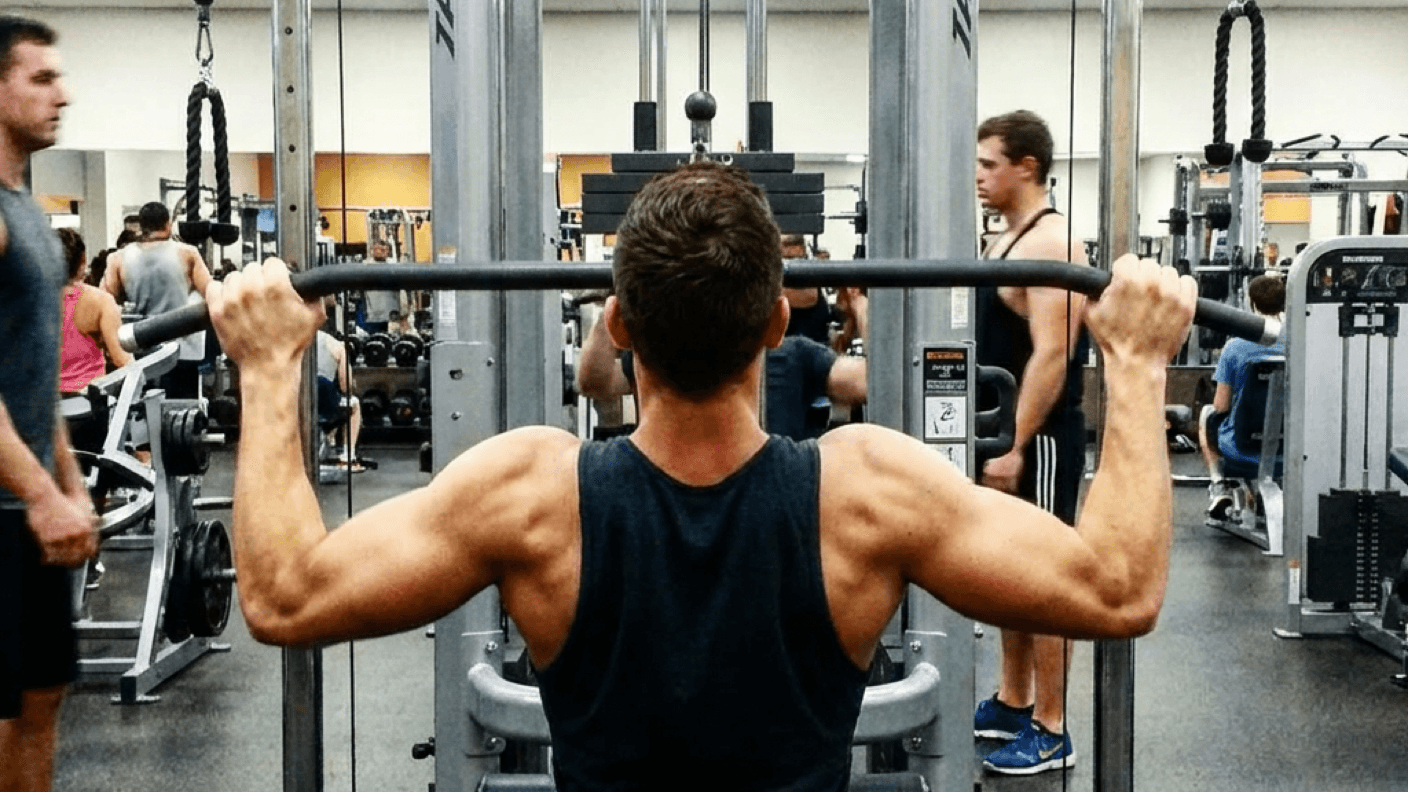
Key Takeaways
- Supersetting back and shoulders gives you an insane pump because blood shuttles between your upper back, lats, and delts for the entire session.
- The V-taper is built, not revealed - focus on growing your lateral delts and lats instead of just cutting down to a smaller waist.
- Start with heavy compounds like weighted pull-ups and seated overhead press, then move to higher rep isolation work for the pump and muscle growth.
- You need at least 6-8 sets of direct rear delt work per week because they make your shoulders look three-dimensional from the side, not flat like a wall.
- Progress on lateral raises is painfully slow - going from 20lb to 25lb dumbbells might take 6-8 weeks and that's totally normal.
Get This on WhatsApp
Get a quick summary and link sent straight to your WhatsApp.
Send Me This ArticleWhat makes a V-taper
The V-taper is the single most impressive visual feature of a developed physique. It is the illusion (or reality) that your torso narrows dramatically from your shoulders down to your waist. Three things create it:
- •Wide shoulders, primarily from lateral deltoid development
- •A wide, thick back, primarily from lat development
- •A relatively lean waist
You can control the first two with training. The third is mostly diet and genetics (some people have naturally wider waist structures). But if you build your shoulders wide and your lats thick, even an average waist will look narrower by comparison.
I coached a client a few years ago who was convinced he needed to diet down to get a V-taper. His waist was already 32 inches. The problem was not his waist. The problem was 15-inch shoulders (measured bone to bone across the back) with barely any lateral delt development and lats that disappeared when he put his arms down. We spent six months hammering lateral raises and vertical pulls. His waist did not change at all, but he looked like a completely different person because his shoulders and back grew.
The V-taper is built, not revealed.
Why superset back and shoulders together
Back and shoulders are not antagonistic muscles in the traditional sense (like chest and back, or biceps and triceps). But they work well as a superset pair for a few reasons:
They do not directly fatigue each other. A set of lateral raises does not pre-fatigue your lats for a set of pull-ups. And a set of rows does not meaningfully tire your medial delts. So performance on the second exercise stays high.
Time efficiency. By supersetting, you can get through 24-28 total sets in about 50-60 minutes. Doing the same work straight through would take 75-90 minutes.
Insane pump. When you alternate between back and shoulder exercises, blood gets shuttled between the upper back, lats, and deltoids for the entire session. By the end of the workout, your entire upper body feels swollen. It is honestly one of the best training pumps you can get.
The workout at a glance
Superset 1: Heavy compounds
| Exercise | Sets | Reps | RPE | Rest |
|---|---|---|---|---|
| A1: Weighted pull-up (or lat pulldown) | 4 | 6-8 | 8-9 | None |
| A2: Seated dumbbell overhead press | 4 | 6-8 | 8-9 | 2 min |
Superset 2: Width builders
| Exercise | Sets | Reps | RPE | Rest |
|---|---|---|---|---|
| B1: Wide-grip cable row | 3 | 10-12 | 8-9 | None |
| B2: Dumbbell lateral raise | 3 | 12-15 | 9 | 90 sec |
Superset 3: Stretch and squeeze
| Exercise | Sets | Reps | RPE | Rest |
|---|---|---|---|---|
| C1: Straight-arm pulldown | 3 | 12-15 | 9 | None |
| C2: Cable lateral raise | 3 | 12-15 | 9-10 | 90 sec |
Superset 4: Rear delts and upper back
| Exercise | Sets | Reps | RPE | Rest |
|---|---|---|---|---|
| D1: Face pull | 3 | 15-20 | 8-9 | None |
| D2: Dumbbell rear delt fly (bent over) | 3 | 12-15 | 9 | 60 sec |
Finisher
| Exercise | Sets | Reps | RPE | Rest |
|---|---|---|---|---|
| Dumbbell shrug | 3 | 12-15 | 8-9 | 60 sec |
Total sets: 26 back and shoulders, 3 traps
Estimated time: 55-65 minutes
Superset breakdown and technique tips
Weighted pull-up + Seated OHP: This is your heavy pairing. If you cannot do weighted pull-ups for sets of 6-8, use the lat pulldown with a wide overhand grip. The key on pull-ups is to pull to your upper chest, not your chin. Think about driving your elbows down and back, not just pulling your chin over the bar. For the overhead press, I prefer seated because it eliminates leg drive and keeps the focus on the delts. Full range of motion: bar (or dumbbells) starts at shoulder height, press all the way to lockout.
Wide-grip cable row + Lateral raise: The wide grip on the cable row shifts emphasis from the lower lats to the upper back, rhomboids, and rear delts. Use a wide handle attachment and pull to your upper abdomen, squeezing your shoulder blades together hard at the end of each rep. Then immediately grab your dumbbells for lateral raises. Keep lateral raises strict. Slight forward lean, raise to just about ear height, control the lowering. If you are hiking your traps up to your ears, the weight is too heavy.
Straight-arm pulldown + Cable lateral raise: The straight-arm pulldown is the best lat isolation exercise that exists. Stand a step back from the cable, slight hinge at the hips, arms almost straight (tiny bend at the elbow), and pull the bar down to your thighs using only your lats. You should feel a massive stretch at the top and a hard contraction at the bottom. Pair it with cable lateral raises for constant tension through the full range of motion.
Face pull + Rear delt fly: This pair is non-negotiable for shoulder health. I do not care if you think face pulls are boring. The rear delts and external rotators of the shoulder are what keep your shoulders functioning correctly when you press heavy weights. Neglect them and you will eventually get hurt. Face pulls at 15-20 reps, focus on pulling the rope apart at the end of each rep. Rear delt flies with light dumbbells, bent over, pinkies turned slightly outward. Feel the squeeze, do not just flap your arms around.
The role of rear delts in shoulder width
Most people think shoulder width comes entirely from the lateral delts. It mostly does, but a lot of people overlook how much the rear delts contribute to the overall look of the shoulder when viewed from any angle other than straight-on.
When you look at someone from the side or from a three-quarter angle (which is how people actually see you in real life), well-developed rear delts make the shoulder look round and three-dimensional. Without rear delt development, the shoulder looks flat from the side, like a wall rather than a boulder.
I aim for at least 6-8 sets of direct rear delt work per week for anyone who wants developed shoulders. This workout gives you 6 sets (3 face pulls + 3 rear delt flies), so if you are running it once a week, you might want to add a few sets of rear delt work on another training day.
How to progress on this workout
Heavy compounds (pull-ups, OHP): Add weight when you hit the top of the rep range on all sets. For pull-ups, use a dip belt and add 2.5-5 lbs. For OHP, add 5 lbs to the bar or go up one dumbbell increment.
Mid-range exercises (cable rows, lateral raises): Double progression within the rep range. When all sets hit the top, add weight. For lateral raises specifically, progress is slow. Going from 20-lb dumbbells to 25s might take 6-8 weeks. That is normal for a small muscle.
High-rep work (face pulls, rear delt flies, straight-arm pulldowns): Add reps before adding weight. If the program says 12-15 and you can do 15 on all sets, try for 18-20 at the same weight before going heavier. Light isolation movements should feel like targeted muscle work, not a strength test.
Programming into your weekly split
This workout works best as one of two upper body sessions in a week. Here are a few ways to slot it in:
Option A: Upper/lower split
- •Monday: Upper body (chest and arm emphasis)
- •Tuesday: Lower body
- •Thursday: This workout (back and shoulder emphasis)
- •Friday: Lower body
Option B: PPL variation
- •Monday: Push (chest/triceps)
- •Tuesday: This workout (back/shoulders)
- •Wednesday: Legs
- •Thursday: Push (shoulder/chest)
- •Friday: Pull (back/biceps)
- •Saturday: Legs
Option C: Standalone shoulder/back day
Run this once per week alongside your normal training. If your shoulders or back are weak points, this is an easy way to add specialized volume without restructuring your entire program.
Common V-taper training mistakes
Training chest more than back. I see it constantly. Monday is chest day (always bench press, always), and back gets whatever is left over on Thursday. If you want a V-taper, your back volume should equal or exceed your chest volume. A big chest with a small back does not create a V-taper. It creates a hunchback.
Only doing heavy rows. Rows are great. But rows alone will not build the lats you need for a wide back. You need vertical pulling (pull-ups, pulldowns) for lat width, and you need straight-arm work for lat isolation. A complete back program hits all three movement patterns.
Low lateral raise volume. Three sets of lateral raises per week is not going to build capped delts. The lateral deltoid is a stubborn muscle that responds well to high frequency and moderate volume. Aim for 10-15 sets per week. That might sound like a lot, but 3-4 sets at the end of each upper body session adds up fast.
Ignoring the waist. You do not need to train your waist smaller (you cannot spot-reduce fat), but you should avoid making it bigger. Heavy oblique work (side bends, Russian twists with heavy weight) can thicken the waist over time. If V-taper is the goal, keep core work focused on anti-rotation and bracing (planks, Pallof presses, ab wheel) rather than heavy loaded flexion and rotation.
Forgetting that body fat matters. You can build the widest shoulders and the thickest lats in the world, but if you are carrying 25% body fat, nobody can see the V-taper. At some point, getting lean enough to show the structure you have built is part of the equation. You do not need to be shredded. 15-18% body fat is usually enough for the V-taper to be visible in a t-shirt.
Frequently Asked Questions
- What muscles create a V-taper physique?
- Wide shoulders (lateral delts specifically) and a wide, thick back (lats and upper back) combined with a lean waist. The V-taper is mostly about the width ratio between your shoulders and waist, so training lateral raises and wide-grip pulls is more important than arm size for this look.
- Do supersets build muscle as well as straight sets?
- Research shows supersets produce similar hypertrophy to straight sets while cutting workout time by 30-40%. The catch is conditioning. If you are gasping for air between sets, your performance drops. Pair non-competing muscle groups like back and shoulders to keep quality high.
- How often should you train back and shoulders?
- Twice a week is the minimum for good growth. Your back can handle a lot of volume because it is a huge muscle group, and lateral delts recover fast. A dedicated back and shoulder day plus extra rear delt and lat work on other days works well.
- What is the best exercise for wider shoulders?
- Lateral raises, hands down. The overhead press builds strong front delts but lateral raises are what actually make your shoulders look wider. Do them 3-4 times per week with moderate weight and high reps (12-20) for best results.