How to Eat Enough Protein Without Supplements
Protein powder is convenient, but you do not need it. Here is how to hit 150 to 200 grams of protein per day from real food alone.
 Jeff·Feb 10, 2026·10 min read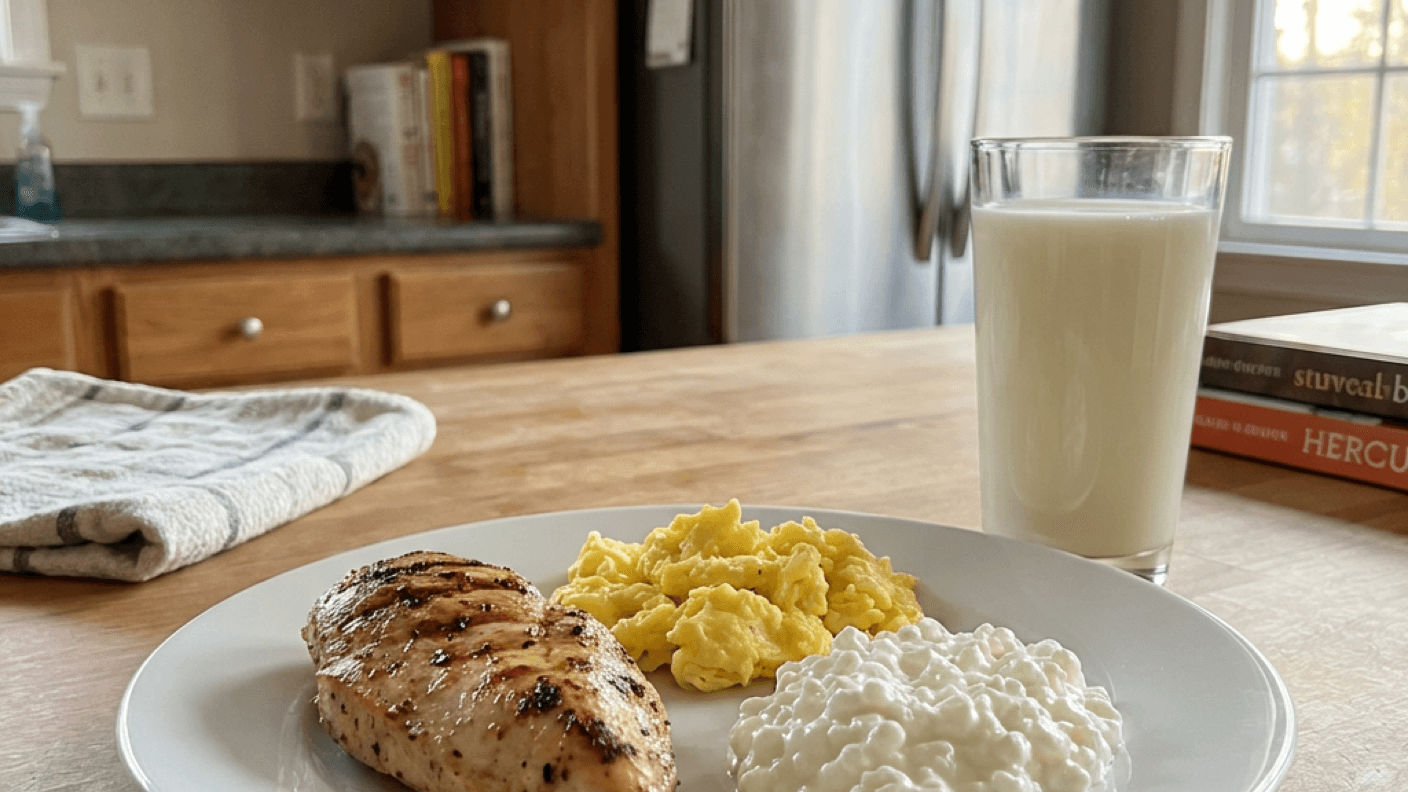
Key Takeaways
- You only need about 0.73 grams of protein per pound of body weight, not the 200+ grams supplement companies want you to believe.
- Canned tuna and pork tenderloin are two of the most protein-dense foods you can buy and way cheaper than most options.
- Every meal should have an anchor protein (30+ grams) and a supporting protein (10-20 grams) to hit your targets easily.
- Most people screw up breakfast by eating cereal and toast when they should be getting 30+ grams of protein to start the day.
- Greek yogurt and cottage cheese are cheat codes for adding protein to any meal without cooking extra meat.
Get This on WhatsApp
Get a quick summary and link sent straight to your WhatsApp.
Send Me This ArticleWhy whole food protein matters
I want to be clear upfront: there is nothing wrong with protein powder. I use it myself sometimes. It is convenient, it works, and the research is pretty solid on whey protein in particular.
But I talk to a lot of lifters who think they literally cannot hit their protein goals without supplements. Like their entire nutritional strategy falls apart without a scoop of whey. And that is a problem, because it means they have never actually learned how to eat properly.
Whole food protein has some real advantages over powder. You get more micronutrients, more fiber (from plant sources), more satiety, and the thermic effect of digesting whole food protein is higher than digesting a liquid shake. A 2004 study by Halton and Hu found that protein from whole food sources produced a thermic effect of about 20-30% of the calories consumed, meaning your body burns more calories just processing it.
Plus, relying on supplements creates a dependency. What happens when you forget your powder at home? What happens when you travel? What happens when you just do not feel like drinking another damn shake?
Learning to hit your protein from food is a skill worth developing.
How much protein you actually need
Before we get into the food, let us settle the number. There is a lot of confusion about this, mostly driven by supplement companies who want you to think you need 300 grams a day.
The actual research, specifically a 2018 meta-analysis by Morton et al. published in the British Journal of Sports Medicine, found that the benefits of protein for muscle building plateau at about 1.6 grams per kilogram of body weight per day. That is roughly 0.73 grams per pound.
For a 180-pound lifter, that comes out to about 131 grams. Not 200. Not 250. About 130.
Now, going higher than that is not harmful. Some people like the extra satiety. Some studies have shown small benefits up to about 1g per pound. But if you are stressing about hitting 200 grams and you weigh 170 pounds, you are probably overshooting by a decent margin.
Here is a simple target based on your body weight:
| Body weight | Minimum target | Upper target |
|---|---|---|
| 140 lbs | 102g | 140g |
| 160 lbs | 117g | 160g |
| 180 lbs | 131g | 180g |
| 200 lbs | 146g | 200g |
| 220 lbs | 161g | 220g |
The "minimum" column is 0.73g/lb (the research-backed number). The "upper" column is 1g/lb (the bro-science number that serves as a nice round target). Anywhere in that range is fine. Stop worrying about the exact gram.
The protein density cheat sheet
The easiest way to eat more protein without supplements is to pick foods with high protein density, meaning lots of protein per calorie. This lets you hit your targets without blowing past your calorie goals.
| Food | Serving | Protein | Calories | Protein per 100 cal |
|---|---|---|---|---|
| Chicken breast | 6 oz | 38g | 187 | 20.3g |
| Chicken thigh (skinless) | 6 oz | 34g | 215 | 15.8g |
| Ground turkey 93/7 | 6 oz | 33g | 240 | 13.8g |
| Sirloin steak | 6 oz | 36g | 276 | 13.0g |
| Pork tenderloin | 6 oz | 39g | 186 | 21.0g |
| Canned tuna (in water) | 1 can (5 oz) | 20g | 90 | 22.2g |
| Shrimp | 6 oz | 34g | 170 | 20.0g |
| Tilapia | 6 oz | 34g | 163 | 20.9g |
| Greek yogurt (0% fat) | 1 cup | 18g | 100 | 18.0g |
| Cottage cheese (2%) | 1 cup | 27g | 183 | 14.8g |
| Eggs | 3 large | 18g | 210 | 8.6g |
| Egg whites | 1 cup | 26g | 126 | 20.6g |
| Lentils (cooked) | 1 cup | 18g | 230 | 7.8g |
| Edamame | 1 cup | 17g | 188 | 9.0g |
| Deli turkey | 4 oz | 18g | 120 | 15.0g |
Two things stand out from this table. First, pork tenderloin and canned tuna are criminally underrated. Pork tenderloin is basically as lean as chicken breast and often costs less per pound. Second, eggs are actually not as protein-dense as people think. They are great, but three eggs only give you 18 grams with 210 calories. You can do a lot better.
Building high protein meals without powder
The strategy is simple: every meal needs an anchor protein, a supporting protein, and then you fill in with whatever carbs and fats you want. An anchor protein is 30+ grams from a single source. A supporting protein adds another 10-20 grams from a secondary source.
Here is what that looks like in practice:
Anchor: 6 oz chicken breast (38g)
Support: 1 cup Greek yogurt on the side or as a sauce base (18g)
Total protein from those two: 56g in a single meal
Do that at lunch and dinner and you are already at 112 grams before breakfast or snacks. See how fast it adds up?
Breakfast ideas that actually have protein
Breakfast is where most people fall short. A bowl of cereal has maybe 4 grams of protein. Toast with jam is basically zero. Even "healthy" breakfasts like oatmeal with fruit are carb-heavy with minimal protein.
Here are breakfasts that actually move the needle:
The egg scramble (35-40g protein)
- •3 whole eggs + 1 cup egg whites
- •Diced ham or turkey sausage (2 oz)
- •Cheese (1 oz)
- •Vegetables of your choice
- •Toast on the side
Greek yogurt bowl (35-40g protein)
- •1.5 cups nonfat Greek yogurt
- •2 tbsp peanut butter
- •Berries
- •Granola (small handful)
Cottage cheese and toast (32-35g protein)
- •1 cup cottage cheese (2%)
- •2 slices whole grain toast
- •Sliced tomato and everything bagel seasoning on top
The deli wrap (30g protein)
- •Large flour tortilla
- •4 oz deli turkey
- •2 eggs (scrambled or fried)
- •Cheese, lettuce, hot sauce
Notice the pattern: each breakfast has at least 30 grams. If you are eating a breakfast with less than 25 grams of protein, you are making the rest of your day harder than it needs to be.
Lunch and dinner protein stacking
This is where the bulk of your protein should come from. Aim for 40-50 grams per meal at lunch and dinner, and hitting 150+ grams for the day becomes almost automatic.
Stacked lunch ideas
Tuna melt (45g protein): Two cans of tuna mixed with mustard and diced celery, piled on sourdough bread with Swiss cheese, toasted in a pan until the cheese melts. Simple, cheap, packed with protein.
Chicken quesadilla (48g protein): 6 oz shredded chicken, 2 oz cheese, flour tortillas. Cook in a skillet until crispy. Serve with Greek yogurt instead of sour cream for bonus protein.
Deli meat mega sandwich (42g protein): 6 oz of deli turkey or roast beef, 1 oz cheese, mustard, lettuce, tomato, on a sub roll. This is a Subway-style sandwich but better and cheaper.
Stacked dinner ideas
Steak and potatoes (52g protein): 8 oz sirloin steak, baked potato with cottage cheese (instead of sour cream), side of roasted broccoli. The cottage cheese swap adds 14g of protein that sour cream would not give you.
Shrimp stir fry (42g protein): 8 oz shrimp, rice, frozen stir fry vegetables, soy sauce, sesame oil. Cook the shrimp in 5 minutes, heat the vegetables, serve over rice. Done in 15 minutes.
Turkey chili (46g protein per big bowl): Ground turkey, kidney beans, diced tomatoes, chili powder, onion, garlic. Make a huge pot on Sunday. Each serving has protein from both the turkey and the beans.
High protein snacks that are not shakes
Snacks are the easiest place to add 20-40 grams of protein to your day without much effort:
| Snack | Protein |
|---|---|
| 1 cup cottage cheese + fruit | 27g |
| 1 cup Greek yogurt + honey | 18g |
| 2 hard boiled eggs + string cheese | 19g |
| Beef jerky (2 oz) | 18g |
| Deli turkey rolled up with cheese (4 oz turkey + 1 oz cheese) | 25g |
| Edamame (1 cup, shelled) | 17g |
| Canned chicken (5 oz) on crackers | 22g |
| Tuna packet + crackers | 20g |
I keep hard boiled eggs, string cheese, and deli turkey in my fridge at all times. When I need protein, I grab one of those without thinking about it. No blending, no scooping powder, no cleanup.
A sample 200g protein day with no supplements
Here is a full day that hits roughly 200 grams of protein from nothing but regular food:
| Meal | Food | Protein |
|---|---|---|
| Breakfast (7am) | 3 eggs + 1 cup egg whites, scrambled, with 2 oz ham and 1 oz cheddar | 42g |
| Snack (10am) | 1 cup Greek yogurt with berries and honey | 18g |
| Lunch (12:30pm) | Chicken quesadilla (6 oz chicken, 2 oz cheese, tortillas) | 48g |
| Snack (3pm) | Deli turkey roll-ups (4 oz turkey, 1 oz Swiss) | 25g |
| Dinner (7pm) | 8 oz sirloin steak, baked potato with cottage cheese, broccoli | 52g |
| Evening (9pm) | 1 cup cottage cheese with pineapple | 27g |
| Total | 212g |
That is 212 grams of protein from completely normal food. No powder, no bars, no special products. The total calorie count for that day is roughly 2,400-2,600, which works for most male lifters who are either maintaining or in a slight surplus.
Common mistakes people make
Backloading all their protein into dinner. I see this constantly. Someone eats a low-protein breakfast and lunch, then tries to cram 100+ grams into dinner. A 2018 study by Mamerow et al. found that distributing protein evenly across meals (about 30g per meal) resulted in 25% greater muscle protein synthesis compared to eating the same total amount skewed toward one meal. Spread it out.
Thinking plant protein is equal to animal protein gram for gram. Look, I am not anti-plant-protein. But the bioavailability is different. Plant proteins are generally less digestible and have less optimal amino acid profiles for muscle building. A 2019 paper by van Vliet et al. in the Journal of Nutrition showed that you need roughly 20-30% more plant protein to get the same muscle-building response as animal protein. If you are vegetarian or vegan, aim for the higher end of the protein range and focus on soy, pea protein, and combining complementary sources.
Ignoring leucine. Leucine is the amino acid that triggers muscle protein synthesis. Animal proteins are high in leucine naturally. If you are relying heavily on plant sources, make sure your meals include leucine-rich options like soy, peanuts, and lentils. The threshold for triggering muscle protein synthesis is about 2-3 grams of leucine per meal, which you get automatically from 25-30g of animal protein but need to be more intentional about with plant sources.
Thinking cooking is too hard. Most of these meals are not cooking in any serious sense. You are heating meat in a pan, boiling eggs, or warming up canned tuna. If you can operate a stove and a microwave, you can eat 150+ grams of protein per day from real food. Stop using "I cannot cook" as an excuse.
Frequently Asked Questions
- How can I get 150 grams of protein a day without shakes?
- Four eggs at breakfast (24g), a chicken breast at lunch (45g), Greek yogurt as a snack (20g), and 8 ounces of ground beef at dinner (50g) gets you to 139 grams before counting protein from sides like rice, bread, and vegetables. It is easier than most people think.
- What food has the most protein per dollar?
- Eggs, whole chicken, canned tuna, dried lentils, and cottage cheese are the cheapest protein sources. Eggs are the king at roughly 7 grams of protein per egg at about 25 cents each. A $6 rotisserie chicken gives you 100+ grams of protein.
- Is it hard to eat enough protein without supplements?
- Not if you plan around protein at every meal. The people who struggle are the ones eating cereal for breakfast, a salad for lunch, and pasta for dinner. Restructure your meals so protein is the centerpiece and everything else fills in around it.
- Do I really need protein at every meal?
- You do not need to stress about exact meal timing, but spreading protein across 3-4 meals does help with absorption and muscle protein synthesis. Your body can only use about 40-50 grams efficiently per meal, so one massive 150-gram protein dinner is not ideal.