Macro Calculator
Calculate protein, fat, and carb targets based on your goals
What This Calculator Measures
The Macro Calculator breaks your total daily calories into specific gram targets for protein, fat, and carbohydrates. Getting the macro split right is essential for optimizing body composition changes, whether you are cutting, maintaining, or bulking.
How It Works
The calculator prioritizes protein and fat, then fills the remainder with carbohydrates:
1. **Protein** is set based on body weight and goal: 2.0 g/kg for cutting and bulking, 1.8 g/kg for maintenance.
2. **Fat** is set as a percentage of total calories: 25% for cutting/bulking, 30% for maintenance.
3. **Carbohydrates** fill the remaining calories after protein and fat are allocated.
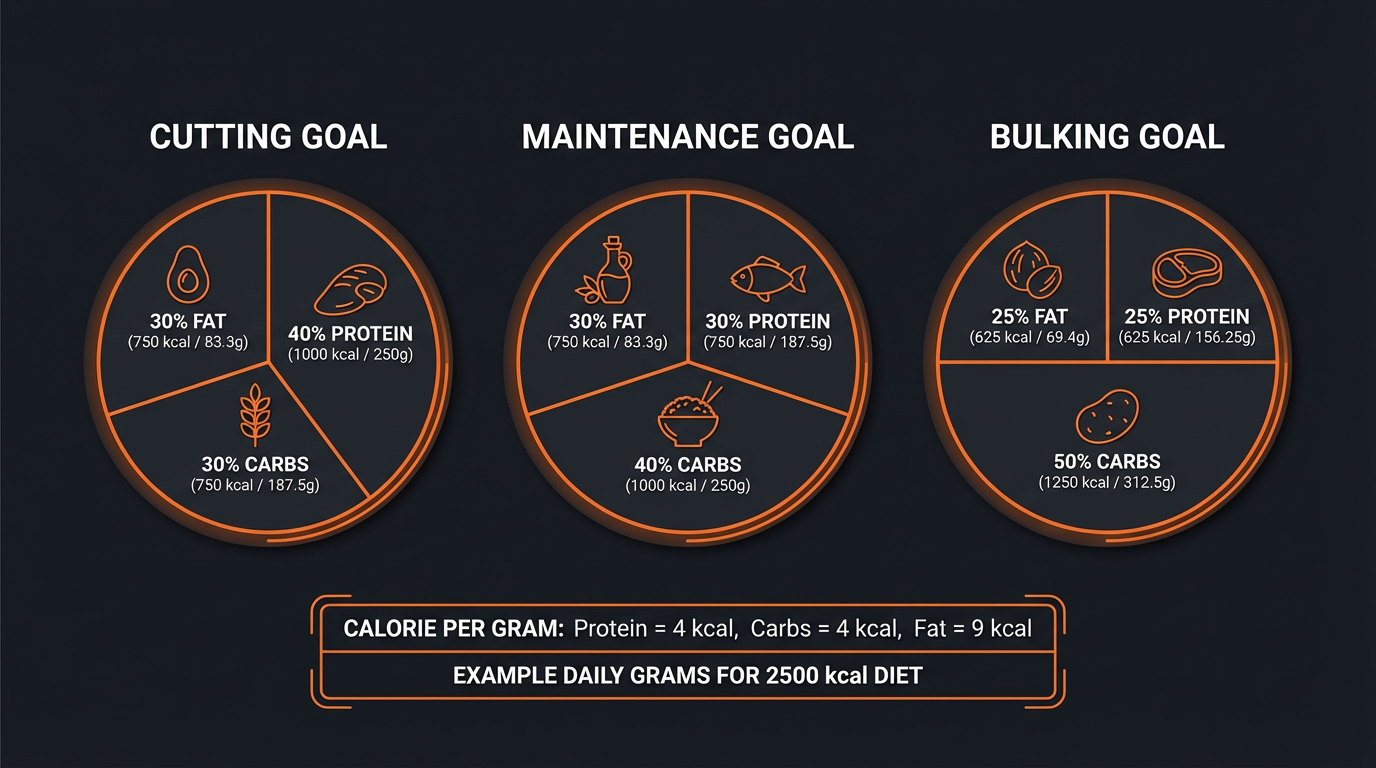
| Macro | Cutting | Maintenance | Bulking |
|---|---|---|---|
| Protein | 2.0 g/kg | 1.8 g/kg | 2.0 g/kg |
| Fat | 25% of cals | 30% of cals | 25% of cals |
| Carbs | Remaining | Remaining | Remaining |
For example, an 80 kg lifter eating 2500 kcal on a bulk: Protein = 160g (640 kcal), Fat = 69g (625 kcal), Carbs = 309g (1235 kcal).
Practical Tips
Limitations
Frequently Asked Questions
- What are macros and why should I track them?
- Macros are protein, carbs, and fat -- the three macronutrients that make up your calories. Tracking them ensures you're getting enough protein for muscle growth, enough carbs for energy, and enough fat for hormonal health. Just counting calories misses the full picture.
- What's the best macro ratio for building muscle?
- A solid starting point is 30% protein, 40% carbs, 30% fat. For a 2,800-calorie bulk, that's roughly 210g protein, 280g carbs, and 93g fat. Adjust based on how you feel and perform -- some guys do better with more carbs, others with more fat.
- Do I need to track macros to make progress?
- Not necessarily. Tracking is the fastest way to dial in your nutrition, but some guys do fine just hitting a protein target and eating roughly the right amount. If you're a beginner, start by just tracking protein. Add full macro tracking later if you want to optimize.
- How are macro targets different for cutting vs. bulking?
- Protein stays high in both (0.8-1g per pound). On a bulk, carbs go up to fuel training and recovery. On a cut, carbs and fat come down to create the deficit, but protein stays the same or goes slightly higher to protect muscle mass.