12-Week Full Body Transformation Plan: From Beginner to Fit
A periodized 12-week program for true beginners — with three distinct training phases, specific sets/reps/rest times, nutrition macros, and realistic expectations for your first three months of lifting.
 Jeff·Aug 20, 2024·15 min read
Key Takeaways
- This is a periodized 12-week program that actually progresses through three phases instead of just giving you random exercises.
- You'll realistically gain 4-7 pounds of muscle and roughly double your main lifts if you're a true beginner.
- Phase 1 focuses on learning movements with full body workouts 3x per week, Phase 2 shifts to an upper/lower split 4x per week with heavier weights, and Phase 3 cranks up the volume.
- The key is hitting about 85% of your planned sessions and staying consistent with nutrition rather than being perfect.
- You need to log every workout and progress by adding either 1-2 reps or 5 pounds each week, not both at the same time.
Get This on WhatsApp
Get a quick summary and link sent straight to your WhatsApp.
Send Me This ArticleMost 12-week plans hand you a cookie-cutter spreadsheet and call it a day. Three sets of ten on everything, "eat clean," good luck. That's not a program — it's a list of exercises with no logic behind it.
This is different. What you're getting is a periodized plan built the way a coach would actually write one: three phases, each with a specific purpose, with progression baked in week to week. Phase 1 teaches the movements and builds work capacity. Phase 2 shifts to heavier loading with an upper/lower split. Phase 3 ramps up volume and introduces intensity techniques.
If you've never followed a structured program — or tried one that fizzled out — this is your starting point.
---
- •[What to Expect in 12 Weeks (Realistic Numbers)](#what-to-expect-in-12-weeks-realistic-numbers)
- •[Before You Start: Equipment and Setup](#before-you-start-equipment-and-setup)
- •[Phase 1: Foundation (Weeks 1–4)](#phase-1-foundation-weeks-14)
- •[Phase 2: Building (Weeks 5–8)](#phase-2-building-weeks-58)
- •[Phase 3: Peak (Weeks 9–12)](#phase-3-peak-weeks-912)
- •[Nutrition: What and How Much to Eat](#nutrition-what-and-how-much-to-eat)
- •[Tracking Your Progress](#tracking-your-progress)
- •[FAQ](#faq)
---
What to Expect in 12 Weeks (Realistic Numbers)
Let's set expectations upfront, because nothing kills motivation faster than comparing yourself to influencer timelines.
For a genuine beginner — someone who hasn't followed a consistent resistance training program — here's what 12 weeks realistically looks like:
- •Muscle gain: 4–7 lbs of lean tissue. Beginners get the fastest gains they'll ever see (this is the "newbie gains" window), but it's still measured in single-digit pounds, not the 20-lb claims you see on YouTube thumbnails.
- •Strength increases: Expect your main lifts (squat, bench, deadlift, overhead press) to roughly double from where you start. If you begin squatting 65 lbs, finishing around 135 lbs is realistic.
- •Body composition: You'll likely lose some fat simultaneously if your nutrition is dialed in, especially in the first 8 weeks. This "recomposition" effect is strongest in beginners.
- •Visible changes: You'll notice differences around week 6–8. Others start commenting around week 10–12.
None of this requires perfection. It requires consistency — roughly 85% of planned sessions and staying in range on nutrition most days.
---
Before You Start: Equipment and Setup
This program is designed for a standard commercial gym. You'll need:
- •Barbell and plates (or a Smith machine in a pinch)
- •Dumbbells (a range from 10–50 lbs covers most beginners)
- •A flat/adjustable bench
- •A cable machine or lat pulldown station
- •A pull-up bar (assisted pull-up machine works too)
What you don't need: Bands, bosu balls, or special shoes.
Grab a notebook or tracking app. Log every workout — exercises, weights, sets, reps. This matters more than most people think.
---
Phase 1: Foundation (Weeks 1–4)
Goal: Learn the movement patterns, build work capacity, establish the gym habit.
Frequency: 3 sessions per week (e.g., Monday / Wednesday / Friday)
Session length: 40–50 minutes
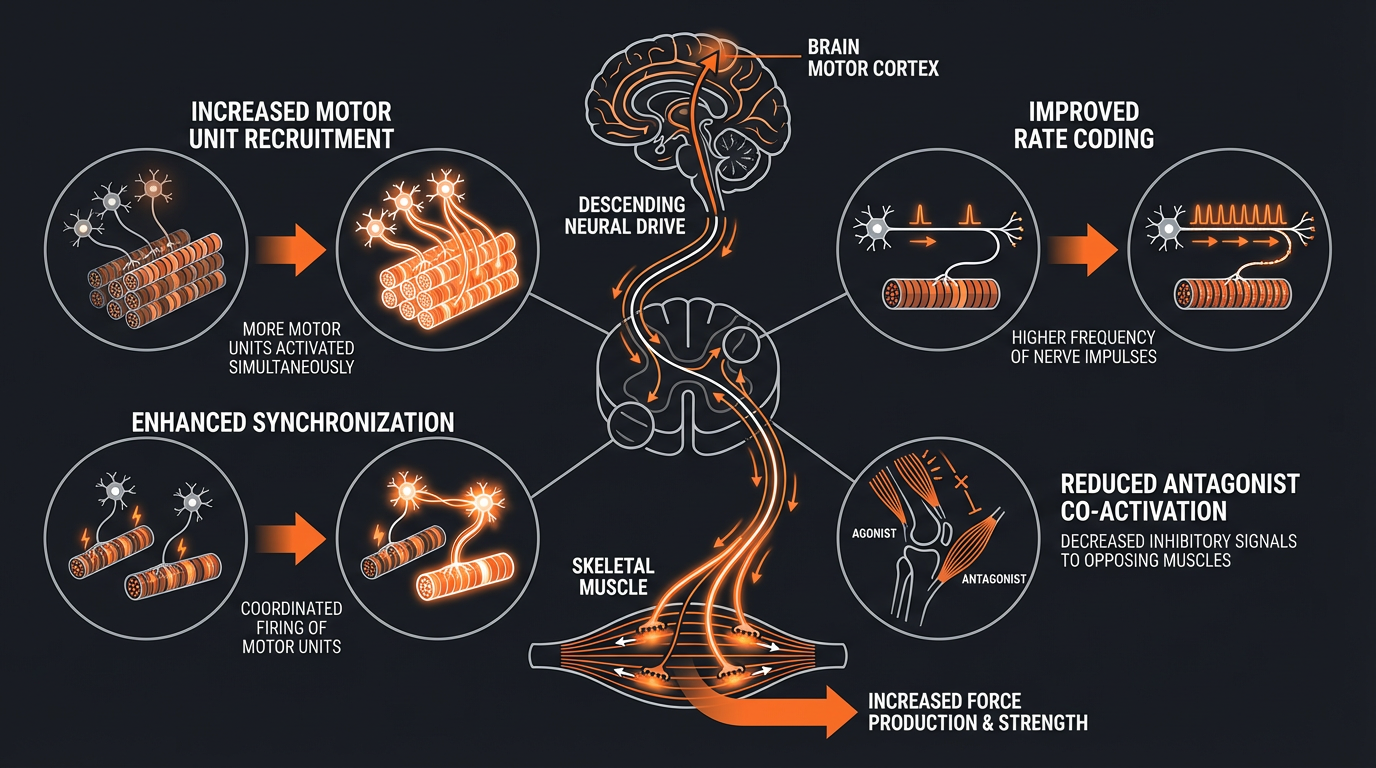
How to pick starting weights: Find a weight where the last 2 reps feel challenging but you could do 2–3 more. This is "reps in reserve" (RIR) — aim for about 3 RIR in Phase 1. The point isn't to grind; it's to practice movements under moderate load.
Workout A — Full Body (Push Emphasis)
| Exercise | Sets x Reps | Rest | Notes |
|---|---|---|---|
| Goblet Squat | 3 x 12 | 90 sec | Hold dumbbell at chest, sit back and down |
| Dumbbell Bench Press | 3 x 10 | 90 sec | Control the lowering for 2 seconds |
| Dumbbell Romanian Deadlift | 3 x 10 | 90 sec | Slight knee bend, hinge at hips, feel hamstrings stretch |
| Overhead Press (dumbbells) | 3 x 10 | 60 sec | Standing or seated, no leg drive |
| Plank | 3 x 30–45 sec | 60 sec | Squeeze glutes, don't let hips sag |
Workout B — Full Body (Pull Emphasis)
| Exercise | Sets x Reps | Rest | Notes |
|---|---|---|---|
| Dumbbell Lunges | 3 x 10/leg | 90 sec | Alternate legs, keep torso upright |
| Lat Pulldown | 3 x 12 | 90 sec | Pull to upper chest, squeeze shoulder blades |
| Dumbbell Hip Thrust | 3 x 12 | 60 sec | Bench behind you, drive through heels |
| Dumbbell Row | 3 x 10/arm | 60 sec | One hand on bench, pull to hip |
| Dead Bug | 3 x 8/side | 60 sec | Slow and controlled, lower back stays flat |
Workout C — Full Body (Mixed)
| Exercise | Sets x Reps | Rest | Notes |
|---|---|---|---|
| Bodyweight Squat | 2 x 15 | 60 sec | Warm-up focus, full depth |
| Push-ups (or knee push-ups) | 3 x AMRAP | 90 sec | As many reps as possible with good form |
| Kettlebell or Dumbbell Deadlift | 3 x 10 | 90 sec | Flat back, drive through floor |
| Cable Face Pull | 3 x 15 | 60 sec | Light weight, pull to forehead level |
| Farmer's Walk | 3 x 40 sec | 60 sec | Heavy dumbbells, stand tall, walk steady |
Phase 1 Progression
Each week, add 1–2 reps to each set OR add 5 lbs — not both. When you hit the top of the rep range on all sets, bump the weight up by the smallest increment and drop back to the lower end of the range.
By week 4, you should feel comfortable with every movement and have clear baseline weights.
---
Phase 2: Building (Weeks 5–8)
Goal: Increase strength through heavier loading and a smarter split that lets you hit each muscle harder per session.
Frequency: 4 sessions per week (e.g., Monday / Tuesday / Thursday / Friday)
Session length: 50–60 minutes
Intensity shift: Now working at roughly 2 RIR — the last couple reps should feel genuinely hard. No failing, but no coasting either.
Upper Body Day A
| Exercise | Sets x Reps | Rest | Notes |
|---|---|---|---|
| Barbell Bench Press | 4 x 6–8 | 2 min | If you haven't benched with a barbell yet, use dumbbells and work up to it |
| Barbell Bent-Over Row | 4 x 6–8 | 2 min | Slight torso lean, pull to lower chest |
| Dumbbell Overhead Press | 3 x 8–10 | 90 sec | Seated for stability |
| Cable Row | 3 x 10–12 | 90 sec | Squeeze at the top for a one-count |
| Dumbbell Curl | 2 x 12 | 60 sec | Controlled, no swinging |
| Tricep Pushdown | 2 x 12 | 60 sec | Elbows pinned to sides |
Lower Body Day A
| Exercise | Sets x Reps | Rest | Notes |
|---|---|---|---|
| Barbell Back Squat | 4 x 6–8 | 2–3 min | Box squat if depth is an issue |
| Romanian Deadlift (barbell) | 3 x 8–10 | 2 min | Heavier than Phase 1 dumbbells, same form |
| Bulgarian Split Squat | 3 x 10/leg | 90 sec | Rear foot on bench, dumbbells in hands |
| Leg Curl (machine) | 3 x 10–12 | 60 sec | Slow eccentric (3 seconds lowering) |
| Standing Calf Raise | 3 x 15 | 60 sec | Full stretch at bottom, pause at top |
Upper Body Day B
| Exercise | Sets x Reps | Rest | Notes |
|---|---|---|---|
| Dumbbell Incline Press | 3 x 8–10 | 90 sec | 30-degree incline |
| Pull-ups or Assisted Pull-ups | 4 x 6–8 | 2 min | Use the assist machine until you can get 6 clean reps unassisted |
| Dumbbell Lateral Raise | 3 x 12–15 | 60 sec | Light weight, control the movement |
| Cable Face Pull | 3 x 12–15 | 60 sec | Rear delt and rotator cuff health |
| Hammer Curl | 2 x 10–12 | 60 sec | Neutral grip |
| Overhead Tricep Extension | 2 x 10–12 | 60 sec | Cable or dumbbell |
Lower Body Day B
| Exercise | Sets x Reps | Rest | Notes |
|---|---|---|---|
| Conventional Deadlift | 4 x 5 | 3 min | Heaviest compound lift — focus on bracing and form |
| Leg Press | 3 x 10–12 | 90 sec | Moderate weight, full range of motion |
| Walking Lunges | 3 x 12/leg | 90 sec | Dumbbells in hands |
| Hip Thrust (barbell) | 3 x 10 | 90 sec | Use a pad on the bar |
| Plank | 3 x 45–60 sec | 60 sec | Add weight on back if bodyweight feels easy |
Phase 2 Progression
Simple linear progression: add 5 lbs to barbell movements and 2.5 lbs to dumbbell movements each week. If you stall (can't hit the bottom of the rep range), stay at the same weight and push for more reps until you can.
Track everything. Your logbook is your roadmap.
---
Phase 3: Peak (Weeks 9–12)
Goal: Push your limits with more volume, intensity techniques, and a more targeted split. This is where the work you did in Phases 1 and 2 pays off.
Frequency: 4–5 sessions per week
Session length: 55–70 minutes
Intensity: 1–2 RIR on compounds, occasionally hitting true failure on isolation work. Two new techniques:
- •Drop sets: After your last set, reduce weight by ~30% and rep out.
- •Pause reps: 2-second pause at the hardest point (bottom of squat, chest on bench).
Day 1 — Push
| Exercise | Sets x Reps | Rest | Notes |
|---|---|---|---|
| Barbell Bench Press | 4 x 5–6 | 2–3 min | Heaviest of the program; use pause reps on set 3 |
| Incline Dumbbell Press | 3 x 8–10 | 90 sec | Drop set on the last set |
| Overhead Press (barbell or dumbbell) | 3 x 8–10 | 90 sec | Standing preferred |
| Cable Fly | 3 x 12–15 | 60 sec | Squeeze at the top |
| Lateral Raise | 3 x 15 | 60 sec | Drop set on last set |
| Tricep Dip or Pushdown | 3 x 10–12 | 60 sec | Bodyweight dips if you can do 10+ |
Day 2 — Pull
| Exercise | Sets x Reps | Rest | Notes |
|---|---|---|---|
| Barbell Deadlift | 4 x 4–5 | 3 min | Your heaviest pull; reset between reps |
| Pull-ups | 4 x AMRAP | 2 min | Add weight if bodyweight is over 8 reps |
| Barbell Row | 3 x 6–8 | 2 min | Heavier than Phase 2 |
| Cable Row | 3 x 10–12 | 90 sec | Slow eccentric |
| Face Pull | 3 x 15 | 60 sec | Rear delt health |
| Barbell Curl | 3 x 10 | 60 sec | Drop set on last set |
Day 3 — Legs
| Exercise | Sets x Reps | Rest | Notes |
|---|---|---|---|
| Barbell Back Squat | 4 x 5–6 | 3 min | Pause reps on set 2 |
| Romanian Deadlift | 3 x 8–10 | 2 min | Go heavier than Phase 2 |
| Leg Press | 3 x 12–15 | 90 sec | Drop set on last set |
| Walking Lunges | 3 x 10/leg | 90 sec | Dumbbells |
| Leg Curl | 3 x 10–12 | 60 sec | Slow eccentric |
| Standing Calf Raise | 4 x 12 | 60 sec | Pause at top and bottom |
Day 4 — Upper (Volume)
| Exercise | Sets x Reps | Rest | Notes |
|---|---|---|---|
| Dumbbell Bench Press | 3 x 10–12 | 90 sec | Lighter than Day 1 barbell, more reps |
| Lat Pulldown | 3 x 10–12 | 90 sec | Wider grip than cable row |
| Arnold Press | 3 x 10 | 90 sec | Rotation through the press |
| Chest-Supported Dumbbell Row | 3 x 10–12 | 60 sec | Incline bench, takes lower back out of it |
| Superset: Curl + Tricep Extension | 3 x 12 each | 60 sec | Back to back, no rest between the two |
| Farmer's Walk | 3 x 45 sec | 60 sec | Heavy, grip challenge |
Phase 3 Progression
Weekly weight increases may slow down. That's normal and expected. Focus on:
- •Adding reps within the prescribed range before adding weight
- •Improving the quality of each rep (slower eccentrics, better control)
- •Using the intensity techniques (drop sets, pause reps) to push past plateaus without just piling on more weight
---
Nutrition: What and How Much to Eat
Training stimulates growth. Food builds it. Here's how to set up your nutrition.
Step 1: Find Your Calorie Target
Multiply your bodyweight (in pounds) by 15–16. That's your approximate daily calorie target for building muscle while staying relatively lean.
- •150 lb person: 2,250–2,400 calories/day
- •180 lb person: 2,700–2,880 calories/day
- •200 lb person: 3,000–3,200 calories/day
If you're over 25% body fat, use 13–14 as your multiplier. You'll still build muscle as a beginner even in a slight deficit.
Step 2: Set Your Macros
- •Protein: 0.8–1g per pound of bodyweight. This is non-negotiable. For a 180 lb person, that's 145–180g of protein daily.
- •Fat: 0.3–0.4g per pound of bodyweight. For a 180 lb person: 55–70g of fat.
- •Carbs: Fill the remaining calories with carbohydrates. For a 180 lb person eating 2,800 calories with 160g protein and 60g fat: that's roughly 340g of carbs.
Step 3: What to Actually Eat
You don't need to eat "clean" — you need to hit your protein and calorie targets consistently. About 80% of your food should come from whole sources:
- •Protein sources: Chicken breast, ground turkey, eggs, Greek yogurt, whey protein, lean beef, fish
- •Carb sources: Rice, oats, potatoes, fruit, pasta, bread
- •Fat sources: Olive oil, nuts, avocado, cheese, egg yolks
The other 20%? Eat what you enjoy. Sustainability matters more than purity.
Meal Timing
- •3–4 meals per day, roughly 3–5 hours apart
- •30–50g of protein per meal
- •Protein and carbs within 2 hours of training (before or after, either works)
---
Tracking Your Progress
You need to measure more than just the scale. Here's your tracking checklist:
Weekly
- •Weigh yourself 3 times per week (morning, after bathroom, before food) and average them. Single readings are meaningless — weight fluctuates 2–4 lbs daily.
- •Log every workout. Weights, reps, how it felt. This is your primary progress tool.
Biweekly (Every 2 Weeks)
- •Progress photos. Same lighting, same angle, same time of day. Front, side, back. Comparing week 1 to week 6 tells the real story.
- •Measurements. Chest, waist, hips, upper arms (flexed), thighs. Use a flexible tape measure.
Strength Benchmarks
Here are reasonable 12-week targets for a male beginner starting from scratch (women can expect roughly 60–70% of these numbers):
| Lift | Week 1 | Week 12 Target |
|---|---|---|
| Barbell Squat | 65–95 lbs | 135–185 lbs |
| Bench Press | 65–95 lbs | 115–155 lbs |
| Deadlift | 95–135 lbs | 185–255 lbs |
| Overhead Press | 45–65 lbs | 85–115 lbs |
Where you land depends on size, genetics, sleep, and consistency. Don't fixate on specific numbers — focus on steady upward trends in your logbook.
---
FAQ
How sore will I be in the first week?
Pretty sore, especially days 2–3 after your first session. This is called DOMS (delayed onset muscle soreness) and it's normal. It fades by week 2–3. Don't skip workouts because of soreness — light movement actually helps.
What if I miss a workout?
Pick up where you left off. If you miss Monday, do that workout Tuesday. Don't cram two sessions into one day. Over 12 weeks, missing 3–4 total sessions won't matter. Missing 3–4 per week will.
Can I add cardio to this program?
Yes, but keep it moderate. Two to three 20–30 minute sessions of walking, cycling, or swimming per week actually supports recovery. Just don't do hard cardio right before lifting — it'll compromise your strength work.
I'm a woman — is this program appropriate for me?
Yes. The programming applies the same regardless of gender. You may start lighter on upper body movements and progress at slightly different rates, but the phases, rep ranges, and progression schemes all work. You won't "get bulky" — that myth won't die.
Do I need supplements?
Most are a waste of money. The two worth buying:
- •Creatine monohydrate: 5g daily. Cheap, safe, well-studied. Modest but real benefit for strength and muscle.
- •Whey protein: Only if you can't hit your protein target through food. It's a convenience product, not magic.
Everything else — BCAAs, pre-workout, fat burners, test boosters — skip it.
What happens after week 12?
You run another program. Twelve weeks is a training block, not a finish line. By then you'll have the movement skill, strength, and work capacity for an intermediate program. Repeat with heavier weights, try a dedicated hypertrophy block, or chase a new goal. The important thing is that you keep going.
I'm over 40 — do I need to modify anything?
Warm up longer (10 minutes instead of 5), prioritize sleep, and extend rest periods by 30 seconds if needed. The programming doesn't need major changes. Older beginners build muscle at a slightly slower rate, but the process is the same. If joints bother you, swap barbell movements for dumbbell alternatives — same muscles, less joint stress.
Frequently Asked Questions
- Can you really transform your body in 12 weeks?
- You can make visible progress in 12 weeks, but don't expect a magazine cover. Realistic expectations: beginners can gain 5-8 lbs of muscle, lose noticeable fat, and dramatically improve their strength. That's a solid foundation, not a finish line.
- What should a complete beginner do in their first week at the gym?
- Learn the basic movement patterns: squat, hinge, push, pull, and carry. Use light weights or just the barbell to nail form. Do 2-3 full-body sessions with 3 sets of 10 reps on each exercise. Expect to be sore, it goes away.
- How much weight should a beginner lift?
- Start with a weight you can do 10 reps with while keeping 3-4 reps in reserve. It should feel challenging but not like a max effort. You'll add weight quickly in the first few weeks as your nervous system learns the movements.
- Is full body or split training better for beginners?
- Full body, hands down. Beginners recover faster between sessions and benefit more from practicing movements frequently. A 3-day full body program hitting each muscle group three times per week will beat a bro split every time for the first year.