Home Gym Setup Guide: What to Buy on Any Budget
You do not need ten thousand dollars to build a solid home gym. Here is what to buy at every price point from budget to dream setup.
 Jeff·Feb 10, 2026·12 min read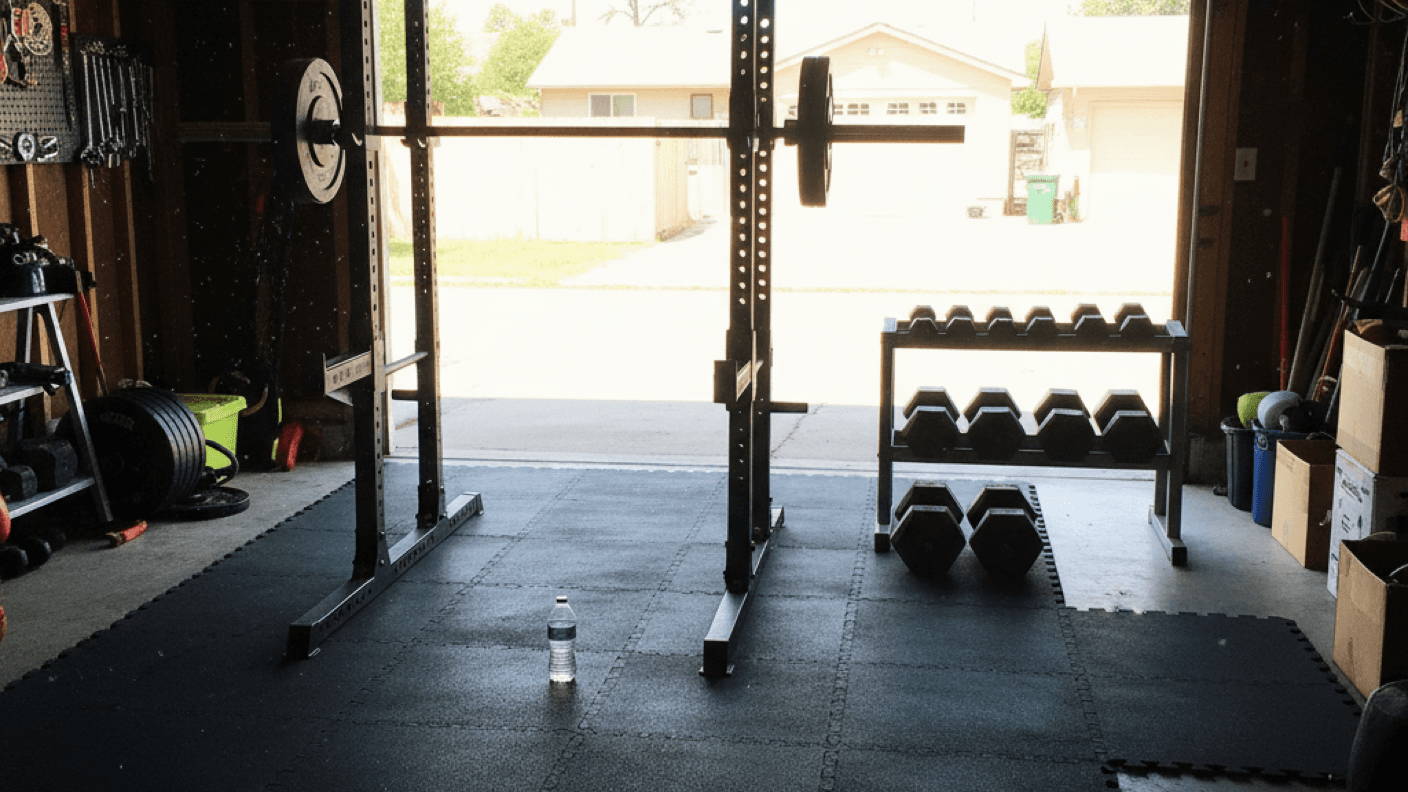
Key Takeaways
- You need at least 50 square feet and 8+ foot ceilings for a proper barbell setup, plus horse stall mats from Tractor Supply to protect your floors.
- A $200 starter setup with adjustable dumbbells, pull-up bar, and resistance bands will carry a beginner for 6-12 months before you outgrow the weight limits.
- The $500 budget gets you a real barbell setup but no safety bars, so you'll need to keep squat weights conservative or learn to bail properly.
- At $1,500 you get a power rack with safeties which lets you train heavy alone without risking getting crushed under a failed squat.
- Buy used equipment on Facebook Marketplace and Craigslist to save 25-50% compared to retail prices on new gear.
Get This on WhatsApp
Get a quick summary and link sent straight to your WhatsApp.
Send Me This ArticleWhy I built a home gym (and almost regretted it)
During the pandemic shutdowns in 2020, I did what half the fitness community did: panic-bought a barbell and some plates off Facebook Marketplace for roughly double what they were worth. I set them up in my garage, which was not climate controlled, had no mirrors, and had a concrete floor that I was terrified of dropping anything on.
For the first few months, I loved it. No commute. No waiting for equipment. No wiping down someone else's sweat. Training at midnight in my underwear? Sure, why not.
Then winter came. My garage was 35 degrees. The barbell felt like a frozen pipe. My hands went numb by the second set. I started making excuses to skip sessions, which is exactly what I built the home gym to avoid.
The lesson: a home gym is only as good as the space it is in and the thought you put into it. A well-planned home gym is one of the best investments you can make in your fitness. A poorly planned one is an expensive clothes hanger.
The honest pros and cons
Pros
No commute. The average American lives about 15 minutes from their gym. That is 30 minutes round trip, multiplied by 4-5 sessions per week, multiplied by 52 weeks. That is over 100 hours per year just driving to and from the gym. A home gym gives you that time back.
No waiting. If you train during peak hours, you know the frustration of waiting ten minutes for a squat rack. At home, everything is available immediately. Your sessions become shorter and more efficient.
Train whenever. 5 AM, 11 PM, during your lunch break. No operating hours, no holiday closures. Your gym is always open.
No monthly fees. The equipment pays for itself within 1-2 years compared to a gym membership. After that, it is free training forever (minus the occasional replacement or addition).
Your music, your rules. Full volume. No headphones required. Play death metal, play show tunes, play nothing at all.
Cons
Upfront cost. Even a basic setup costs a few hundred dollars. A proper setup runs into the thousands. You are front-loading the expense instead of spreading it across monthly payments.
Space requirements. Not everyone has a garage, basement, or spare room. And the space you do have might have other uses that compete with a gym.
Limited equipment variety. Unless you have unlimited money and space, you will not replicate a full commercial gym. Cable machines, leg presses, and specialty equipment are either expensive or bulky or both.
Motivation can suffer. Some people thrive on the gym environment. The energy of other people training, the social aspect, the separation between home and workout space. At home, it is just you and the weights in a quiet room. For some people that is heaven. For others it is boring as hell.
Resale value varies. Good equipment (Rogue, Rep Fitness, Titan) holds value well. Cheap equipment depreciates fast. If you buy garbage and decide to sell it later, you will get pennies on the dollar.
Before you buy anything: space and flooring
Space
You need a minimum of about 6 feet by 8 feet (roughly 50 square feet) for a barbell setup with a rack. That gives you room to load the bar, step back to squat, and bench press without hitting walls. For a more comfortable setup with room for accessories, aim for 10 by 10 feet or larger.
Ceiling height matters for overhead pressing. If you plan to overhead press standing up (and you should), you need at least 8 feet of clearance, preferably 9. Some basements have low ceilings that make standing overhead work impossible. Measure before you buy a rack.
Flooring
Do not skip this. Dropping weights on concrete will crack it. Dropping weights on hardwood will destroy it. And standing on hard surfaces for long sessions is rough on your joints.
Horse stall mats from Tractor Supply are the gold standard for home gym flooring. They are 4 feet by 6 feet, 3/4 inch thick, made of dense rubber, and cost about 50 dollars each. Three of them cover a typical lifting area for under 150 bucks. They smell like rubber for a couple of weeks, then the smell fades. They protect your floor, dampen noise, and give you a stable surface to lift on.
Two to three mats will cover most single-rack setups. Budget about 100 to 150 dollars for flooring.
The $200 starter setup
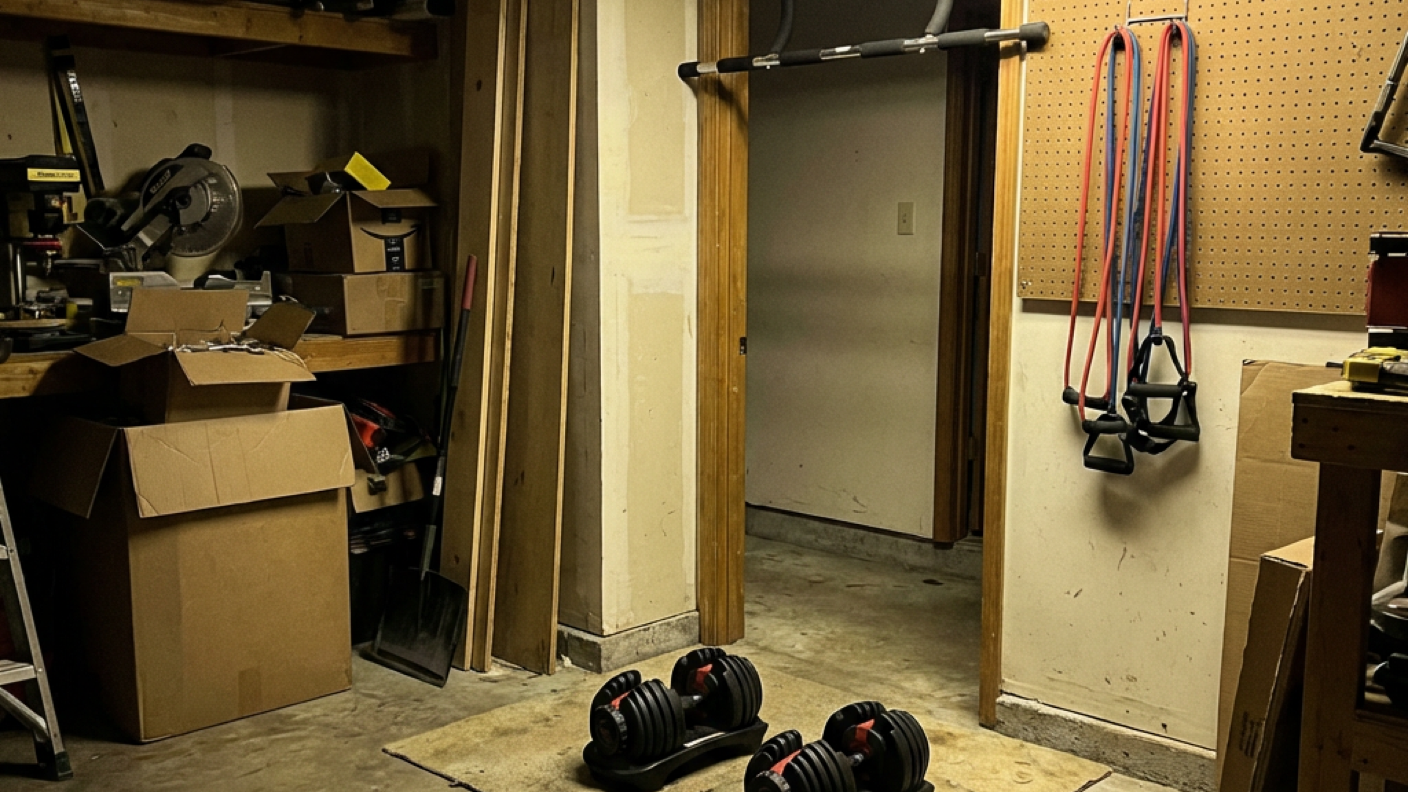
This is the "I have almost no money but I want to start training at home" package. It is limited, but you can build a real training program around it.
What to buy:
- •Adjustable dumbbells (pair) with plates up to 50-60 lbs each: $100-150. Look for used ones on Facebook Marketplace or Craigslist. The old-school spinlock dumbbells are cheap and functional.
- •Pull-up bar (doorframe mounted): $25-30
- •Resistance bands (set of 3-5): $20-30
What you can do with this:
Pretty much everything, honestly. Dumbbell bench press (on the floor if you do not have a bench), dumbbell rows, overhead presses, lunges, goblet squats, Romanian deadlifts, curls, tricep extensions, pull-ups, band-assisted work, band pull-aparts for shoulder health. That covers your entire body.
The limitation is load. Once you get strong enough that 50-60 pound dumbbells feel light for big movements like squats and deadlifts, you need to upgrade. But for a beginner, this setup will carry you for six months to a year.
The $500 serious beginner setup
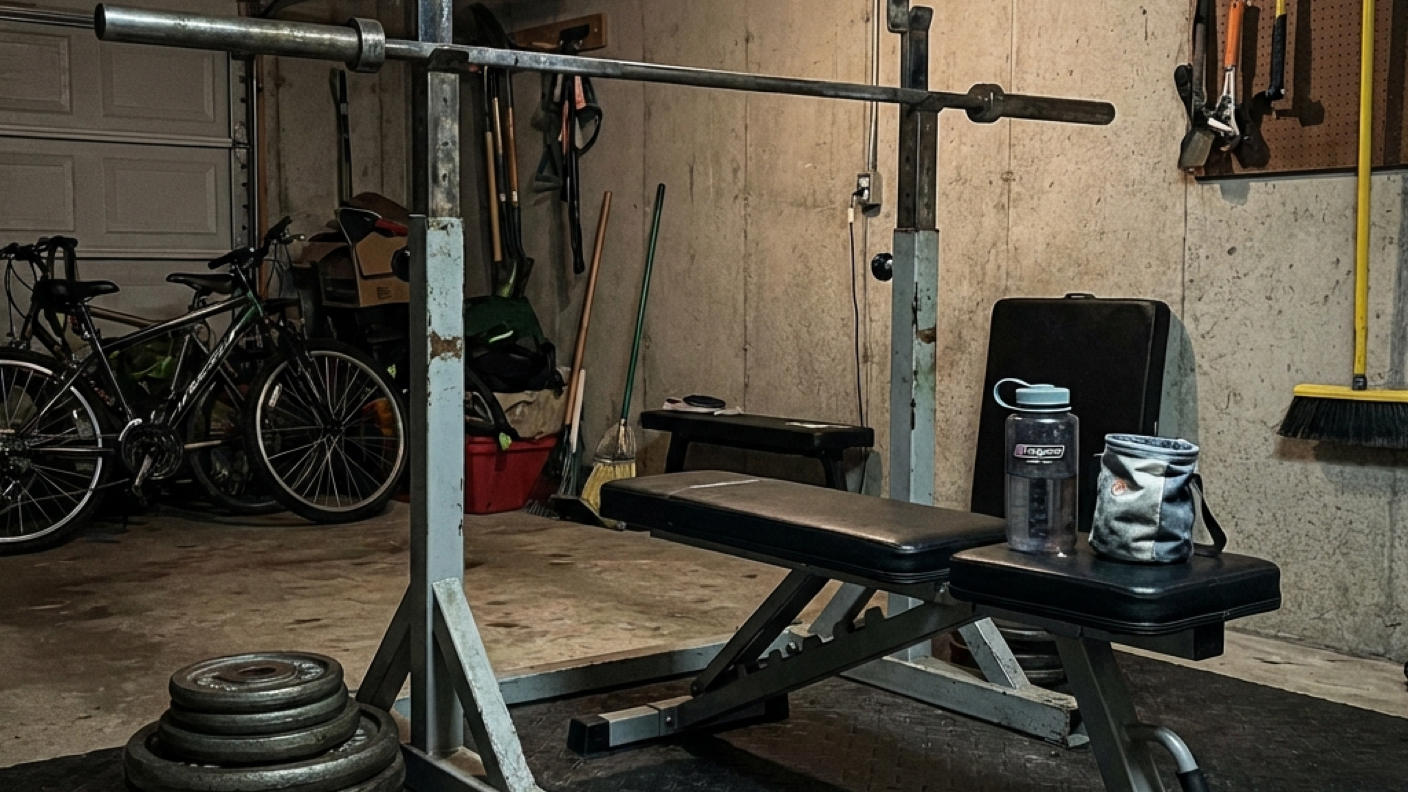
This is where you can build a genuinely effective program with real progressive overload. At this budget, you are getting a barbell into the equation.
What to buy:
- •Olympic barbell (45 lbs): $150-200. Do not buy the cheapest bar you can find. A bar with no knurling that bends under 200 pounds is worthless. Spend at least 150 on a bar. Cap Barbell's OB-86B is a solid budget option. Used bars from Rogue or Rep Fitness show up on marketplace regularly.
- •Weight plates (300 lb set): $150-200. Look for used iron plates. New plates cost about a dollar per pound. Used plates go for 50 to 75 cents per pound if you are patient.
- •Flat/adjustable bench: $80-150. An adjustable bench that inclines is more versatile. The Flybird adjustable bench is around 100 dollars and holds up surprisingly well for the price.
- •Squat stands (pair): $80-120. Not a full rack, but two independent stands that hold the bar at squat and bench height. They work. They are not as safe as a full rack (no safety bars), so you need to learn to bail on a squat if you fail.
What you can still not do:
Safely squat heavy without a spotter (no safeties), cable work, any machine exercises. The absence of safeties is the biggest issue. If you are squatting heavy alone, you need safety bars or a full rack. At this budget, keep your squat weights manageable or learn to dump the bar behind you.
The $1,500 proper home gym
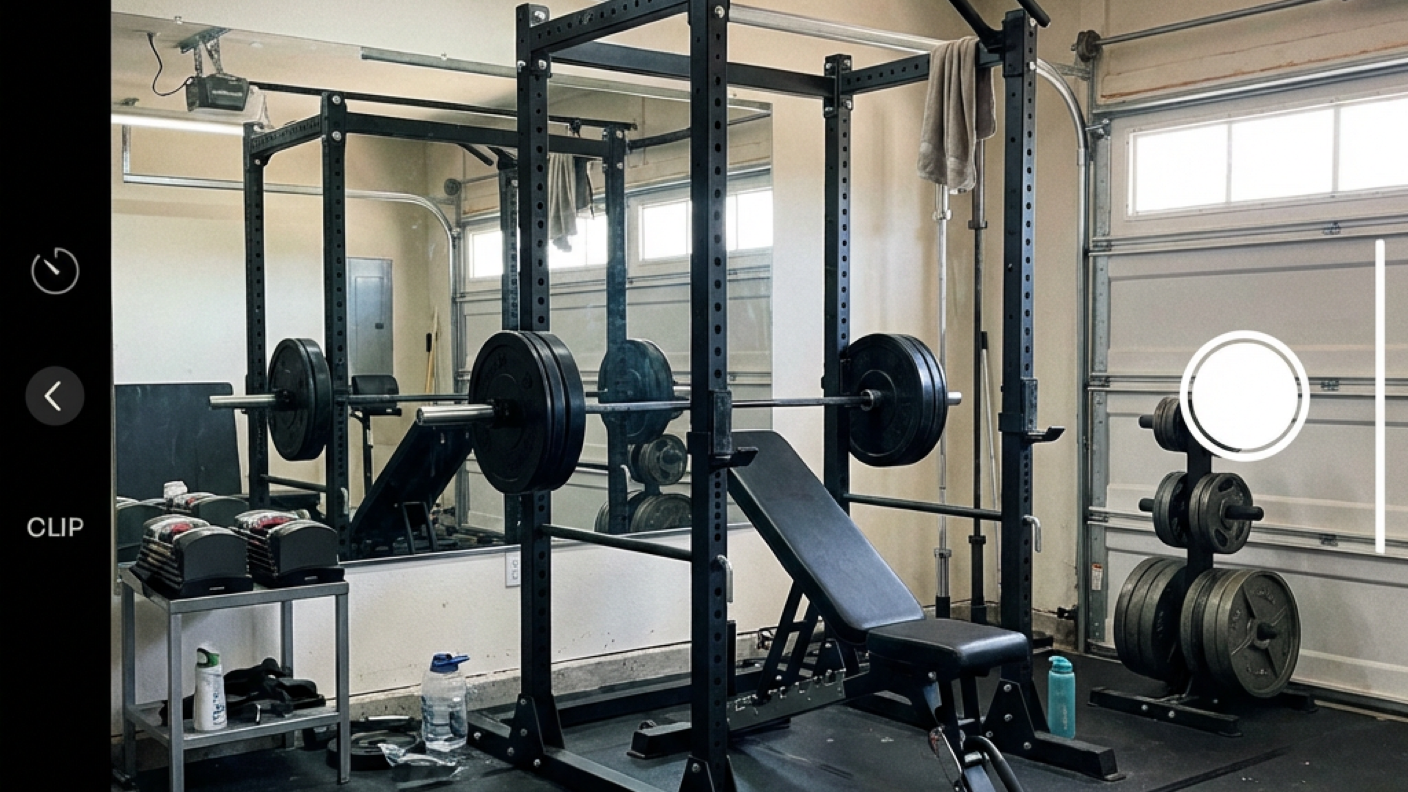
This is the setup I recommend for most people who are serious about training at home long-term. It covers 90% of what a commercial gym offers for the exercises that actually matter.
What to buy:
- •Power rack with pull-up bar and safety bars: $300-500. The Titan T-2 or Rep Fitness PR-1100 are great budget racks. They hold plenty of weight, have J-cups and safeties, and include a pull-up bar. This is the centerpiece of your gym.
- •Olympic barbell: $200-250. At this budget, you can step up to a nicer bar. The Rep Fitness Sabre bar or Titan's 20kg Olympic bar are solid.
- •Weight plates (400-500 lbs total): $300-400. You want enough to deadlift heavy. Bumper plates are nice (quieter, floor-friendly) but cost more. Iron plates are fine if you have rubber flooring.
- •Adjustable bench: $150-250. At this tier, get something with a solid frame and smooth adjustment. The Rep Fitness AB-3000 or similar.
- •Horse stall mats for flooring: $100-150
- •Adjustable dumbbells or a dumbbell set: $150-250. The Powerblock Sport EXP adjustable dumbbells go up to 70 lbs and are excellent. They cost more than spinlocks but change weight in seconds.
- •Miscellaneous (clips, chalk, band pegs): $50
Total: roughly $1,250-$1,850
What you can do: Squat, bench, deadlift, overhead press, rows, pull-ups, dips (if your rack has a dip attachment), all dumbbell work. This covers probably 95% of what you actually need.
The $3,000–$5,000 dream setup
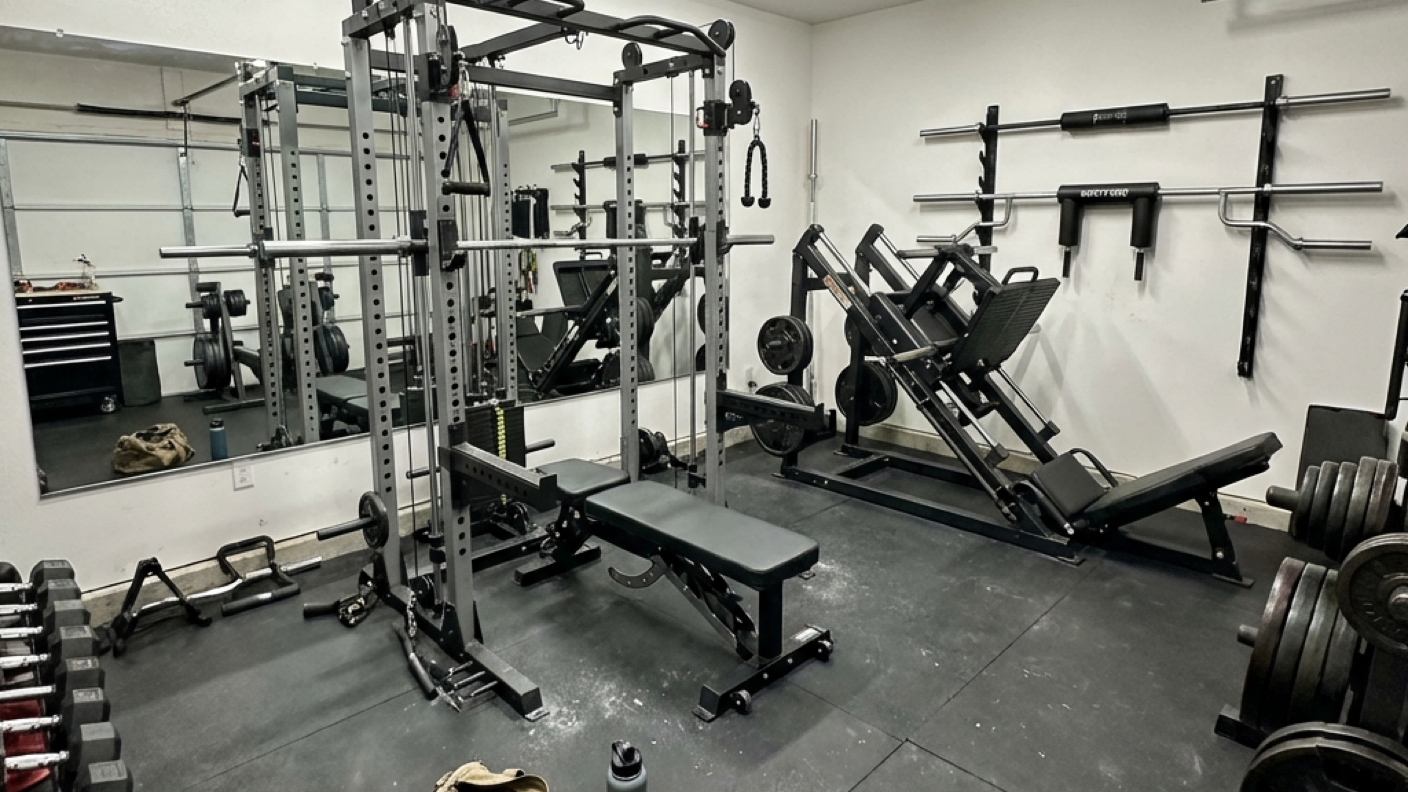
If you have the budget and space, this is where a home gym starts competing with a commercial gym. Everything from the 1500-dollar setup, plus:
- •Cable pulley system: $300-600. A lat pulldown/low row attachment for your rack or a standalone pulley system. This opens up cable curls, tricep pushdowns, face pulls, lat pulldowns, cable rows, and a ton of other exercises. The Titan wall-mounted pulley tower is excellent for the money.
- •Specialty bars: $200-400. A trap/hex bar for deadlifts (easier on your back), an EZ curl bar, and maybe a safety squat bar. Each one costs about 100-200 dollars. You do not need all of them, but one or two specialty bars add real variety.
- •Plate-loaded leg press or hack squat: $500-1000. This is the big one. A leg press is bulky, heavy, and expensive. But it lets you train legs hard without loading your spine. If you have the space, it is worth it.
- •Dip station or dip attachment: $50-150
- •GHD (glute-ham developer) or reverse hyper: $300-500. Great for posterior chain work if you have the space.
- •Better flooring (full room coverage): $200-300
- •Mirror: $50-200. A full-length mirror for form checks. Mount it on the wall facing your rack.
Total: roughly $3,000-$5,000
At this level, you have a gym that most commercial facilities would envy. The only things missing are machines with very specific resistance curves (like a pec deck or leg extension) and the social environment.
Where to buy equipment without getting ripped off
Facebook Marketplace and Craigslist are your best friends for used equipment. People buy home gym stuff, use it for three months, then sell it for 50-60% of retail when they get bored. Their loss, your gain. Be patient and check regularly.
Rogue Fitness makes the best equipment in the game. It is also the most expensive. If you are buying new and want stuff that will last 20 years, Rogue is hard to beat. Their boneyard section sells cosmetically flawed (but structurally perfect) items at a discount.
Rep Fitness is the best value brand right now. Their racks, benches, and bars are 80-90% of Rogue quality at 60-70% of the price. I recommend Rep to most people building their first home gym.
Titan Fitness is the budget play. Quality is inconsistent (some products are great, some are mediocre) but the prices are hard to argue with. Their T-2 rack is one of the best deals in home gym equipment.
Amazon is fine for small accessories (bands, clips, straps) but risky for big items. The off-brand barbells and racks on Amazon are often low quality with misleading weight ratings.
Avoid any brand you have never heard of that sells exclusively through Instagram ads. If a "revolutionary adjustable dumbbell system" is being marketed with slick ads and no reviews, it is probably junk.
Equipment that is not worth the money
After years of accumulating stuff, here is what I would skip:
Smith machines for a home gym. They take up a huge amount of space, cost as much as a full rack setup, and limit your training to a fixed bar path. A barbell in a rack is more versatile in every way.
Ab machines. Ab rollers are five dollars and more effective than any 300-dollar ab machine. Save your money.
Shake weights and gimmick equipment. If it was on a late-night infomercial, it does not work. You know this already.
Cheap Olympic bars (under $100 new). They bend, the sleeves do not spin, the knurling wears off. A bar is the most important piece of equipment you own. Spend at least 150 on it.
Cardio equipment you will not use. Before buying a treadmill, stationary bike, or rower, be honest with yourself about whether you will actually use it. A used treadmill is one of the most common items on Facebook Marketplace because everybody buys one and nobody uses it. If you want cardio, go for a walk. It is free.
The one thing nobody tells you about home gyms
The biggest challenge of a home gym is not the equipment or the space. It is the isolation.
When you train at a commercial gym, other people create ambient accountability. You show up partly because other regulars expect to see you. You push harder because someone might be watching. You finish your workout because leaving after 20 minutes would feel embarrassing.
At home, nobody knows if you trained or not. Nobody cares if you cut your last two sets. Nobody notices if you skipped leg day for the third week in a row.
Some people thrive in that isolation. They put on their headphones, lock in, and do their work. Others slowly drift into shorter, easier sessions until they stop training altogether.
Know which type you are before investing thousands of dollars. If you need the gym environment to stay consistent, a home gym might not be for you, and that is a perfectly valid answer. The best gym is the one you actually use consistently, whether that is a 50,000 square foot facility or a barbell in your garage.
Frequently Asked Questions
- What's the minimum equipment I need for a home gym?
- An adjustable dumbbell set and a flat bench will cover about 80% of exercises. If you can add a pull-up bar for $30, even better. You don't need a full rack to get strong.
- How much does a good home gym cost?
- A solid starter setup runs $300-500 for adjustable dumbbells and a bench. A mid-tier setup with a barbell, rack, and plates is $1,000-2,000. A dream home gym with specialty bars and a cable machine is $3,000-5,000+.
- Is a home gym worth it compared to a gym membership?
- If you'll use it, a home gym pays for itself within 1-2 years versus a commercial gym membership. The real benefit is zero commute time and never waiting for equipment. The downside is you need the discipline to train without the gym atmosphere.
- Should I buy new or used home gym equipment?
- Buy used whenever possible, especially for barbells, plates, and racks — iron doesn't go bad. Check Facebook Marketplace and Craigslist regularly. You can build a $2,000 home gym for $800 with patience.