How Much Of A Calorie Surplus To Gain Muscle?
Discover the ideal calorie surplus for maximum muscle growth with minimum fat gain in 2024. Learn how to set up your bulk for optimal results.
 Jeff·Aug 29, 2024·4 min read
Key Takeaways
- Aim for a 10-20% calorie surplus above your maintenance calories to build muscle without getting fat.
- Your maintenance calories are roughly your body weight in pounds multiplied by 14-16.
- Eat 1.6-2.2 grams of protein per kilogram of body weight every day to support muscle growth.
- Target gaining 0.25-0.5% of your body weight per week, which is about 0.5-1 pound weekly for most people.
- Track your progress with weekly weigh-ins and progress photos, then adjust your calories if you're gaining too fast or too slow.
Get This on WhatsApp
Get a quick summary and link sent straight to your WhatsApp.
Send Me This ArticleLoading the Elevenlabs Text to Speech AudioNative Player...
Building muscle is a goal for many fitness enthusiasts and athletes. One crucial aspect of muscle growth is maintaining a calorie surplus, but determining the right amount can be challenging. This article will guide you through the process of calculating and implementing an effective calorie surplus for optimal muscle gain. Don't forget to try our calorie needs calculator.
A calorie surplus is essential for muscle growth, but finding the right balance is key to avoiding excessive fat gain.
Understanding Calorie Surplus
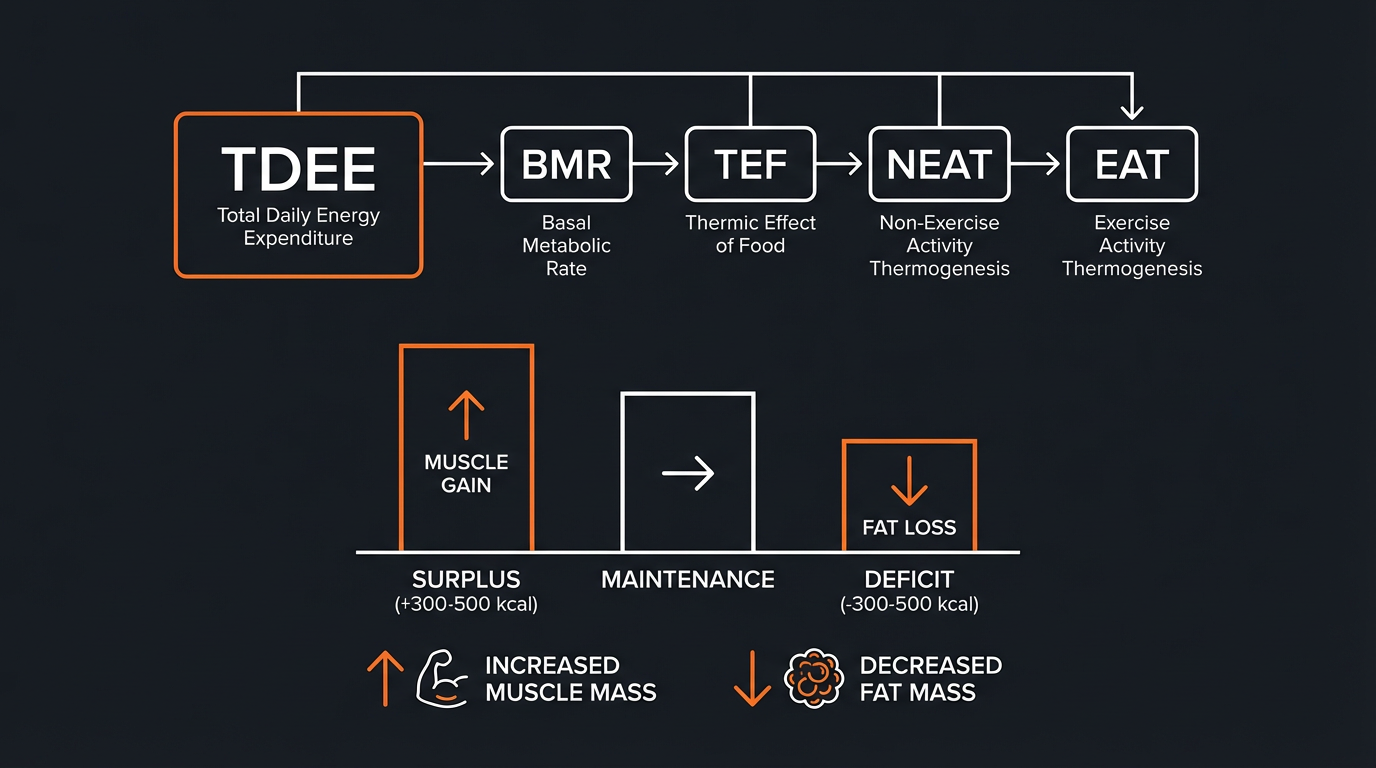
A calorie surplus occurs when you consume more calories than your body burns in a day. This excess energy provides the necessary resources for muscle growth and repair. However, it's important to strike a balance between providing enough calories for muscle growth and avoiding excessive fat gain.
Factors Affecting Calorie Needs
Several factors influence your calorie needs for muscle gain:
- •Body composition
- •Activity level
- •Genetics
- •Age
- •Gender
Your individual calorie needs depend on various factors, including your body composition, activity level, and genetics.
Calculating Your Calorie Surplus
To determine the appropriate calorie surplus for muscle gain, follow these steps:
- •Calculate your maintenance calories: This is the number of calories you need to maintain your current weight. Use a Total Daily Energy Expenditure (TDEE) calculator or multiply your body weight in pounds by 14-16 for an estimate[1].
- •Determine your surplus: A moderate surplus of 10-20% above your maintenance calories is generally recommended for muscle gain[1].
- •Monitor and adjust: Track your progress and adjust your calorie intake as needed.
Example Calculation
Let's say your maintenance calories are 2,500 per day:
- •10% surplus: 2,500 + (2,500 x 0.10) = 2,750 calories
- •20% surplus: 2,500 + (2,500 x 0.20) = 3,000 calories
Aim for a calorie intake between 2,750 and 3,000 calories per day for muscle gain.
A moderate calorie surplus of 10-20% above maintenance is typically sufficient for muscle growth without excessive fat gain.
Optimizing Your Calorie Surplus
To make the most of your calorie surplus and promote muscle growth:
- •Focus on protein intake: Consume 1.6-2.2 grams of protein per kilogram of body weight daily.
- •Include complex carbohydrates: These provide energy for workouts and support muscle recovery.
- •Don't neglect healthy fats: They play a crucial role in hormone production and overall health.
- •Time your meals: Consider eating more calories around your workouts to support muscle growth and recovery.
- •Stay consistent: Maintain your calorie surplus consistently to see results.
Proper nutrient timing and consistency in your calorie surplus are crucial for maximizing muscle growth.
Potential Pitfalls and How to Avoid Them
- •Excessive fat gain: If you're gaining more than 0.5-1 pound per week, reduce your calorie surplus slightly.
- •Inadequate protein intake: Ensure you're meeting your protein goals to support muscle growth.
- •Neglecting micronutrients: Include a variety of fruits and vegetables in your diet to support overall health.
- •Inconsistency: Stick to your calorie surplus consistently for best results.
- •Overestimating activity level: Be honest about your activity level when calculating your maintenance calories.
Tracking Progress and Making Adjustments
To ensure you're on the right track:
- •Weigh yourself regularly: Aim for a weight gain of 0.25-0.5% of your body weight per week.
- •Take progress photos: Visual changes can be more telling than the scale alone.
- •Measure body composition: Use methods like skinfold calipers or DEXA scans to track muscle and fat gain.
- •Monitor strength gains: Increasing strength is a good indicator of muscle growth.
- •Adjust as needed: If you're not seeing the desired results, gradually increase or decrease your calorie surplus.
Regular progress tracking and adjustments are essential for optimizing your muscle-building journey.
Q&A: Common Questions About Calorie Surplus for Muscle Gain
Q: Can I build muscle without a calorie surplus?**A: While it's possible for beginners or those returning to training to build some muscle without a surplus (body recomposition), most individuals will need a calorie surplus for significant muscle growth[1].
Q: How long should I maintain a calorie surplus?****A: Maintain your surplus until you've reached your desired muscle gain or need to reduce body fat. This can range from a few months to a year or more, depending on your goals.
Q: Should I adjust my calorie surplus on rest days?****A: While some people reduce calories slightly on rest days, it's generally simpler and equally effective to maintain the same calorie intake daily.
Q: Can I do cardio while in a calorie surplus?****A: Yes, moderate cardio can be beneficial for overall health and can help manage fat gain. Just be sure to account for the extra calories burned in your surplus calculations.
Q: How do I know if I'm gaining too much fat?**
A: If you're gaining more than 0.5-1 pound per week or noticing significant increases in body fat percentage, consider reducing your calorie surplus slightly.
By following these guidelines and consistently applying the principles of proper nutrition and training, you'll be well on your way to achieving your muscle-building goals. Remember, patience and consistency are key in the journey to building a stronger, more muscular physique.
Read Next
11 min read
Science-Backed Hypertrophy: Junk Volume Explained
Frequently Asked Questions
- How many extra calories do you need to build muscle?
- A surplus of 250-500 calories above maintenance is the sweet spot for most people. Beginners can get away with the higher end, while experienced lifters should stay closer to 250 to minimize fat gain.
- What happens if your calorie surplus is too high?
- You'll gain muscle, but you'll also gain significantly more fat than necessary. That means a longer, harder cut later. A 1,000 calorie surplus doesn't build muscle twice as fast as a 500 calorie surplus, it just makes you fatter.
- Can you gain muscle without eating in a surplus?
- Beginners and people returning after a break can build muscle at maintenance or even in a slight deficit. But for anyone with more than a year of serious training, a surplus makes a noticeable difference in how fast you grow.
- How do I calculate my maintenance calories?
- Multiply your bodyweight in pounds by 14-16 (14 if you're sedentary, 16 if you're active). Track your weight for 2 weeks at that intake. If your weight stays stable, that's your maintenance. Then add 250-500 calories on top.