How to Build Muscle: The Science-Based Approach
Everything you need to know about muscle growth, backed by research.
 Jeff·Aug 15, 2024·2 min read
Key Takeaways
- You need to lift heavy with controlled reps because mechanical tension is the main driver of muscle growth.
- Train each muscle group 10-20 sets per week, hitting them 2-3 times weekly to keep protein synthesis cranking.
- Stop your sets 1-3 reps before failure instead of grinding every single rep to complete death.
- Eat 200-500 calories above maintenance with 1.6-2.2g protein per kg bodyweight spread across your meals.
- You can realistically gain 8-12 kg of muscle your first year, then it drops to 4-6 kg in year two as you get more advanced.
Get This on WhatsApp
Get a quick summary and link sent straight to your WhatsApp.
Send Me This ArticleThe Three Drivers of Muscle Growth
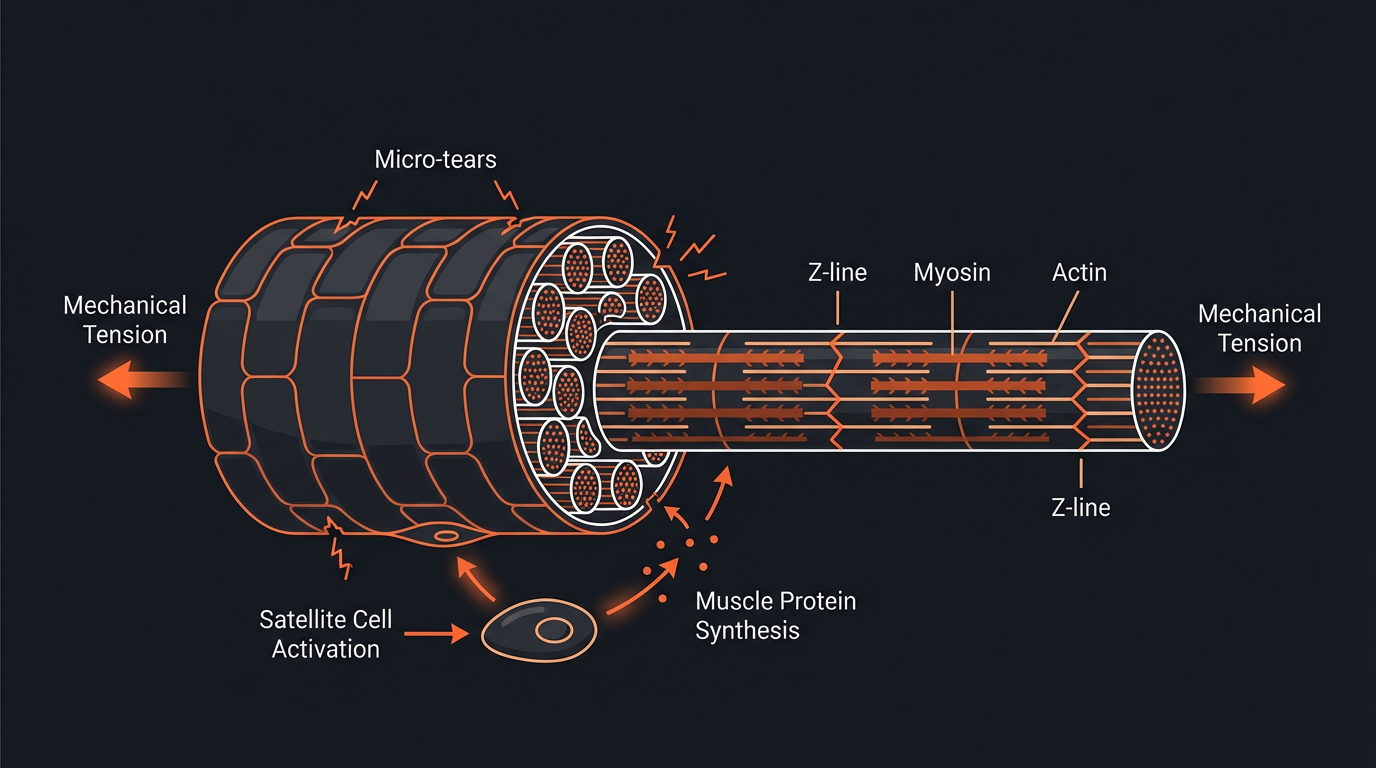
Muscle growth (hypertrophy) is driven by three mechanisms:
Mechanical tension is the most important. It's the force your muscles produce against resistance. Heavier weights and controlled reps maximize this.
Metabolic stress is the "pump" and burning sensation. It contributes to growth through cell swelling and hormonal responses, but it's secondary to tension.
Muscle damage plays a small role. Some damage signals repair and growth, but too much just extends recovery without extra benefit.
Training for Growth
Based on current research, here are the key training variables:
Volume
10-20 sets per muscle group per week is the productive range for most people. Beginners can grow on the lower end. Advanced lifters might need the higher end.
Intensity
Train to within 1-3 reps of failure on most sets. Going to absolute failure on every set isn't necessary and increases injury risk.
Frequency
Hit each muscle group 2-3 times per week. This spreads volume across sessions and keeps muscle protein synthesis elevated more consistently.
Exercise Selection
Prioritize compound movements (squat, bench, deadlift, rows, overhead press) and supplement with isolation work for lagging areas.
Progressive Overload
You must increase the demand on your muscles over time. Add weight, add reps, add sets, or improve execution. Without progression, you won't grow.
Nutrition for Growth
Calories
You need a caloric surplus to grow optimally. 200-500 calories above maintenance is enough. A bigger surplus just adds more fat.
Protein
1.6-2.2g per kg of bodyweight per day. Spread it across 3-5 meals. The source doesn't matter much -- hit your number.
Timing
Eat protein within a few hours of training. The "anabolic window" isn't as narrow as supplement companies claim, but proximity to training does help slightly.
Recovery
Muscle doesn't grow in the gym. It grows while you recover.
- •Sleep 7-9 hours per night. Growth hormone peaks during deep sleep.
- •Manage stress. Chronically elevated cortisol impairs recovery and muscle growth.
- •Take rest days seriously. If you're not recovering between sessions, you're not growing.
Realistic Expectations
A natural lifter can expect to gain roughly:
- •Year 1: 8-12 kg of muscle
- •Year 2: 4-6 kg
- •Year 3: 2-3 kg
- •Year 4+: 1-2 kg
Progress slows with experience. That's normal. Stay consistent and think in years, not weeks.
Frequently Asked Questions
- What are the three things you need to build muscle?
- Progressive overload (lifting more over time), adequate protein (0.7-1g per pound of bodyweight), and sufficient sleep (7-9 hours). Miss any one of these and your results will suffer significantly.
- How many times a week should I train each muscle group?
- Twice a week per muscle group is the sweet spot for most people. Research consistently shows that splitting your weekly volume across two sessions produces better growth than hitting everything once a week.
- Do you need supplements to build muscle?
- No. Creatine monohydrate is the only supplement with strong evidence for muscle building, and even that just gives you a small edge. Get your protein from food first, then use a protein powder only if you can't hit your daily target.
- Can you build muscle without getting fat?
- Yes, especially if you're a beginner or returning after a break. Eat at a slight surplus of 200-300 calories above maintenance and keep protein high. You'll gain muscle with minimal fat. Only advanced lifters need aggressive bulks.