How to Eat Enough Protein on a Budget
You do not need expensive supplements or grass-fed everything to hit your protein goals. These cheap, high-protein foods and strategies will get you to 150+ grams a day without destroying your wallet.
 Jess·Feb 2, 2026·9 min read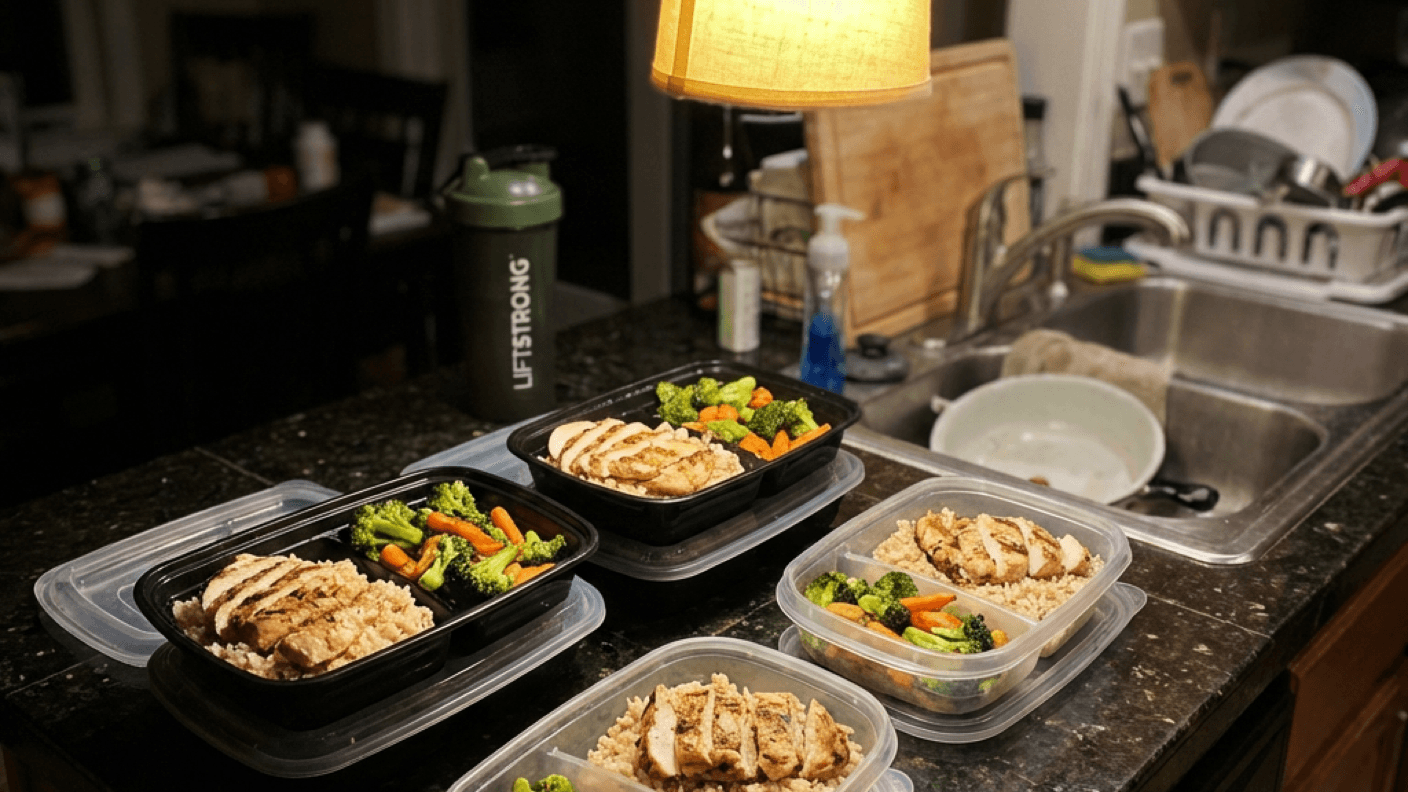
Key Takeaways
- Eggs, canned tuna, cottage cheese, and chicken thighs are the cheapest high-protein foods per gram of protein -- build your meals around these staples.
- Buying protein in bulk, choosing store brands, and shopping sales can cut your monthly protein cost by 30-40% without changing what you eat.
- Greek yogurt and milk are underrated protein sources that also give you calcium and probiotics -- a cup of Greek yogurt has 15-20 grams of protein for under a dollar.
- Dried lentils, black beans, and chickpeas cost pennies per serving and stack protein on top of your animal sources to hit your daily target.
- Aim for 0.7-1 gram of protein per pound of bodyweight; anything above that has diminishing returns and just wastes money.
Get This on WhatsApp
Get a quick summary and link sent straight to your WhatsApp.
Send Me This ArticleProtein Does Not Have to Be Expensive
The most common excuse for not eating enough protein is cost. And honestly, it is a fair concern on the surface. Chicken breast, protein powder, Greek yogurt, lean beef -- this stuff adds up. Walk through the supplement aisle and you will see tubs of protein powder priced like they contain gold dust.
But here is the thing: hitting your protein target on a budget is entirely doable if you know which foods give you the most protein per dollar and you are willing to do some basic meal prep. You do not need grass-fed organic everything. You do not need the fanciest protein powder. You need cheap, reliable protein sources and a plan.
How Much Protein Do You Actually Need
Before we talk about food, let us establish the target. The research on protein intake for muscle building and strength is clear:
- •Minimum effective dose: 0.7 grams per pound of bodyweight per day
- •Optimal range: 0.8-1.0 grams per pound of bodyweight per day
- •Beyond 1g/lb: Diminishing returns. Not harmful, but you are spending money for minimal extra benefit.
For a 180 lb lifter, that means 126-180 grams of protein per day. Let us use 150 grams as a practical target for the rest of this article.
If you are currently eating 60-80 grams of protein a day (which is where most people land without trying), you need to roughly double your intake. That sounds expensive until you see the cost breakdown.
The Cheapest Protein Sources Ranked
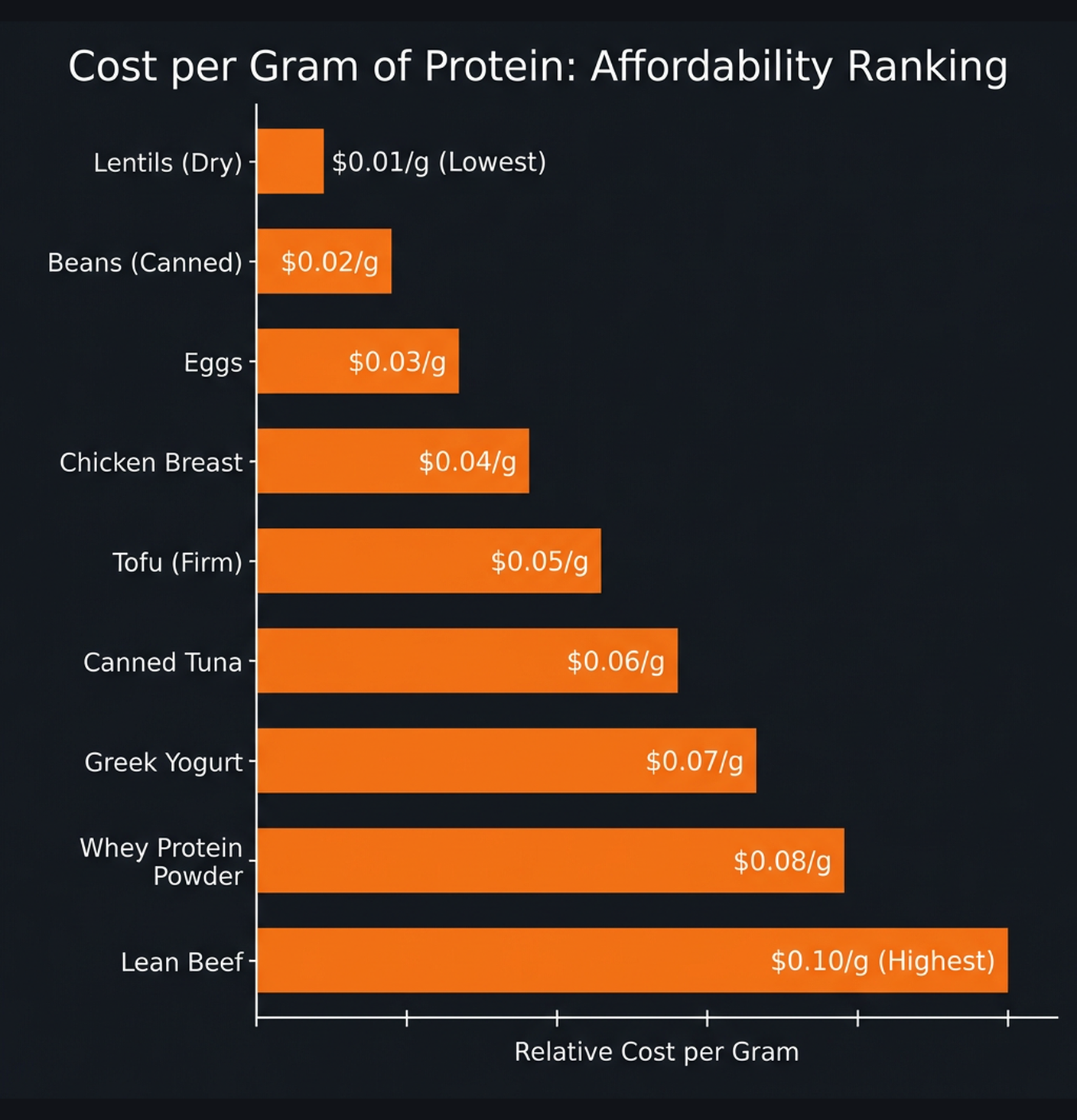
Here is how common protein sources stack up by cost per gram of protein, based on average US grocery prices:
| Food | Serving | Protein | Approx. Cost | Cost per 30g Protein |
|---|---|---|---|---|
| Eggs (whole, large) | 4 eggs | 24g | $0.80 | $1.00 |
| Chicken thighs (bone-in, skin-on) | 6 oz cooked | 38g | $1.20 | $0.95 |
| Ground turkey (93/7) | 6 oz cooked | 32g | $1.60 | $1.50 |
| Canned tuna (chunk light) | 1 can (5 oz) | 25g | $1.00 | $1.20 |
| Greek yogurt (plain, store brand) | 1 cup (8 oz) | 20g | $1.00 | $1.50 |
| Cottage cheese (low-fat) | 1 cup | 28g | $1.25 | $1.35 |
| Dry lentils | 1 cup cooked | 18g | $0.35 | $0.58 |
| Whey protein powder | 1 scoop | 25g | $0.80 | $0.96 |
| Whole milk | 2 cups | 16g | $0.60 | $1.13 |
| Chicken breast (boneless) | 6 oz cooked | 42g | $2.00 | $1.43 |
| Peanut butter | 2 tbsp | 8g | $0.25 | $0.94 |
| Ground beef (80/20) | 6 oz cooked | 34g | $2.25 | $1.99 |
| Canned black beans | 1 cup | 15g | $0.90 | $1.80 |
A few things jump out from this table. Eggs are absurdly cost-effective. Chicken thighs beat chicken breast on price while delivering nearly as much protein. Lentils are the cheapest protein source period, though you need more volume to hit your targets. And whey protein, despite looking expensive on the shelf, is actually one of the cheapest per-gram options.
Building a $10-12 Day of 150g Protein
Here is what a full day looks like when you prioritize cheap protein sources:
Breakfast ($2.00)
- •4 scrambled eggs: 24g protein
- •2 slices whole wheat toast: 6g protein
- •Total: 30g protein
Lunch ($3.00)
- •6 oz chicken thighs over rice: 38g protein
- •Side of black beans (1/2 cup): 7g protein
- •Total: 45g protein
Snack ($1.50)
- •1 cup Greek yogurt with a handful of granola: 22g protein
- •Total: 22g protein
Dinner ($3.50)
- •6 oz ground turkey taco bowl with rice and salsa: 32g protein
- •Total: 32g protein
Post-workout or evening snack ($1.50)
- •1 scoop whey protein in water or milk: 25g protein
- •Total: 25g protein
Daily total: 154g protein for roughly $11.50
That is hitting a serious protein target for less than most people spend on lunch at a fast-casual restaurant. It is not fancy food. It is not Instagram food. But it works.
Meal Prep Is Your Best Friend
Buying cheap protein is step one. Cooking it efficiently is step two. If you do not meal prep, you will end up ordering takeout (expensive and usually low-protein) or grabbing convenience food that is overpriced and under-proteined.
Here is a simple Sunday meal prep protocol:
Buy in bulk:
- •5 lbs chicken thighs (bone-in, skin-on -- cheapest option)
- •2 dozen eggs
- •2 lbs ground turkey
- •2 lbs dry rice
- •1 large container Greek yogurt (32 oz)
- •1 bag dry lentils or canned beans
- •Frozen vegetables (whatever is on sale)
Cook on Sunday (about 90 minutes):
- •Season and bake all 5 lbs of chicken thighs at 400F for 35-40 minutes. Let cool, pull meat off bones, store in containers.
- •Brown 2 lbs of ground turkey with taco seasoning or your preferred seasoning.
- •Cook a large pot of rice (3-4 cups dry).
- •Boil eggs (make 12 hard-boiled for the week).
- •Optional: cook a pot of lentils.
You now have 5-6 days of protein-rich meals that take about 5 minutes to assemble. Scoop some chicken, add rice, throw on some frozen veggies and microwave for 3 minutes. Done.
When Whey IS the Budget Option
Protein powder gets a bad rap as an unnecessary expense. And if you can hit your protein target entirely through food, you do not need it. But for many people, especially those with busy schedules or small appetites, whey protein is actually one of the most cost-effective ways to add 25-50g of protein to your daily intake.
A 5 lb tub of quality whey from a brand like Optimum Nutrition, MyProtein, or Dymatize costs $50-70 and contains roughly 70 servings. That is $0.70-1.00 per 25g of protein. Try getting 25g of protein from any restaurant or convenience store for a dollar. You cannot.
Buy whey protein when:
- •You are consistently falling 25-50g short of your daily target
- •You need a fast, convenient protein source after training or between meals
- •Whole food options are not available (traveling, at work, etc.)
Skip expensive proteins: mass gainers (just protein powder with sugar), collagen protein (incomplete amino acid profile), and any protein powder over $2.00 per serving. Basic whey concentrate or isolate is all you need.
Bulk Buying Strategy
The single biggest money-saving move for protein on a budget is buying in bulk at warehouse stores or during sales. Here is what to look for:
Warehouse stores (Costco, Sam's Club):
- •Rotisserie chickens ($5 for 3+ lbs of cooked meat -- roughly 150g of protein for $5)
- •Large cartons of eggs (5 dozen for $8-10)
- •Bulk Greek yogurt
- •Large bags of frozen chicken breast or thighs
- •Bulk cottage cheese
Grocery store sales:
- •Buy chicken thighs when they go under $1.50/lb and freeze them
- •Stock up on canned tuna when it is buy-one-get-one (it has a multi-year shelf life)
- •Store-brand Greek yogurt is almost always cheaper than name brands with identical protein content
- •Dry beans and lentils have infinite shelf life and are dirt cheap
Buying in bulk requires a freezer. If you have freezer space, buy protein whenever it is on sale and freeze it. Chicken thighs and ground turkey freeze for 3-6 months with no quality loss. Thaw the night before in the fridge and cook the next day.
Common Budget Protein Mistakes
Buying pre-marinated or pre-seasoned chicken. You are paying a premium for 10 cents worth of seasoning. Buy plain chicken and season it yourself.
Choosing chicken breast over thighs. Boneless, skinless chicken breast is the fitness industry default, but it costs 30-50% more than bone-in, skin-on thighs. Thighs have slightly more fat and slightly less protein per ounce, but the difference is minimal and the cost savings are significant. If you are counting macros tightly, just remove the skin after cooking.
Ignoring plant-based protein sources. You do not have to be vegetarian to benefit from lentils, beans, and chickpeas. These are some of the cheapest protein sources available, and while they are not "complete" proteins on their own, combining them with rice or other grains throughout the day provides all the amino acids you need.
Buying single-serving protein snacks. Protein bars at $3-4 each are a terrible deal. A scoop of whey in a shaker bottle gives you the same protein for a quarter of the price. If you need a portable protein source, hard-boiled eggs, a bag of beef jerky (buy in bulk), or a shaker cup with pre-measured powder are all cheaper.
Sample Budget-Friendly High-Protein Meal Plan
Here is a full week template to rotate through:
| Meal | Option A | Option B | Option C |
|---|---|---|---|
| Breakfast | 4 eggs scrambled + toast (30g) | Greek yogurt + granola + scoop of protein (45g) | 3-egg omelet with cheese (28g) |
| Lunch | Chicken thigh + rice + beans (45g) | Tuna salad on bread + cottage cheese (40g) | Ground turkey taco bowl (35g) |
| Snack | Protein shake (25g) | Hard-boiled eggs x 3 (18g) | Greek yogurt + peanut butter (28g) |
| Dinner | Ground turkey stir-fry + rice (35g) | Lentil soup + bread + cheese (30g) | Chicken thigh + potatoes + veggies (38g) |
| Evening | Cottage cheese (28g) | Glass of milk + PB toast (16g) | Protein shake (25g) |
Mix and match to keep things interesting. The specific combinations matter less than consistently hitting 130-160g per day across 4-5 eating occasions.
The Bottom Line
Eating 150+ grams of protein per day does not require a big food budget. It requires knowing which foods give you the most protein per dollar (eggs, chicken thighs, Greek yogurt, canned tuna, lentils, whey protein) and spending 90 minutes on a Sunday cooking for the week ahead.
Stop buying pre-made protein snacks at convenience stores. Stop thinking you need grass-fed ribeye to build muscle. Stop skipping protein because you think it is too expensive. A chicken thigh and some rice costs less than a bag of chips and does infinitely more for your body.
Hit your protein. Keep your wallet intact. It is not complicated.
Frequently Asked Questions
- What are the cheapest high-protein foods?
- Eggs, canned tuna, chicken thighs, cottage cheese, dried lentils, and whey protein are consistently the cheapest protein sources per gram. Buying in bulk and watching for sales can bring chicken thighs under two dollars per pound. Greek yogurt is also excellent when bought in large tubs instead of single servings.
- How much protein do I actually need per day?
- Aim for 0.7-1 gram per pound of body weight. For a 180-pound lifter, that is 130-180 grams daily. Going above 1 gram per pound has not been shown to provide additional muscle-building benefit in most studies, so there is no reason to overshoot and overspend.
- Is protein powder a cost-effective protein source?
- Yes, whey protein is actually one of the cheapest per-gram options available. A basic unflavored or simply flavored whey from a reputable brand usually runs around 3-5 cents per gram of protein. That beats most whole food sources except eggs and canned tuna.
- Can I get enough protein without chicken breast every day?
- Absolutely. Chicken breast is overhyped as the only option. Ground turkey, pork loin, canned fish, eggs, and dairy all deliver comparable protein. Mixing cheaper cuts and plant sources like beans and lentils with animal protein stretches your budget without sacrificing intake.
- How do I meal prep high-protein meals cheaply?
- Cook in bulk once or twice a week. A sheet pan of chicken thighs, a pot of rice, and a bag of frozen vegetables gives you meals for days at a few dollars each. Season differently throughout the week so you do not get bored. The key is making it easy enough that you actually do it consistently.