Isometric Exercises for Muscle Hypertrophy: Incorporating Static Holds
Isometric exercises for hypertrophy: how planks, wall sits and static holds build tension and muscle, plus how to add them to your training for real gains.
 Jeff·Aug 20, 2024·3 min read
Key Takeaways
- Isometric exercises create continuous muscle tension without joint movement, which triggers muscle growth just like traditional lifting.
- Static holds force your muscles to stay engaged for extended periods, leading to better muscle fiber recruitment and increased size.
- Start with 10-20 second holds and gradually increase the time as you get stronger to avoid burnout.
- Use static holds to complement your regular dynamic exercises, not replace them completely.
- Isometric exercises are perfect for breaking through plateaus when your regular lifts aren't progressing.
Get This on WhatsApp
Get a quick summary and link sent straight to your WhatsApp.
Send Me This ArticleWhen we think about muscle growth, we often imagine dynamic movements like lifting weights or doing push-ups. However, isometric exercises for muscle hypertrophy, particularly the incorporation of static holds, can be incredibly effective for gaining strength and muscle mass. In this article, we'll dive into how these exercises work, their benefits, and how to integrate them into your training routine.
What Are Isometric Exercises?
Isometric exercises involve muscle contractions without any visible movement in the angle of the joint. Unlike traditional weightlifting, where muscles lengthen and shorten, isometric exercises require you to hold a position statically for a set period of time. Think of holding a plank or pausing midway through a bicep curl. These exercises force your muscles to engage continuously, generating tension and leading to muscle hypertrophy.
- •Planks
- •Wall Sits
- •Static Lunges
The Science Behind Muscle Hypertrophy with Isometric Exercises
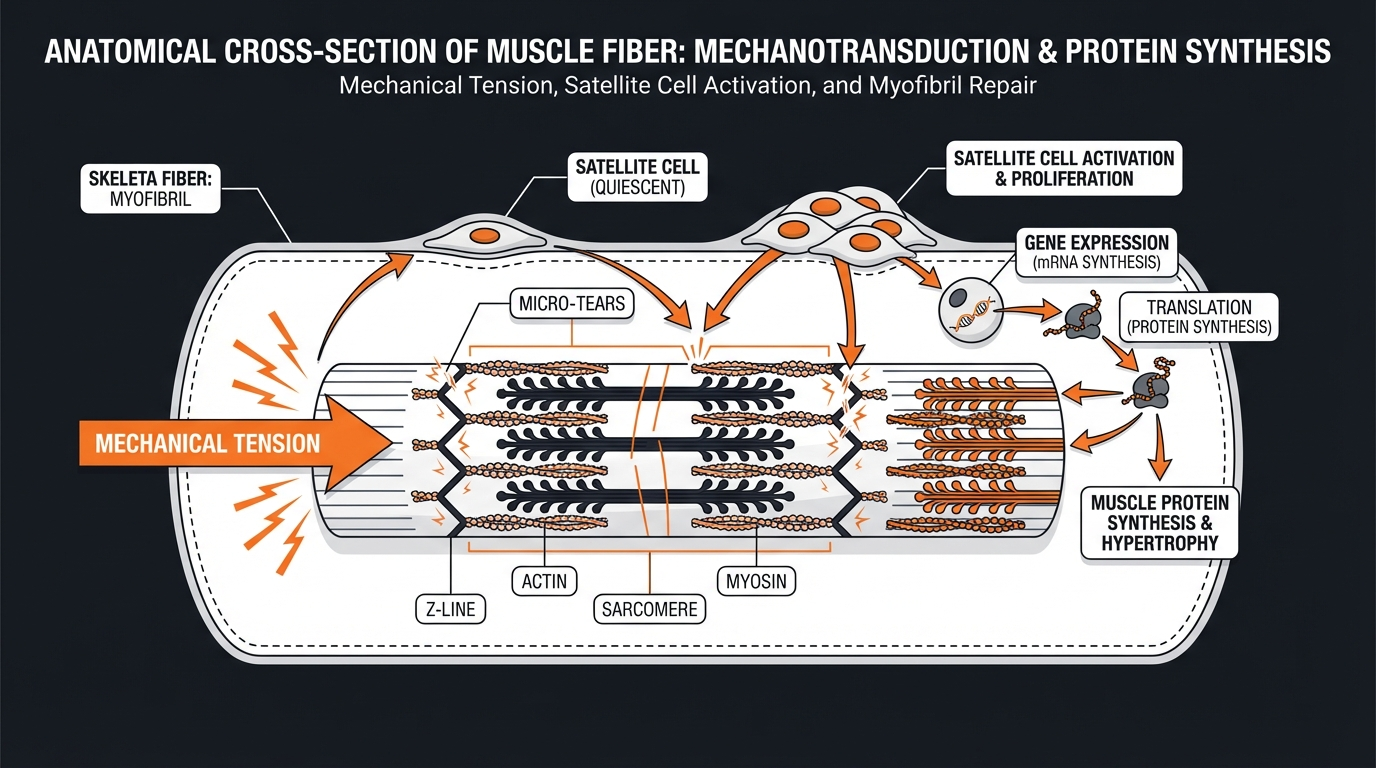
To understand why isometric exercises are effective for muscle hypertrophy, it helps to delve into the science. Research shows that muscle hypertrophy occurs when muscles undergo continuous tension. Static holds can produce this continuous tension by keeping the muscles engaged for extended periods, promoting muscle fiber recruitment and growth.1 Furthermore, isometric exercises improve joint stability and enhance neural drive, which translates to better performance in dynamic exercises.
According to a study published in the *Journal of Applied Physiology*, isometric training can lead to increases in both muscle size and strength, making it an invaluable tool for athletes and fitness enthusiasts alike.2
How to Incorporate Static Holds Into Your Routine
Integrating static holds into your routine doesn’t mean you have to overhaul your existing workout plan. Here’s how you can start:
- •Identify Target Exercises: Choose exercises that target the muscle groups you want to grow. Planks, wall sits, and isometric push-ups are great starters.
- •Start Small: Begin with shorter hold times, around 10-20 seconds, and gradually increase as you get stronger.
- •Complement with Dynamic Movements: Pair static holds with dynamic exercises to ensure a comprehensive workout.
- •Track Your Progress: Document the duration of your holds to monitor improvements over time.
Sample Workout Routine
Here's a sample workout routine incorporating both isometric and dynamic exercises:
- •Warm-up: 5-10 minutes of light cardio
- •Plank Static Hold: 3 sets of 30 seconds
- •Dynamic Push-Ups: 3 sets of 10-12 reps
- •Wall Sits: 3 sets of 30 seconds
- •Bodyweight Squats: 3 sets of 15 reps
- •Cooldown: Stretching and relaxation exercises
Addressing Common Concerns
Some people worry that isometric exercises alone might not be enough for comprehensive muscle growth. While it’s true that a balanced workout regime should include various types of exercises, isometric holds are a valuable component that can enhance traditional training routines. They are particularly beneficial for breaking through plateaus and increasing muscle endurance.
Another common question is whether static holds can replace dynamic movements entirely. The answer is no. Dynamic exercises are crucial for functional strength, cardiovascular health, and overall athletic performance. Static holds should be used as a complementary tool, rather than a replacement.
Conclusion: Elevate Your Training
Incorporating isometric exercises for muscle hypertrophy through static holds can significantly enhance your strength-training regimen. These exercises provide continuous muscle tension, leading to increased muscle size and strength. By integrating static holds with dynamic movements, you can achieve a well-rounded and effective workout routine.
Ready to elevate your training? Start incorporating static holds into your routine today and witness the transformation in your strength and muscle growth!
For more fitness tips and workout plans, stay tuned to our blog or reach out to our fitness experts for personalized guidance.
1 "Mechanisms of Muscle Hypertrophy," Journal of Applied Physiology 2 "Effects of Isometric Training on Muscle Strength and Growth," Journal of Strength and Conditioning Research
Frequently Asked Questions
- Do isometric exercises actually build muscle?
- Yes, but mainly at the specific joint angle you're holding. Research shows isometric training can produce meaningful hypertrophy, especially when holds are done at long muscle lengths (stretched positions) for 20-40 seconds per set. They're a solid addition to your program, not a replacement.
- How long should I hold an isometric exercise?
- For hypertrophy, aim for 20-40 seconds at 60-80% of your max effort. For strength, hold at max effort for 3-6 seconds. Anything over 60 seconds is more about endurance than building size or strength. Quality of the hold matters more than duration.
- What are the best isometric exercises for muscle growth?
- Wall sits, split squat holds at the bottom, isometric pull-up holds at various angles, plank variations, and dead hangs. Holds in the stretched position of a muscle tend to produce the best hypertrophy results, so focus on bottom-position holds.
- Can I build a workout around only isometric exercises?
- You can, but it's not ideal. Isometrics only strengthen the specific angle you train at, so you'd need holds at multiple positions per muscle. They work best as a supplement to regular lifting, added as finishers or used during deload weeks and injury rehab.