Leg Day for Beginners: Complete Lower Body Workout Guide
Your first real leg day does not have to be terrifying. Here is exactly what to do, how to do it, and how to survive the next two days.
 Jeff·Feb 10, 2026·12 min read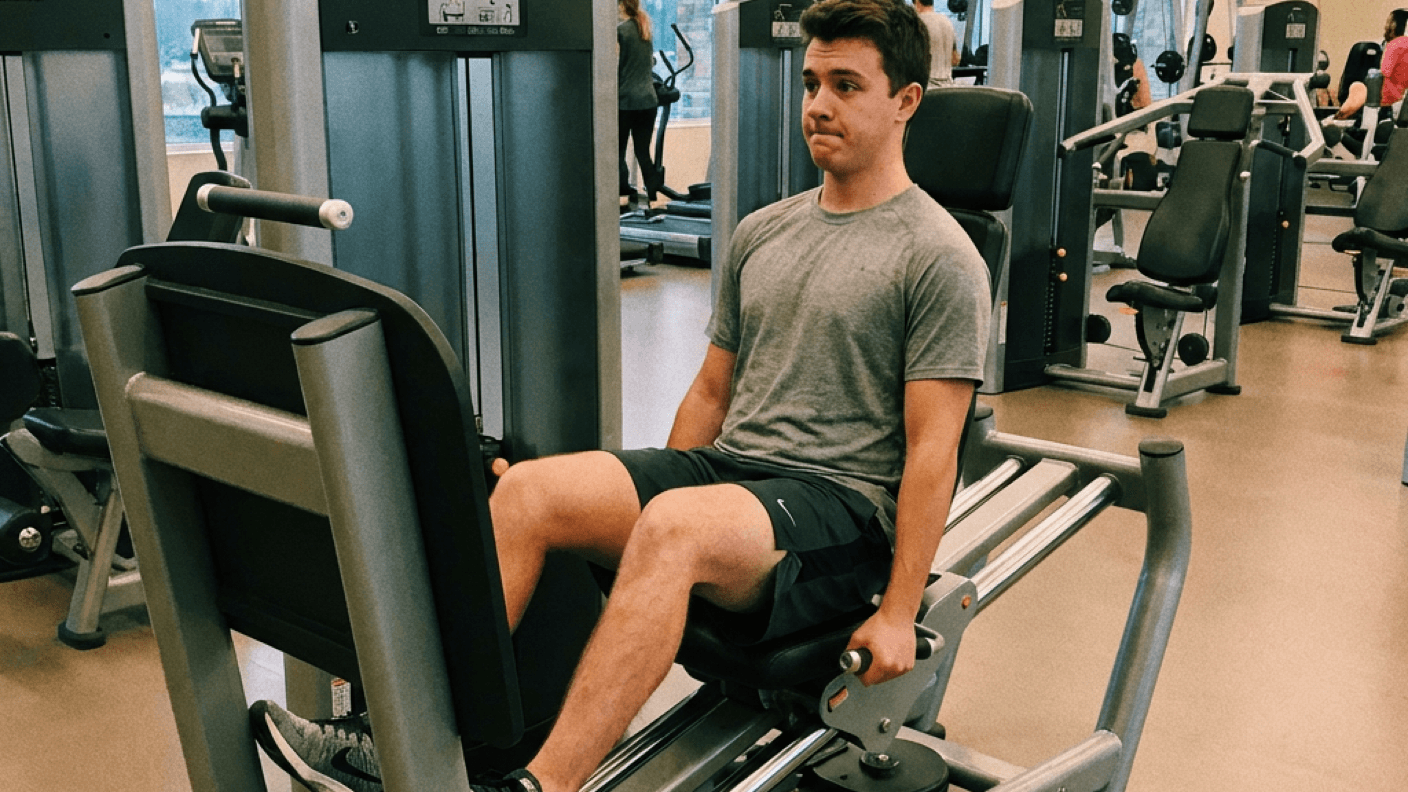
Key Takeaways
- Leg training produces a bigger hormonal response than upper body work, which helps your entire body grow.
- Start with light weights and expect to be sore for 2-3 days after your first real leg session.
- Focus on goblet squats and leg press as your main exercises until you can handle heavier loads with perfect form.
- Train legs once per week as a beginner and add weight only when you can hit the top of your rep range with good technique.
- Wear flat shoes instead of running shoes when squatting because the cushioned soles make you unstable under load.
Get This on WhatsApp
Get a quick summary and link sent straight to your WhatsApp.
Send Me This ArticleWhy most beginners skip legs (and why you should not)
I will be straight with you: the number one reason beginners skip leg day is because it sucks. Leg training is harder than upper body training. It just is. Your legs contain the largest muscles in your body (quads, glutes, hamstrings), and training them hard creates a level of systemic fatigue that curls and bench press simply cannot match. After a hard leg session, you are out of breath, you feel nauseous, and walking to your car feels like an expedition.
The number two reason is that nobody sees your legs. You wear pants. In the gym you wear shorts, maybe, but nobody is looking at your quads the way they notice your chest or arms. So the motivation to train legs is lower because the visible payoff feels smaller.
Here is why neither of those is a good reason to skip leg day:
Hormonal response. Heavy leg training produces a significantly larger acute hormonal response (testosterone, growth hormone, IGF-1) than upper body training. A study by Hansen et al. (2001) showed that leg resistance exercise produced greater post-exercise increases in testosterone and GH compared to arm-only training. While the direct effect of acute hormonal spikes on long-term muscle growth is debated, the systemic stress of leg training does promote overall body adaptation.
Total body strength. If you can squat 315, everything else feels easier. Your core is stronger, your stabilizers are stronger, your work capacity is higher. A strong lower body carries over to every other lift in the gym.
You look ridiculous with chicken legs. Sorry, but it is true. A guy with a big chest, big arms, and toothpick legs looks worse than a guy with a moderate upper body and proportionate legs. It is like building a house with a second-story addition but forgetting the foundation.
Before your first leg day
If you have genuinely never done a structured leg workout, here is what to expect:
You will be sore for 2-3 days. Possibly more. This is called delayed onset muscle soreness (DOMS) and it is worst after your first session. It gets much better after the first few weeks as your muscles adapt.
You will use less weight than you think. Your ego will tell you to load up the leg press with six plates. Do not listen. Start light, learn the movements, and build up over the first 4-6 weeks.
It will feel like cardio. Big compound leg exercises (squats, lunges, leg press) will elevate your heart rate much more than upper body exercises. This is normal. Take longer rest periods and do not feel bad about breathing hard between sets.
Wear the right shoes. Running shoes with squishy soles are terrible for squatting. The cushion compresses under heavy load and makes you unstable. Wear flat shoes (Converse, Vans) or dedicated squat shoes. Or just squat barefoot if your gym allows it.
The beginner leg workout
This workout is designed for someone with less than 6 months of training experience. It hits quads, hamstrings, glutes, and calves with basic movements that are easy to learn and safe to perform.
| Exercise | Sets | Reps | RPE | Rest |
|---|---|---|---|---|
| Goblet squat | 3 | 10-12 | 7-8 | 2 min |
| Leg press | 3 | 10-12 | 7-8 | 2 min |
| Romanian deadlift (dumbbell) | 3 | 10-12 | 7 | 2 min |
| Leg extension | 2 | 12-15 | 8 | 90 sec |
| Lying leg curl | 2 | 12-15 | 8 | 90 sec |
| Standing calf raise (machine or dumbbell) | 3 | 12-15 | 8 | 60 sec |
Total sets: 16
Estimated time: 40-50 minutes
This is less volume than you will see in most "leg day" articles. That is intentional. As a beginner, you do not need 25 sets to grow. You need enough to stimulate adaptation without creating so much soreness that you cannot walk for a week and never come back to train legs again.
Exercise-by-exercise breakdown
Goblet squat: Hold a dumbbell or kettlebell at chest height with both hands, squat down until your thighs are at least parallel to the floor, then stand back up. I start every beginner with goblet squats instead of barbell back squats for three reasons. First, the front-loaded position forces you to stay upright, which teaches good squat posture naturally. Second, you cannot load it too heavy because you are limited by what you can hold at your chest. Third, if you fail a rep, you just set the dumbbell down. No spotters, no safety bars, no drama.
Once you can goblet squat a 70-80 lb dumbbell for sets of 12 with good form, you are ready to transition to barbell squats.
Leg press: Sit in the leg press with your feet about shoulder-width apart, midway up the platform. Lower the sled until your thighs are at about a 90-degree angle to your shins, then press back up. Do not lock out your knees at the top. Do not let your lower back round off the pad at the bottom. If your butt lifts off the seat, you are going too deep.
The leg press is a great exercise for beginners because it takes balance out of the equation. You can focus entirely on pushing with your quads without worrying about falling over. Use it to build a base of quad strength, then transition to more free-weight work as you get more experienced.
Romanian deadlift (dumbbell): Stand with a dumbbell in each hand in front of your thighs. Push your hips back while keeping a slight bend in your knees. Lower the dumbbells along your legs until you feel a strong stretch in your hamstrings (usually around mid-shin level). Then drive your hips forward to stand back up.
The most common mistake is rounding the lower back. Your back should stay flat (neutral spine) throughout the entire movement. If your back starts rounding, you have gone too deep. The range of motion will improve as your hamstring flexibility increases over the first few weeks.
I use dumbbells instead of a barbell for beginners because the weight stays closer to your center of gravity and the movement feels more natural. Switch to a barbell once you can handle 50-60 lb dumbbells.
Leg extension: Sit in the machine, hook your shins behind the pad, and extend your legs until they are straight. Squeeze the quads hard at the top, then lower slowly (3 seconds down). This is an isolation exercise that targets the quads without the systemic fatigue of squats or leg press. Good for building the mind-muscle connection with your quads, which a lot of beginners struggle with.
Lying leg curl: Lie face-down on the machine, hook your heels under the pad, and curl the weight up toward your butt. Squeeze the hamstrings at the top, then lower slowly. Same idea as leg extensions but for the back of the thigh.
Standing calf raise: Stand on the edge of a step or the calf raise machine. Lower your heels below the step to get a full stretch, then press up onto your toes as high as you can. Pause at the top for a second. Calves respond well to the stretch at the bottom and the squeeze at the top, so do not rush through these.
How to warm up for legs
Do not just walk in and start squatting. Your knees, hips, and lower back need to be warm and mobile. Here is a 5-minute warm-up routine:
- •5 minutes of light cardio (bike, treadmill walk, elliptical). Just enough to get blood flowing.
- •Bodyweight squats: 2 sets of 15. Full range of motion, controlled tempo.
- •Walking lunges: 1 set of 10 each leg. Bodyweight only.
- •Leg swings: 10 front-to-back each leg, 10 side-to-side each leg. Hold onto something for balance.
Then do 1-2 warm-up sets of your first exercise (goblet squats) with light weight before starting your working sets. If the workout calls for a 40-lb dumbbell, do a set with 15 lbs and a set with 25 lbs first.
Dealing with soreness after leg day
Your first few leg days are going to make you sore. Brutally sore. Walking downstairs will be an experience. Sitting on the toilet will become a challenge. This is completely normal.
DOMS peaks 24-48 hours after training and usually resolves within 3-4 days. Here is what helps:
Light walking. It seems counterintuitive, but moving your legs at a low intensity increases blood flow and speeds recovery. A 20-minute walk the day after leg day will make you feel better, not worse.
Foam rolling. Roll your quads, hamstrings, and glutes for 5-10 minutes. It is not magic, but it does reduce the perception of soreness. It hurts in the moment but you will thank yourself after.
Hydration and protein. Your muscles are repairing. Give them what they need. Drink plenty of water and hit your protein targets (0.7-1g per pound of bodyweight).
Not skipping the next leg day. Seriously. The worst thing you can do is train legs once, get destroyed by DOMS, and then wait three weeks before doing it again. You will just get destroyed again because your muscles have de-adapted. Train legs once per week consistently and the soreness will decrease dramatically after the first 2-3 sessions.
Common beginner mistakes on leg day
Going too heavy too soon. I cannot say this enough. A beginner has no business squatting 185 lbs on their first day. Your muscles might be strong enough to handle it, but your tendons, ligaments, and movement patterns are not. Start with a weight that feels too easy and add 5-10 lbs per week. You will be squatting respectable weight within two months.
Quarter reps. A half-squat is not a squat. A quarter-squat is definitely not a squat. Go to at least parallel (thighs parallel to the floor). Full depth squats recruit significantly more muscle than partial reps and are actually easier on the knees because the force distribution changes as you go deeper. Hartmann et al. (2013) found that deep squats produced greater quad and glute activation than partial squats and did not increase injury risk in healthy individuals.
Only training quads. A lot of beginners do squats, leg press, and leg extensions, then skip hamstring and calf work entirely. Your hamstrings and quads should be trained with roughly equal volume. Imbalances between the front and back of the thigh are one of the most common causes of knee pain and hamstring strains.
Not bracing properly. Before every rep of squats, leg press, or RDLs, take a deep breath into your belly (not your chest), brace your core like someone is about to punch you in the stomach, and maintain that brace throughout the rep. This protects your spine and creates a stable base to push from. If you are not bracing, you are asking for a back injury once the weights get heavy.
Skipping the warm-up. Five minutes on the bike and some bodyweight squats is all it takes. Cold muscles and joints under heavy load is how injuries happen.
When to add weight and progress
For the first 2-3 weeks, do not add any weight. Focus entirely on form. Your body is learning the movement patterns and your connective tissue is adapting to the new stress. Adding weight before the movement is automatic is putting the cart before the horse.
After weeks 2-3, start adding weight using double progression:
- •Pick a weight where you can do 10 reps on your first set
- •Work on getting 12 reps on all sets
- •Once you hit 12 reps on all sets with good form, add weight (5-10 lbs)
- •You will probably drop back to 8-10 reps. Work your way back up to 12
This process repeats indefinitely. It is simple, it works, and it keeps you progressing without overthinking.
The 8-week beginner leg progression
Here is a week-by-week plan so you know exactly what to expect:
Weeks 1-2: Learn the movements. Light weight, focus on form. Every rep should feel controlled. RPE should be 6-7 at most. You should finish the workout thinking "that was not so bad." Good. That is the point.
Weeks 3-4: Start adding weight. Follow the double progression model. RPE creeps up to 7-8. The last 2-3 reps of each set should feel challenging but not desperate.
Weeks 5-6: You are now comfortable with the movements. Add one set to goblet squats and leg press (so 4 sets each instead of 3). RPE is 8 on most exercises. You are starting to feel the difference leg training makes in your daily life, especially going up stairs.
Weeks 7-8: If your goblet squat is strong enough (60-80 lb dumbbell for sets of 12), consider transitioning to barbell back squats. Start with just the bar (45 lbs) and learn the new movement pattern. If you are not ready for that, keep progressing on goblet squats. There is no rush.
By week 8, you should be noticeably stronger on every exercise, your soreness should be minimal (you might not even get sore from leg day anymore), and your legs should be starting to show some shape. From here, you can graduate to an intermediate leg program with more exercises, more volume, and heavier weights.
Welcome to leg day. It never gets easier. You just get stronger.
Frequently Asked Questions
- What should a beginner do on leg day?
- Start with goblet squats or bodyweight squats to learn the pattern, then leg press, Romanian deadlifts with light dumbbells, walking lunges, and leg curls. Keep it simple, focus on form, and do not go crazy with weight on your first few sessions.
- Why is leg day so much harder than upper body?
- Your legs contain the largest muscles in your body and squatting or leg pressing recruits almost your entire lower body at once. That massive muscle recruitment spikes your heart rate, burns way more energy, and creates systemic fatigue that upper body isolation work just does not.
- How do I stop feeling sick on leg day?
- Eat a light meal 60-90 minutes before training, not a huge one right before. Stay hydrated and take longer rest periods between heavy sets (2-3 minutes minimum). The nausea usually comes from going too heavy too fast with inadequate rest.
- Can I skip squats on leg day?
- You can if you have a legitimate reason like injury, but you should replace them with another compound leg movement like leg press, hack squat, or Bulgarian split squats. Leg extensions alone will not cut it as a quad builder.