Mobility Routine for Lifters: 15 Minutes to Move Better
A no-nonsense 15-minute mobility routine designed specifically for people who lift. Better squats, better presses, fewer injuries.
 Jeff·Feb 10, 2026·13 min read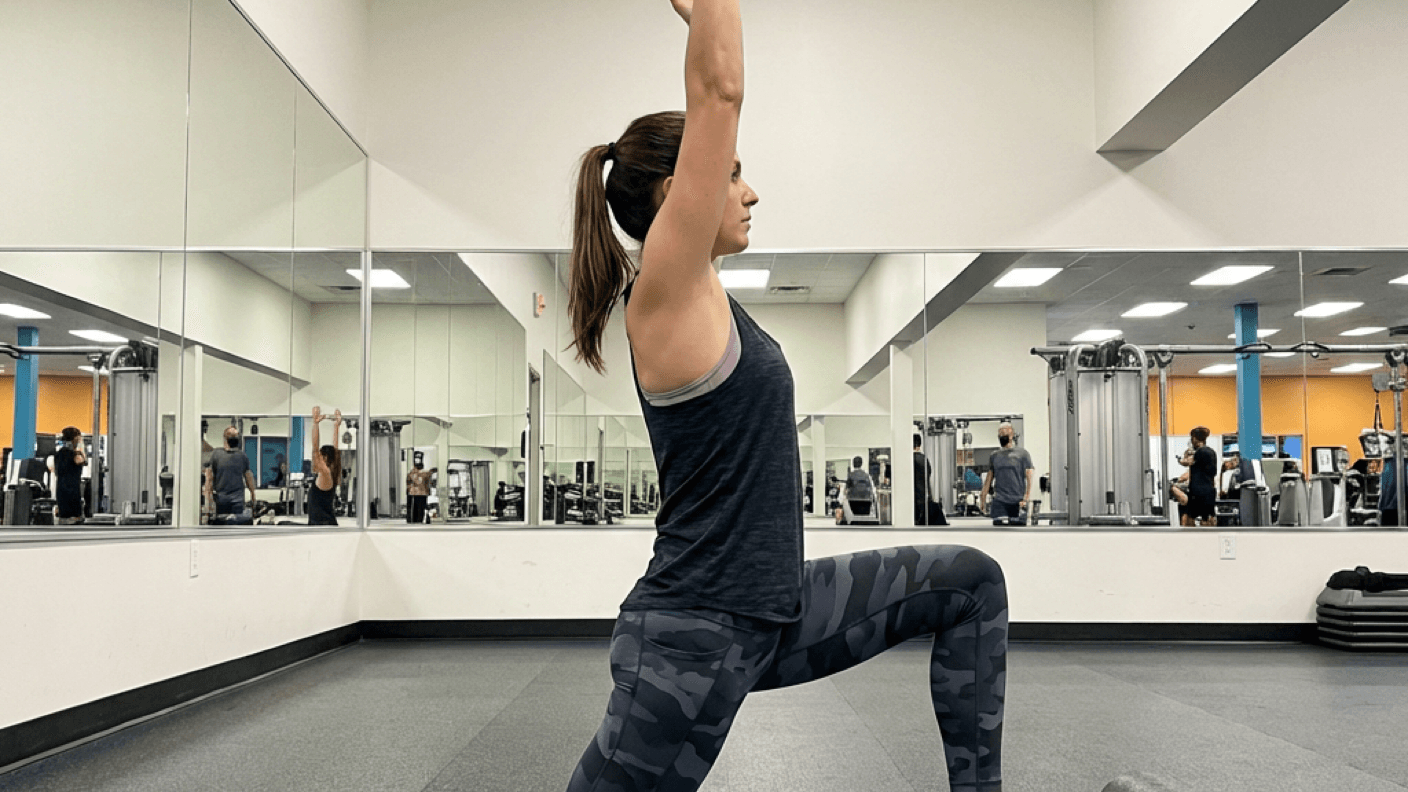
Key Takeaways
- Most lifters skip mobility work but end up with tight hips that limit squat depth and shoulders that click during overhead presses.
- Mobility is active range of motion under your control, while flexibility is just passive stretching, and you need the mobility version for heavy lifting.
- Focus on ankles, hips, thoracic spine, and shoulders since these four areas cause 90% of lifting restrictions.
- The wall ankle stretch shows if your ankle mobility sucks when you can't touch the wall with your knee from 5 inches away while keeping your heel down.
- Do this 15-minute routine before training as your warm-up or on rest days to maintain range of motion.
Get This on WhatsApp
Get a quick summary and link sent straight to your WhatsApp.
Send Me This ArticleWhy most lifters skip mobility and pay for it
I used to be the guy who walked into the gym, loaded 135 on the bar, and started squatting. No warm-up, no mobility work, just straight to lifting. I thought mobility routines were for yoga people and physical therapy patients. Then my hips got so tight I could barely hit parallel on squats, my shoulders started clicking during overhead presses, and my lower back locked up twice in three months.
That was about seven years ago. Since then I have done some form of mobility work before every training session. My squat depth is better at 35 than it was at 25. My shoulders have not bothered me in years. And it takes me 15 minutes, not the hour-long yoga sessions some people insist on.
Here is the fundamental issue: resistance training shortens muscles over time if you do not actively maintain range of motion. You are contracting muscles through partial ranges of motion under heavy loads, hundreds of times per week. Without mobility work, the muscles and fascia adapt to those shortened positions. Your hip flexors get tight from sitting and from squatting. Your pecs get tight from benching. Your lats get tight from everything. Eventually, these restrictions start limiting your training and causing pain.
The good news is that you do not need to become a contortionist. You just need enough mobility to perform your lifts through a full range of motion with good technique. That is the bar. It is attainable for almost everyone with consistent, targeted work.
Mobility vs flexibility: they are not the same
Flexibility is passive range of motion. It is how far your hamstring stretches when someone pushes your leg toward your face while you lie there doing nothing.
Mobility is active range of motion. It is how far you can move your hip through its range of motion under your own muscular control, while maintaining stability.
For lifters, mobility matters more. You do not need to do the splits. You need to squat to depth with control, press overhead without your lower back arching to compensate, and deadlift with a neutral spine. These all require active range of motion, meaning your muscles need to be strong and coordinated through the full range, not just passively stretchy.
This is why static stretching alone is not enough for lifters. Stretching increases passive flexibility, but if you do not also train strength through that new range, you have range of motion you cannot control. Uncontrolled range of motion under heavy load is a recipe for injury.
The routine below combines dynamic movements, active stretches, and loaded mobility drills to build both range of motion and control. That is what makes it different from a generic yoga flow or stretching routine.
The areas that matter most for lifters
You could work on mobility for every joint in your body, but these four areas account for about 90% of lifting-related mobility restrictions:
Ankles. Limited ankle dorsiflexion causes your heels to rise during squats, forces you to lean forward excessively, and shifts stress to the knees and lower back. This is the most underrated mobility restriction in the lifting population.
Hips. Tight hip flexors (from sitting all day) limit hip extension in deadlifts and glute activation in squats. Tight adductors and external rotators limit squat depth and stance width. Tight hamstrings limit your ability to hinge at the hips with a flat back.
Thoracic spine. Limited thoracic extension causes you to round your upper back during squats, deadlifts, and rows. It also forces compensatory movement from the lower back and shoulders. If you sit at a desk, your thoracic spine is probably locked up.
Shoulders. Limited shoulder flexion and external rotation compromise overhead pressing mechanics and bench press position. Internal rotation dominance from heavy pressing creates impingement risk.
The routine below hits all four areas in 15 minutes.
The 15-minute routine
Do this before training or on rest days. Before training, it serves as both a warm-up and mobility session. On rest days, it maintains your range of motion and aids recovery.
You will need: a foam roller, a resistance band, and a wall or squat rack. That is it.
Ankles
Wall ankle stretch (2 minutes)
Face a wall. Place one foot about 4-5 inches from the base of the wall. Drive your knee forward over your toes, trying to touch the wall while keeping your heel glued to the floor. If your knee touches easily, move your foot back an inch. If your heel pops up, move your foot forward.
Hold each rep for 3 seconds at end range, then return to start. Do 10 reps per side.
This is both a test and an exercise. If you cannot touch the wall with your knee from 5 inches away, your ankle dorsiflexion is limited and this is probably affecting your squat.
Banded ankle mobilization (1 minute)
Loop a heavy resistance band around a squat rack at ankle height. Step into the band so it sits across the front of your ankle (just below where your foot meets your shin). Step away from the rack until the band has tension. Now drive your knee forward over your toes in the same wall-stretch pattern. The band provides a posterior glide to the talus bone, which is what is actually restricted in most cases.
Do 10 reps per side, holding each for 2-3 seconds at end range.
Hips
90/90 hip switches (2 minutes)
Sit on the floor with both knees bent at 90 degrees, one in front of you (external rotation) and one beside you (internal rotation). Keep your torso upright and your sit bones on the floor. Slowly rotate both legs to the opposite side, switching which hip is in external versus internal rotation.
Do 8-10 switches (both sides equals one), moving slowly and controlled. Pause for 2-3 seconds at each end position. If this is difficult or painful, you have found a significant restriction. Keep working it.
Half-kneeling hip flexor stretch with reach (1.5 minutes)
Kneel in a half-kneeling position (one knee on the ground, other foot flat in front). Squeeze the glute of the kneeling leg hard and shift your hips slightly forward. You should feel a stretch in the front of the kneeling hip. Now raise the arm on the kneeling side overhead and lean slightly away from that side.
Hold for 30-45 seconds per side. The overhead reach adds a stretch to the psoas, which runs from the lumbar spine to the hip. Most people only stretch the rectus femoris (the superficial hip flexor) without ever getting the psoas. The reach changes that.
Deep squat hold with prying (1.5 minutes)
Grab a kettlebell or dumbbell (25-35 pounds works for most people). Hold it at your chest in a goblet position. Squat as deep as you comfortably can, ideally below parallel. Once at the bottom, use your elbows to gently push your knees outward while keeping your feet flat on the ground. Rock side to side slightly. Shift your weight to one side, then the other.
Hold for 60-90 seconds total. This is the single best hip mobility drill for squatting. The weight acts as a counterbalance that lets you sit deeper than you normally would. The prying action opens up the adductors and hip internal rotators.
If you cannot squat deep enough to be comfortable, put a 10-pound plate under each heel. Over time, work toward doing this flat-footed.
Thoracic spine
Foam roller thoracic extensions (1.5 minutes)
Lie on a foam roller positioned across your upper back (around the level of your shoulder blades). Cross your arms over your chest or place your hands behind your head. Let your upper back extend over the roller while keeping your ribcage down and your lower back neutral. You are not arching your entire spine. You are segmentally extending the thoracic spine.
Roll slightly up or down to different segments, extending over the roller at each position. Spend about 10 seconds at each position, covering 4-5 segments from mid-back to upper-back.
Do 2-3 passes. You should feel your upper back "open up" and you might hear a few pops. That is normal.
Open book rotations (1.5 minutes)
Lie on your side with your knees stacked and bent to 90 degrees, arms extended in front of you at shoulder height. Slowly rotate your top arm over your body toward the floor on the other side, following it with your eyes. Try to get your top shoulder to touch the ground (or as close as possible) while keeping your knees stacked.
Do 8-10 reps per side, pausing at end range for 2-3 seconds. This targets thoracic rotation, which is critical for maintaining a neutral spine during heavy lifts and for allowing your shoulders to move independently of your ribcage.
Shoulders
Band pull-aparts with rotation (1 minute)
Hold a light resistance band in front of you at chest height, arms straight. Pull the band apart while simultaneously rotating your hands outward (external rotation). Squeeze your shoulder blades together at the end. Return slowly.
Do 15-20 reps. This activates the posterior deltoid, rhomboids, and external rotators in a single movement. It is the ideal warm-up for any pressing or pulling workout.
Band dislocates (1 minute)
Hold a resistance band with a wide grip in front of your thighs. Keep your arms straight and raise the band overhead and behind your body in a smooth arc. The band should end up behind your back at hip level. Reverse the motion and return to the starting position.
Do 10-12 reps. Start with a very wide grip (wider than you think you need). As your shoulders warm up and open up, you can narrow the grip slightly. If you cannot complete the full arc without bending your elbows, your grip is too narrow.
This is the best overall shoulder mobility drill. It takes the shoulder through its full range of flexion, abduction, and extension while the band provides light resistance that activates the stabilizers.
Wall slides (1 minute)
Stand with your back flat against a wall. Place your arms in a "goal post" position: upper arms out to the sides at shoulder height, elbows bent at 90 degrees, backs of your hands, forearms, and elbows all touching the wall. Slowly slide your arms up the wall as high as you can while maintaining full contact with the wall.
Do 10 reps. Most people cannot get their arms more than halfway up while maintaining full wall contact. This is a test and a corrective exercise in one. If your arms lose contact with the wall, you have identified a restriction (usually tight pecs, tight lats, or poor scapular upward rotation).
When to do this routine
Before training (ideal). The full 15-minute routine serves as your warm-up. After this, you only need 1-2 light sets of whatever exercise you are starting with and you are ready to go. This is what I do personally.
On rest days. The routine also works as a standalone mobility session. It provides light movement that promotes blood flow and recovery without adding training stress.
Morning. If you train in the afternoon or evening, doing this routine in the morning is a great way to counteract the stiffness from sitting at a desk all day. You will feel noticeably better by the time you get to the gym.
You do not need to do all of it every day. If you are short on time, pick the areas that are most restricted for you and spend 5-8 minutes on those. For most desk workers, that means hips and thoracic spine. For most lifters, add ankles and shoulders.
Progressions for common mobility restrictions
If your ankle dorsiflexion is severely limited
Add 2-3 minutes of extra ankle work per day. Elevated heel goblet squats (with a plate under your heels) build strength through your available range while you work on increasing it. Over 4-6 weeks of daily ankle mobility work, most people gain 2-3 degrees of dorsiflexion, which translates to noticeably better squat depth.
If your hips are locked up from desk work
The deep squat hold is your best friend. Work toward accumulating 5 minutes of total time in a deep squat per day. You can break it up: 1 minute here, 2 minutes there. In many cultures where squatting is a resting position, hip mobility problems barely exist. The issue is that we sit in chairs all day instead.
Add pigeon pose or figure-four stretches before bed for the external rotators and glutes.
If your thoracic spine is a steel rod
The foam roller extensions are essential but add one more drill: cat-cow on hands and knees, but only moving your upper back. Lock your lower back in neutral and focus all the movement on rounding and extending your thoracic spine. 10-15 reps, slow and deliberate.
Consider switching from barbell back squats to front squats or safety bar squats for a training block. The front-loaded position forces thoracic extension and trains the muscles that hold your upper back upright.
If your shoulders are limited
Prioritize the band pull-aparts and dislocates daily. Add the doorway pec stretch (30 seconds each arm) and the overhead lat stretch (30 seconds each side). Consider adding face pulls to every training session (3x15-20 with light weight) to build the posterior shoulder muscles that counteract internal rotation dominance.
How to tell if your mobility is limiting your lifts
Squat. Film yourself squatting from the side. If your heels come off the ground, you need ankle mobility. If you lean forward excessively (torso nearly parallel to the floor at the bottom), you need ankle and/or thoracic mobility. If you cannot hit parallel or below, you need hip mobility. If your lower back rounds at the bottom (butt wink), you need a combination of hip and hamstring mobility.
Overhead press. Stand with your back against a wall. Raise your arms overhead. If you cannot get your hands to the wall without arching your lower back away from it, you need shoulder and/or thoracic mobility. If your elbows bend significantly, your lats are too tight.
Deadlift. Set up in your deadlift stance without a barbell. Can you reach the floor with a flat back? If your lower back rounds before your hands reach the floor, you need hamstring and hip mobility. If your upper back rounds, you need thoracic mobility.
Bench press. Can you comfortably retract and depress your scapulae on the bench? If your shoulders round forward and you cannot get into a good arch, you need pec mobility and thoracic extension.
This is not complicated. Film your lifts, identify where you are compensating, and target those areas with the appropriate drills from this routine. Fifteen minutes a day, consistently, will fix most mobility restrictions within 4-8 weeks. The compound interest on that investment is enormous: better positions, heavier loads, and joints that do not hurt.
Frequently Asked Questions
- Do lifters really need mobility work?
- If you can squat to depth, overhead press without pain, and deadlift with a flat back, your mobility might be fine. But if you are limited in any of those movements, 10-15 minutes of targeted mobility work fixes the problem and prevents injuries down the road.
- When should I do mobility work?
- Before your workout as part of your warm-up is the most practical time. Spend 5-10 minutes on the areas that limit your training. Hips before squat day, shoulders before pressing day. You can also do a longer session on rest days if you are particularly stiff.
- What are the best mobility exercises for lifters?
- Hip 90/90 stretches, couch stretch for hip flexors, thoracic spine rotations, shoulder dislocates with a band, and deep goblet squat holds cover the main problem areas for most lifters. You do not need 20 exercises. Just address whatever limits your lifts.
- Is yoga good for lifters?
- It can be, but most yoga classes are not specific enough. You spend 45 minutes on movements you do not need and 2 minutes on what actually limits your lifts. A targeted 15-minute mobility routine hits your problem areas more efficiently. That said, if you enjoy yoga, it is not going to hurt.