Progressive Overload Techniques for Continuous Muscle Growth
Progressive overload techniques that beat plateaus: steadily add weight, reps or sets and cut rest time to keep forcing muscle growth and strength gains.
 Jeff·Aug 20, 2024·3 min read
Key Takeaways
- You need to gradually increase weight, reps, sets, or decrease rest time to keep your muscles growing instead of hitting plateaus.
- Bump up the weight by 2.5% to 5% once you can hit the top of your rep range with solid form.
- Adding more reps per set builds muscle endurance while still triggering growth, especially if you cycle back to heavier weight after hitting higher reps.
- Cutting rest time between sets from 90 seconds down to 60 seconds cranks up intensity and forces your muscles to adapt to less recovery.
- If you plateau, switch up exercises, dial in your form, or check if you're eating and sleeping enough for proper recovery.
Get This on WhatsApp
Get a quick summary and link sent straight to your WhatsApp.
Send Me This ArticleProgressive overload is a fundamental principle in strength training and muscle building. It refers to gradually increasing the stress placed on muscles to stimulate growth and improve strength. In this article, we'll delve deep into progressive overload techniques for continuous muscle growth, providing you with expert insights and actionable tips to optimize your workouts.
Understanding Progressive Overload
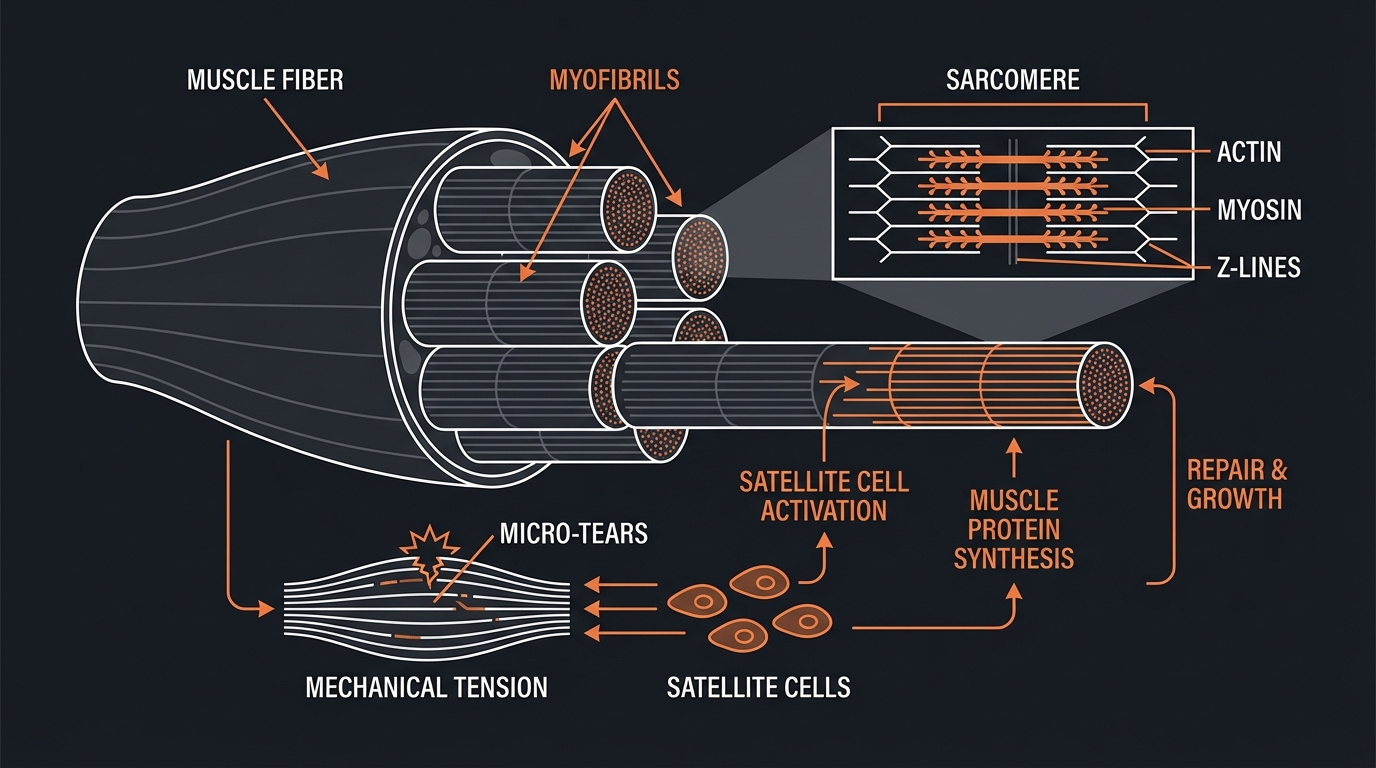
Progressive overload is the gradual increase of stress placed upon the body during exercise. This principle is crucial because muscles adapt to the stresses placed upon them. Without incremental increases in load, muscles cease to grow and develop, leading to plateaus. According to research by the National Strength and Conditioning Association (NSCA), consistent application of progressive overload can significantly enhance muscle hypertrophy and strength.
Here's a quick rundown of the key progressive overload techniques:
- •Increase the weight you're lifting
- •Increase the number of repetitions
- •Increase the number of sets
- •Decrease rest time between sets
Technique 1: Increasing Weight
One of the most straightforward ways to apply progressive overload is by increasing the weight you lift. Gradually adding more weight ensures that the muscles are continuously challenged. Aim to increase the weight by 2.5% to 5% once you can comfortably complete the set and rep range with good form. This method not only enhances muscle growth but also improves strength.
Example
Consider you’re performing a bench press at 100 pounds for 8 reps. Once you can comfortably perform 10 reps, increase the weight to 105 pounds and aim for 8 reps again. Over time, this gradual increase in load will stimulate continued muscle growth.
Technique 2: Increasing Repetitions
Another effective technique is to increase the number of repetitions per set. This approach is particularly useful for refining muscle endurance. According to a study published in the Journal of Strength and Conditioning Research, increasing repetitions can significantly enhance muscular endurance while still promoting muscle hypertrophy.
Step-by-Step Guide
- •Determine your starting reps (e.g., 6-8 reps per set).
- •Gradually increase the reps as you become more comfortable (e.g., move from 8 to 10 reps).
- •Once you reach the higher end of your rep range, increase the weight slightly and drop back to the lower end of the rep range.
Technique 3: Decreasing Rest Time
Reducing the rest period between sets can also be an effective way to apply progressive overload. Decreasing rest time increases the intensity and cardiovascular demand of the workout, forcing muscles to adapt to both the stimulus of the weight and the reduced recovery time.
For instance, if you’re used to resting for 90 seconds between sets, try reducing it to 60 seconds over time. This method can be particularly beneficial for those looking to improve muscle endurance and cardiovascular fitness in addition to strength and muscle size.
Addressing Common Concerns
A common question around progressive overload is: “What if I hit a plateau?” Hitting a plateau can be frustrating, but there are ways to overcome it:
- •Change the exercise: Try different variations to target muscles from new angles.
- •Focus on form: Sometimes, improving your technique can help break through a plateau.
- •Nutrition and recovery: Ensure you’re eating adequately and allowing your muscles sufficient time to recover.
Practical Tips and Conclusion
Making consistent progress requires a well-thought-out plan and dedication. Here are some key tips for incorporating progressive overload into your training regimen:
- •Track your progress to identify when to increase the load.
- •Periodize your training to prevent burnout and injuries.
- •Ensure balanced muscle development to avoid imbalances and injuries.
To sum up, progressive overload techniques for continuous muscle growth involve strategically increasing the demands on your muscles to promote hypertrophy and strength gain. By increasing weight, repetitions, and manipulating rest times, you can effectively stimulate your muscles and make steady progress. Keep challenging yourself, stay consistent, and you’ll see the results you’re aiming for.
Have any questions or need personalized advice? Contact us today to get started on your fitness journey!
Frequently Asked Questions
- What is progressive overload and why does it matter?
- Progressive overload means gradually increasing the demands on your muscles over time — more weight, more reps, or more sets. Without it, your body has no reason to grow because it's already adapted to your current workload.
- How often should I increase weight on my lifts?
- Beginners can add weight almost every session. Intermediates should aim to add weight every 1-2 weeks. If you can hit the top of your rep range for all sets, bump the weight up 5 lbs on compounds or 2.5 lbs on isolation lifts.
- What do I do when I can't add more weight?
- Add reps, add sets, slow down your tempo, reduce rest periods, or improve your range of motion. Weight on the bar is just one form of progressive overload — total workload matters more than any single variable.
- Is progressive overload more important than exercise selection?
- By far. A boring program with consistent progressive overload will always beat a fancy program with no progression. Pick basic exercises, get stronger at them over months, and you'll grow. It really is that simple.