Ring Training for Beginners: Build Gymnast-Level Strength
Gymnastics rings are the most underused piece of equipment in any gym. Here is how to start ring training from scratch and build the kind of upper body strength that turns heads.
 Sam·Mar 28, 2026·7 min read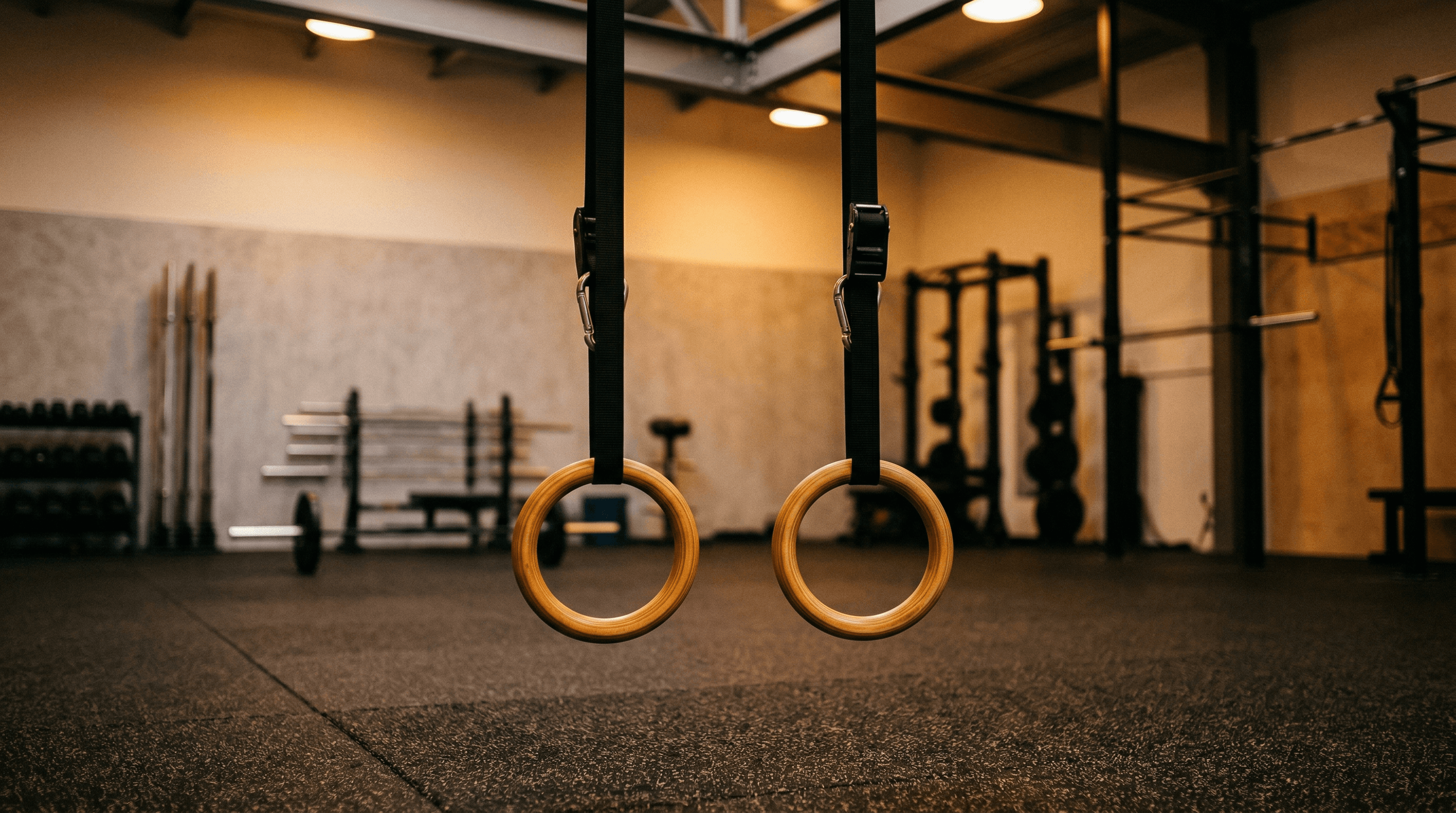
Key Takeaways
- Gymnastics rings are unstable by nature, which forces your stabilizer muscles to work overtime and builds functional upper body strength that fixed bars cannot match.
- Start with the rings set at chest height for support holds, push-ups, and rows before progressing to movements with the rings above your head.
- A solid 30-second ring support hold with locked elbows and turned-out hands is the prerequisite before attempting ring dips or muscle-ups.
- Ring push-ups and ring rows are significantly harder than their bar or floor versions -- drop your reps by about 30-40% when switching to rings.
- Hang the rings from a pull-up bar, tree branch, or ceiling mount at least 9 feet high so you have room for full-range movements without hitting the ground.
Get This on WhatsApp
Get a quick summary and link sent straight to your WhatsApp.
Send Me This ArticleWhy Rings Build Strength That Bars Cannot
Gymnasts have some of the most impressive upper bodies in all of athletics, and they build them primarily on rings. There is a reason.
Rings are unstable. They swing, they rotate, they wobble. Every exercise you do on rings forces your stabilizer muscles to work overtime just to keep you in position. A ring push-up works the same primary muscles as a floor push-up, but your shoulders, rotator cuffs, and core are working 3-4 times harder to stabilize the movement.
This instability forces your body to develop strength in positions that fixed bars and machines never challenge. That is why lifters who train on rings often find that their barbell pressing and pulling strength improves even when they have not touched a barbell in weeks -- rings build the weak links.
Rings are also incredibly versatile. You can do push-ups, dips, rows, pull-ups, muscle-ups, L-sits, and dozens of other exercises. They are portable (hang them from any pull-up bar, tree branch, or ceiling beam), affordable (a solid pair costs 30-50 dollars), and they will last forever.
Setting Up Your Rings
Height Settings
- •For rows and push-ups: Ring handles about 12-24 inches off the ground
- •For dips and support holds: Ring handles at roughly hip to chest height
- •For pull-ups and muscle-ups: Ring handles high enough that your feet clear the ground when hanging
Strap Length
Make sure both straps are equal length. An uneven setup creates an imbalanced workout and defeats the purpose. Most rings have numbered markings on the straps for this reason.
Ring Width
For most exercises, the rings should be about shoulder-width apart. You can adjust slightly wider for rows and slightly narrower for dips based on comfort.
Phase 1: Foundation (Weeks 1-4)
Before doing any dynamic exercises on rings, you need to develop basic stability. These four exercises build the foundation.
Ring Support Hold
Jump up to a support position on the rings: arms straight, body vertical, rings at your sides. Hold this position. Sounds easy. It is not. The rings will shake violently when you first try this. Your goal is to hold a stable position for 30 seconds with the rings turned outward (palms facing forward at the bottom). This "rings turned out" position is harder but builds much more shoulder stability.
Target: 3 sets of 30 seconds. When you can do this without excessive shaking, move to Phase 2 exercises.
Ring Dead Hang
Hang from the rings with straight arms, shoulders active (pull your shoulder blades down slightly -- do not just hang like a wet towel). This builds grip strength and shoulder stability in the overhead position.
Target: 3 sets of 30-45 seconds.
Ring Rows
Lower the rings to about waist height. Grab them and walk your feet forward until your body is at an angle. Pull your chest to the rings, keeping your body straight like a plank. The more horizontal your body, the harder the exercise.
This is the ring equivalent of a barbell row, and it builds your back, biceps, and rear delts while teaching ring stability.
Target: 3 sets of 10-12 with your body at roughly 45 degrees.
Ring Push-Ups
Set the rings low, about 12-18 inches off the ground. Do push-ups with your hands on the rings. Keep the rings stable -- do not let them flare outward. At the top, turn the rings out slightly for extra shoulder activation.
These are significantly harder than floor push-ups. If you can do 20 floor push-ups, you might only manage 8-10 on rings.
Target: 3 sets of 8-12.
Phase 2: Building Strength (Weeks 5-12)
Ring Dips
From the support hold position, lower yourself until your shoulders are below your elbows (or as deep as you can control), then press back up. Ring dips are brutally hard compared to bar dips because the rings want to fly apart. Your chest, shoulders, and especially your stabilizers are working overtime.
If you cannot do full ring dips yet, use a band for assistance or do negatives (lower slowly for 5 seconds, jump back to the top).
Target: 3 sets of 5-8. Build to 3 sets of 10 before adding weight.
Ring Pull-Ups
Hang from the rings and pull up until your chin clears your hands. The beauty of ring pull-ups is that you can rotate your hands naturally throughout the movement -- starting with palms forward and ending with palms facing you. This is much friendlier on the elbows and shoulders than a fixed bar.
Target: 3 sets of 5-8.
Ring Archer Rows
Start in a ring row position. Pull with one arm while the other arm extends straight to the side. This shifts most of the work to the pulling arm and is a great progression toward one-arm exercises.
Target: 3 sets of 6-8 per side.
Ring Flyes
From a ring push-up position (rings low), slowly open your arms out to the sides, lowering your chest toward the ground. Control the descent, then bring the rings back together. This is a devastating chest exercise. Start with a very upright body angle (feet close to the rings) and gradually walk your feet back as you get stronger.
Target: 3 sets of 6-8.
L-Sit on Rings
From the support hold, lift your legs straight out in front of you to form an L shape. Hold. This trains your abs, hip flexors, triceps, and shoulders simultaneously. If a full L-sit is too hard, start with tucked knees and gradually extend your legs over weeks.
Target: 3 sets of 10-20 seconds.
Phase 3: Advanced Skills (Months 3-6+)
Muscle-Up
The muscle-up is the ring exercise everyone wants. It is a pull-up that transitions into a dip in one fluid motion. Before attempting muscle-ups, you should be able to do:
- •10 strict ring pull-ups
- •10 strict ring dips
- •A deep ring pull-up where you pull to your chest, not just your chin
The technique: pull explosively and high (to your lower chest), then aggressively lean your shoulders forward over the rings while punching your hands down. The transition from pull to push is the hardest part and requires practice.
Start by practicing the transition with a band or with your feet on a box. Drill it for weeks before attempting a free-standing muscle-up.
Ring Bulgarian Dip
A ring dip with an exaggerated forward lean at the bottom (similar to a chest dip on bars, but harder because of instability). Go deep, lean forward, and press out. This builds enormous chest and shoulder strength.
Skin the Cat
Hang from the rings, tuck your knees, and rotate backward until your body passes through your arms and you are hanging in a "German hang" position behind your hands. Reverse the motion. This builds incredible shoulder flexibility and strength throughout an enormous range of motion.
Start carefully -- the stretched position can be intense on the shoulders. Only go as far as you are comfortable.
Sample Ring Training Programs
Beginner (3 days per week)
| Exercise | Sets x Reps |
|---|---|
| Ring Support Hold | 3 x 30 sec |
| Ring Rows | 3 x 10-12 |
| Ring Push-Ups | 3 x 8-12 |
| Ring Dead Hang | 3 x 30 sec |
Intermediate (3-4 days per week)
| Exercise | Sets x Reps |
|---|---|
| Ring Pull-Ups | 4 x 6-8 |
| Ring Dips | 4 x 6-8 |
| Ring Rows (feet elevated) | 3 x 10-12 |
| Ring Flyes | 3 x 6-8 |
| L-Sit Hold | 3 x 15-20 sec |
Advanced (3-4 days per week)
| Exercise | Sets x Reps |
|---|---|
| Muscle-Up Practice | 5 x 2-3 |
| Ring Bulgarian Dips | 4 x 5-8 |
| Ring Archer Rows | 3 x 6-8/side |
| Ring Flyes (deep) | 3 x 8-10 |
| Skin the Cat | 3 x 3-5 |
Combining Rings With Barbell Training
Rings do not have to replace your barbell work. They complement it well. Here is how to integrate them:
- •As a warmup: Ring support holds and ring rows before bench press and overhead press. This activates your stabilizers and improves your pressing.
- •As accessory work: Replace cable flyes with ring flyes, replace lat pulldowns with ring pull-ups, replace machine dips with ring dips.
- •As a separate training day: If you train 4 days a week with barbells, add a 5th day of ring-only work for upper body stability and bodyweight strength.
Rings will humble you. A lifter who can bench 315 might struggle with ring dips at bodyweight. That gap between barbell strength and ring strength represents a weakness worth fixing. Close that gap and your overall upper body development will improve across the board.
Frequently Asked Questions
- Why Rings Build Strength That Bars Cannot?
- Gymnasts have some of the most impressive upper bodies in all of athletics, and they build them primarily on rings. There is a reason.
- What should I know about strap length?
- Make sure both straps are equal length. An uneven setup creates an imbalanced workout and defeats the purpose. Most rings have numbered markings on the straps for this reason.
- What should I know about ring width?
- For most exercises, the rings should be about shoulder-width apart. You can adjust slightly wider for rows and slightly narrower for dips based on comfort.
- What should I know about phase 1: foundation (weeks 1-4)?
- Before doing any dynamic exercises on rings, you need to develop basic stability. These four exercises build the foundation.
- What should I know about ring support hold?
- Jump up to a support position on the rings: arms straight, body vertical, rings at your sides. Hold this position. Sounds easy. It is not. The rings will shake violently when you first try this. Your goal is to hold a stable position for 30 seconds with the rings turned outward (palms facing forward at the bottom).