Shoulder Health for Lifters: Prehab Routine for Pressing
The rotator cuff comprises four muscles: supraspinatus, infraspinatus, teres minor, and subscapularis—all critical for shoulder stability during pressing
 Sam·Apr 22, 2026·9 min read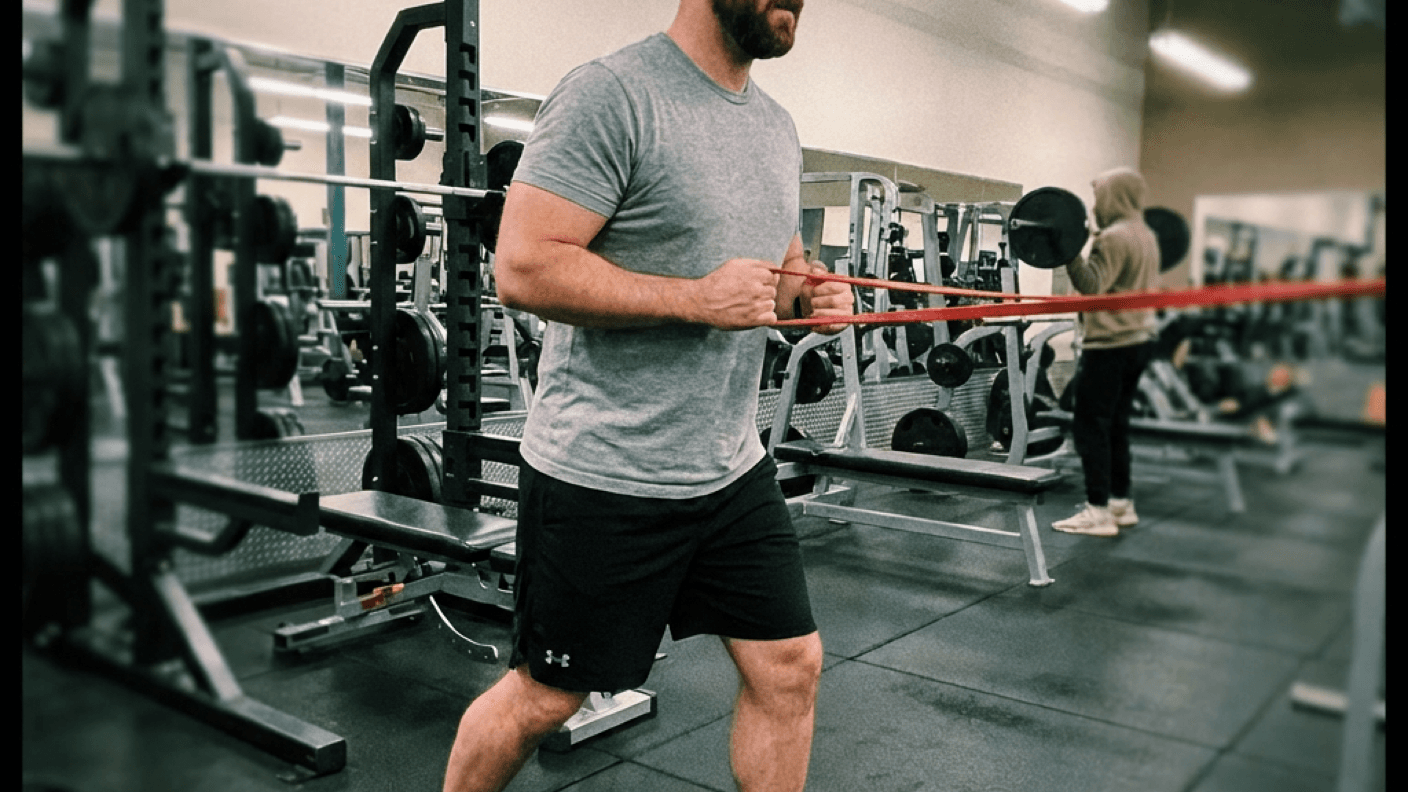
Key Takeaways
- Your shoulders break down from pressing because four small rotator cuff muscles can't keep up with the big pressing muscles, causing the shoulder joint to drift and grind.
- Most lifters have external rotators that are 2-3 times weaker than their internal rotators from doing way more pushing than pulling.
- If you can't do 15 clean reps of side-lying external rotation with a 10-pound dumbbell, your rotator cuff is undertrained.
- Use 5-15 pounds max for rotator cuff exercises with slow 2-3 second negatives instead of swinging heavy weights around.
- Face pulls and band pull-aparts before every pressing session will activate your rear delts and mid-traps to balance out all that benching.
Get This on WhatsApp
Get a quick summary and link sent straight to your WhatsApp.
Send Me This ArticleWhy Lifters' Shoulders Break Down: The Anatomy of Pressing Injuries
If you've been pressing for more than a couple years, you've probably felt it. That pinch in the front of the shoulder when you bench. The dull ache after overhead day. The click that wasn't there last month.
Here's what's actually happening. Your shoulder is the most mobile joint in your body, which means it trades stability for range of motion. Four small muscles — the rotator cuff (supraspinatus, infraspinatus, teres minor, subscapularis) — keep the humeral head centered in the socket while the big movers (pecs, delts, lats) do the heavy lifting. When those small muscles can't keep up, the head of the humerus drifts. It grinds against the acromion. That's impingement, and it's the number one reason lifters end up in pain.
The problem compounds because most lifters are front-dominant. You bench twice a week, maybe throw in some overhead pressing, and call it shoulder day. Meanwhile, your external rotators — the muscles on the back of the shoulder that decelerate and stabilize — get a fraction of that volume. Research on pressing-dominant athletes shows external rotators are often 2-3x weaker than internal rotators. That's a structural imbalance begging for an injury.
Add in poor scapular control, a stiff thoracic spine from sitting all day, and a weak serratus anterior, and you've got a shoulder that's one heavy bench session away from tapping out.
The 4 Pillars of Shoulder Health
Every shoulder prehab program worth doing hits these four buckets. Miss one and you're leaving a door open.
Mobility — Can you actually get into the positions pressing requires? Overhead pressing needs roughly 60 degrees of scapular upward rotation plus full shoulder flexion. If your T-spine is locked up, you won't get there without compensating somewhere ugly.
Stability — Can your rotator cuff keep the ball centered in the socket under load? This is the work nobody wants to do because it doesn't feel like "real" training.
Strength — Are your external rotators, rear delts, and mid-back strong enough to balance out all that benching?
Control — Can you actually coordinate your scapula during pressing? Most lifters have no idea what their shoulder blades are doing under the bar.
If you're fuzzy on the mobility piece specifically, read this breakdown on mobility versus flexibility. The distinction matters.
Self-Assessment: Finding Your Weak Links
Before you start throwing random exercises at the problem, figure out where you're actually broken. Three quick tests:
Wall slides test. Stand with your back against a wall, feet 6 inches out, low back flat. Put your arms up in a goalpost position, elbows and wrists touching the wall. Now slide your arms overhead while keeping contact. If your wrists, elbows, or low back come off the wall, you've got mobility or stability issues in the chain.
External rotation strength. Lie on your side, top arm bent at 90 degrees, elbow tucked to your ribs. Hold a light dumbbell (5-10 lbs) and rotate the forearm up. If you can't do 15 clean reps on each side with a 10-pound dumbbell, your cuff is undertrained. Period.
T-spine extension. Sit on the floor, legs straight out. Foam roller across your upper back, hands behind your head. Extend backward over the roller. If it feels like you're going to snap in half or you can barely arch at all, your thoracic spine is the problem, not your shoulders.
Write down where you failed. That's your roadmap.
The 10-Minute Pre-Press Prehab Routine
This is the routine I run before every pressing session. Eight to ten minutes. It doesn't fatigue you. It primes everything that needs to work.
| Exercise | Sets x Reps | Purpose |
|---|---|---|
| Foam roller T-spine extensions | 1 x 10 | T-spine mobility |
| Wall slides | 2 x 10 | Scapular upward rotation |
| Band pull-aparts | 2 x 15 | Rear delt/mid-back activation |
| Band face pulls | 2 x 15 | External rotation + scap retraction |
| Side-lying external rotations | 2 x 12 each side | Rotator cuff strength |
| Serratus wall slides (or scap push-ups) | 2 x 10 | Serratus anterior activation |
| Prone Y-T-W raises | 1 x 8 each | Lower trap, rear delt endurance |
Keep the loads light. Rotator cuff work responds better to control than to weight — 5-pound dumbbells done correctly beat 20-pound dumbbells with momentum every time. This isn't where you're chasing PRs.
Breaking down the key moves
Band pull-aparts — Hold a light band with straight arms at shoulder height, pull apart until the band touches your chest, squeeze the shoulder blades. EMG research consistently ranks this as one of the highest activators of the mid and lower traps. Cheap, simple, effective.
Face pulls — Attach a band or rope to a pulley at face height. Pull toward your face with elbows high, externally rotating so your hands end up next to your ears. This is the single best exercise for pressing-dominant lifters. Do them everywhere. Do them often.
Serratus wall slides — Stand facing a wall, forearms on the wall in a goalpost, push your forearms into the wall and slide up. You should feel your shoulder blades wrap around your ribcage. That's the serratus firing. It's the forgotten muscle that prevents scapular winging and keeps you out of impingement territory.
Rotator Cuff and Scapular Stability Work That Actually Works
Most lifters do rotator cuff work wrong. They grab a 25-pound dumbbell, swing it around in half-reps, and call it a day. The cuff is made of small, slow-twitch stabilizers. It responds to light loads, slow tempos, and high quality reps.
A few rules:
- •Use 5-15 pounds for most cuff exercises. If you need heavier, you're using the wrong muscles.
- •Slow the eccentric. 2-3 seconds down beats snapping through reps.
- •Train the cuff at least twice a week. Prehab before pressing counts.
- •Prioritize external rotation variations: side-lying ER, cable ER at the side, and face pulls.
For scapular work, the trio of JOSPT-recommended exercises shows up again and again in the research: prone Y-raises, prone T-raises, and wall slides. Boring? Yes. Effective? Also yes.
Thoracic Spine Mobility: The Missing Link
Here's something most lifters miss. If your T-spine can't extend, your shoulders can't get overhead cleanly. When the upper back is rounded — hello, desk job — the scapula sits in a forward, protracted position, and every press becomes a low-grade impingement rep.
Two drills that move the needle:
Foam roller T-spine extensions. Foam roller horizontal across your upper back, hands behind head, extend back over the roller. Move the roller up an inch, repeat. Hit three or four spots between the bottom of your shoulder blades and the base of your neck.
Quadruped T-spine rotations. On all fours, one hand behind your head, rotate that elbow up toward the ceiling, then down under the opposite arm. 8 reps per side.
Your posture outside the gym matters too. Sitting slumped eight hours a day undoes a lot of what prehab is trying to build. This piece on strength training for posture covers how the bigger picture ties together.
Programming Prehab Into Your Training Week
The biggest prehab mistake is treating it like a separate workout. Nobody has time for that, and you won't stick with it. Instead, bolt it onto what you're already doing.
The simple approach:
- •Before every press day: Run the 10-minute routine as part of your warm-up
- •2-3x per week minimum of targeted cuff and scap work
- •Daily (if you can): Band pull-aparts. Keep a band at your desk. 50 reps a day scattered through the day costs you nothing and fixes a lot.
Research on overhead athletes shows 5-10 minutes of targeted prehab performed 3-4 times a week can cut shoulder injury rates roughly in half. That's not a marginal return. That's one of the highest-leverage time investments you can make as a lifter.
Don't pile prehab on top of an already brutal program and wonder why you're fried. Recovery matters. Rest and recovery isn't optional — it's the foundation everything else sits on.
Pressing Form Fixes That Protect Your Shoulders
Prehab can't compensate for terrible pressing technique. A few form fixes that save shoulders:
Bench press:
- •Set your shoulder blades down and back before unracking. Hard.
- •Touch the bar to lower chest/upper abdomen, not your clavicle
- •Tuck the elbows to roughly 45-60 degrees from the torso, not flared to 90
- •Keep the bar path slightly diagonal — over the shoulders at lockout, lower on the chest at the bottom
Overhead press:
- •Full lockout at the top with the bar stacked over the mid-foot
- •Glutes tight, ribs down — no excessive lumbar extension
- •Bar path straight up, not arcing forward
Exercises to swap out:
- •Upright rows — Internal rotation with elevation is the exact position that causes impingement. Swap for high pulls or face pulls.
- •Behind-the-neck press — Puts the shoulder in maximum external rotation with abduction. Fine for some, a disaster for most. Swap for a standard military press.
- •Dips with a forward lean below 90 degrees — Keep dips upright and don't go crazy deep if your shoulders are cranky.
If you want a solid session that builds the shoulders without destroying them, this shoulder and trap workout uses the principles above.
Red Flags: When Prehab Isn't Enough
Prehab is preventive. It's not a cure. If any of these apply, stop trying to fix it yourself and see a physical therapist or orthopedist.
- •Pain at rest or at night — Especially night pain that wakes you up. Classic rotator cuff tear symptom per AAOS guidelines.
- •Weakness, not just pain — If you can't lift your arm overhead or you feel a sudden drop in pressing strength, get it checked.
- •Clicking with pain — Painless clicks are usually fine. Clicks that hurt aren't.
- •Pain that persists more than 2-3 weeks despite backing off volume
- •Numbness or tingling down the arm — That's a nerve issue, not a shoulder issue, and it needs a diagnosis.
If you're already dealing with pain but it's mild, you can often keep training around it smartly. This guide on training around injuries walks through how to keep making progress without making things worse.
The Bottom Line
Healthy shoulders are built through consistency, not heroics. Ten minutes before your press days. Light loads, slow tempos, quality reps. External rotation work twice a week minimum. T-spine mobility most days. Face pulls everywhere.
Do this for six months and you'll notice something: your bench goes up, your overhead press feels stronger, and that nagging pinch you used to have? Gone. Most lifters are one shoulder injury away from losing a year of training. The lifters who last aren't the ones with the best genetics — they're the ones who took the boring work seriously before they had to.
Start today. Grab a band. Do 30 pull-aparts. That's rep one.
Frequently Asked Questions
- Why Lifters' Shoulders Break Down: The Anatomy of Pressing Injuries?
- If you've been pressing for more than a couple years, you've probably felt it. That pinch in the front of the shoulder when you bench. The dull ache after overhead day. The click that wasn't there last month.
- What should I know about 4 pillars of shoulder health?
- Every shoulder prehab program worth doing hits these four buckets. Miss one and you're leaving a door open.
- What should I know about self-assessment: finding your weak links?
- Before you start throwing random exercises at the problem, figure out where you're actually broken. Three quick tests:
- What should I know about 10-minute pre-press prehab routine?
- This is the routine I run before every pressing session. Eight to ten minutes. It doesn't fatigue you. It primes everything that needs to work.
- What should I know about breaking down the key moves?
- Band pull-aparts — Hold a light band with straight arms at shoulder height, pull apart until the band touches your chest, squeeze the shoulder blades. EMG research consistently ranks this as one of the highest activators of the mid and lower traps. Cheap, simple, effective.