Strength Training for Endurance Athletes: Boosting Performance
Strength training for endurance athletes can cut race times by up to 4.9%: build muscle endurance, prevent injury, and hold pace longer while running.
 Jeff·Aug 19, 2024·3 min read
Key Takeaways
- Strength training can improve your race times by up to 4.9% with just two to three short sessions per week.
- You won't get bulky from moderate weights and higher reps - that builds lean, functional muscle that actually helps performance.
- Focus on compound movements like squats, deadlifts, and lunges to hit multiple muscle groups and build the core strength you need.
- Stronger muscles, ligaments, and tendons prevent the overuse injuries that wreck most endurance athletes' seasons.
- Time your strength work with your season - build base strength early, increase intensity mid-season, then just maintain during peak racing.
Get This on WhatsApp
Get a quick summary and link sent straight to your WhatsApp.
Send Me This ArticleIntroduction
Most endurance athletes think the gym is for bodybuilders. They're wrong. If you run, cycle, or swim long distances and you're not doing some form of strength work, you're leaving performance on the table and increasing your injury risk. Here's why strength training matters for endurance, what the common objections get wrong, and how to actually fit it into your program.
Why Strength Training is Essential for Endurance Athletes
If you spend all your training time on aerobic work, you're only developing one side of the equation. A study from the National Strength and Conditioning Association found that combining strength training with endurance workouts can improve race times by up to 4.9% (NSCA, 2020). That's a big number for something that takes two or three short sessions a week.
The benefits break down into three areas:
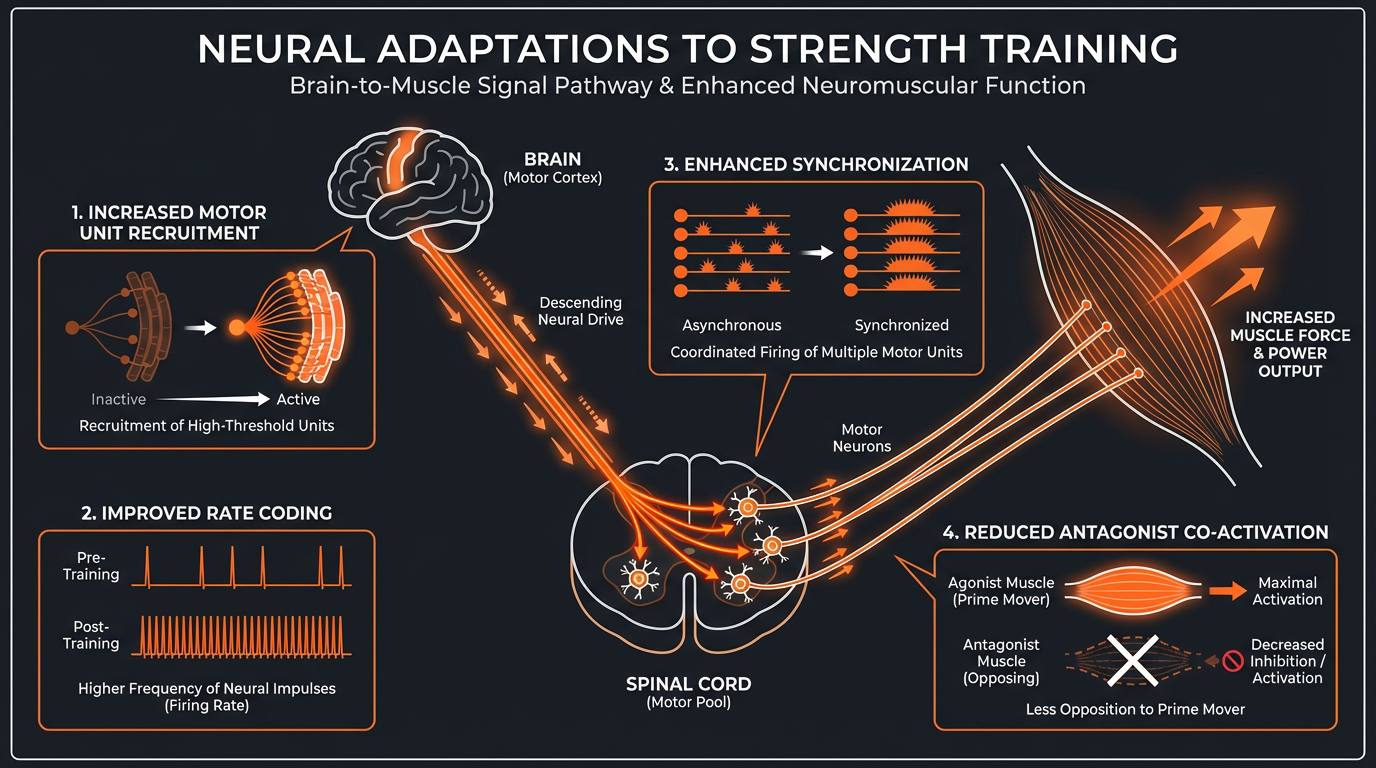
Enhanced Muscle Endurance: Strength training increases muscle fiber recruitment and resilience. Your muscles fatigue slower, which means you can hold pace longer before breaking down.
Injury Prevention: Stronger muscles, ligaments, and tendons protect against the strains, sprains, and overuse injuries that plague endurance athletes. Running puts massive repetitive stress on your body. Strength work builds the armor to handle it.
Better Economy of Movement: Efficient movement is everything in endurance sports. Exercises like squats and deadlifts strengthen the major muscle groups involved in running and cycling, which improves your biomechanics and helps you waste less energy per stride or pedal stroke.
Common Strength Training Myths Debunked
A few common objections keep endurance athletes out of the gym. None of them hold up.
Myth #1: Strength Training Makes You Bulky
You won't turn into a bodybuilder from two or three gym sessions a week. Getting bulky requires eating in a massive surplus and training specifically for hypertrophy. Moderate weights with higher reps build lean, functional muscle that helps you perform without adding significant body mass.
Myth #2: It's Time-Consuming
It doesn't have to be. Two to three 30-minute sessions per week, focused on compound movements, is enough. That's less time than most people spend warming up for a long run.
Myth #3: It's Not Necessary for Endurance Athletes
The American College of Sports Medicine (ACSM) and most sports science researchers disagree. Strength training builds the physical durability and mental toughness you need for long, hard races. Ignoring it is like training on one leg.
Actionable Tips for Incorporating Strength Training
Here's how to add strength work without derailing your endurance training:
- •Start with Core Exercises: Focus on compound exercises like squats, deadlifts, and lunges to engage multiple muscle groups and build core strength.
- •Use Periodization: Structure your training in phases – early season (build base strength), mid-season (increase intensity and reduce volume), and peak season (maintain strength, minimize fatigue).
- •Prioritize Recovery: Ensure proper rest and recovery to prevent overtraining. Use techniques like foam rolling and stretching to enhance muscle recovery.
Real-Life Case Study: A Success Story
I worked with a runner named John who had been dealing with recurring knee injuries and stagnant race times for over a year. We added two sessions a week focused on lower-body and core stability work -- squats, single-leg deadlifts, planks, and step-ups. Within three months, he knocked 3 minutes off his half-marathon time and his knee pain was gone. He didn't run more miles. He just got stronger.
Conclusion
Strength training makes endurance athletes faster, more durable, and more efficient. The research backs it up, and so does practical experience. Two or three short sessions a week, focused on compound lifts with proper periodization, is all it takes. If you've been avoiding the gym because you think it doesn't apply to your sport, it's time to reconsider.
Frequently Asked Questions
- Will lifting weights slow me down as a runner or cyclist?
- No -- it'll actually make you faster. Stronger muscles produce more force per stride or pedal stroke, meaning you use less energy at any given pace. Every serious endurance coach now includes strength work in their athletes' programs.
- How should endurance athletes structure their lifting?
- Two sessions per week, focusing on compound movements at moderate to heavy weight for 3-5 sets of 5-8 reps. Skip the bodybuilder volume -- you want strength without excessive muscle mass. Squats, deadlifts, step-ups, and core work should be your staples.
- Won't gaining muscle hurt my endurance performance?
- Only if you gain a lot of unnecessary mass. Strength training 2x per week at moderate volume builds functional strength without packing on bodybuilder-level muscle. You'd have to eat in a big surplus and train like a bodybuilder to gain enough mass to slow you down.
- Should I lift before or after my endurance training?
- Ideally, separate them by at least 6 hours or put them on different days. If you must combine them, do whatever your priority is first. Most endurance athletes benefit from lifting first when fresh, then doing easy aerobic work after.