The Psychology of Strength Training: Building Mental Toughness
The psychology of strength training and how lifting builds mental toughness. Use the mind-muscle connection and SMART goals to forge lasting discipline.
 Jeff·Aug 19, 2024·3 min read
Key Takeaways
- The mind-muscle connection is legit science that improves both your lifts and mental focus by training your brain to lock in and ignore distractions.
- Setting SMART goals and actually hitting them builds real discipline because every time you crush a target you set, you prove to yourself you can do hard things.
- Use visualization before heavy sets, swap negative self-talk for reminders of past wins, and control your breathing to push through mental barriers that limit you more than physical ones.
- Training with other people makes you mentally tougher through accountability and competition, plus you'll naturally push harder when someone's watching.
- The mental toughness you build grinding through tough sets carries over to handling stress and challenges in every other part of your life.
Get This on WhatsApp
Get a quick summary and link sent straight to your WhatsApp.
Send Me This ArticleMost lifters think strength training is purely physical. Lift heavy, eat right, sleep well, repeat. But after years of coaching, I can tell you the mental side matters just as much -- maybe more. Building mental toughness in the gym carries over to everything else in your life. Here's how that works, and what you can do about it.
The Mind-Muscle Connection
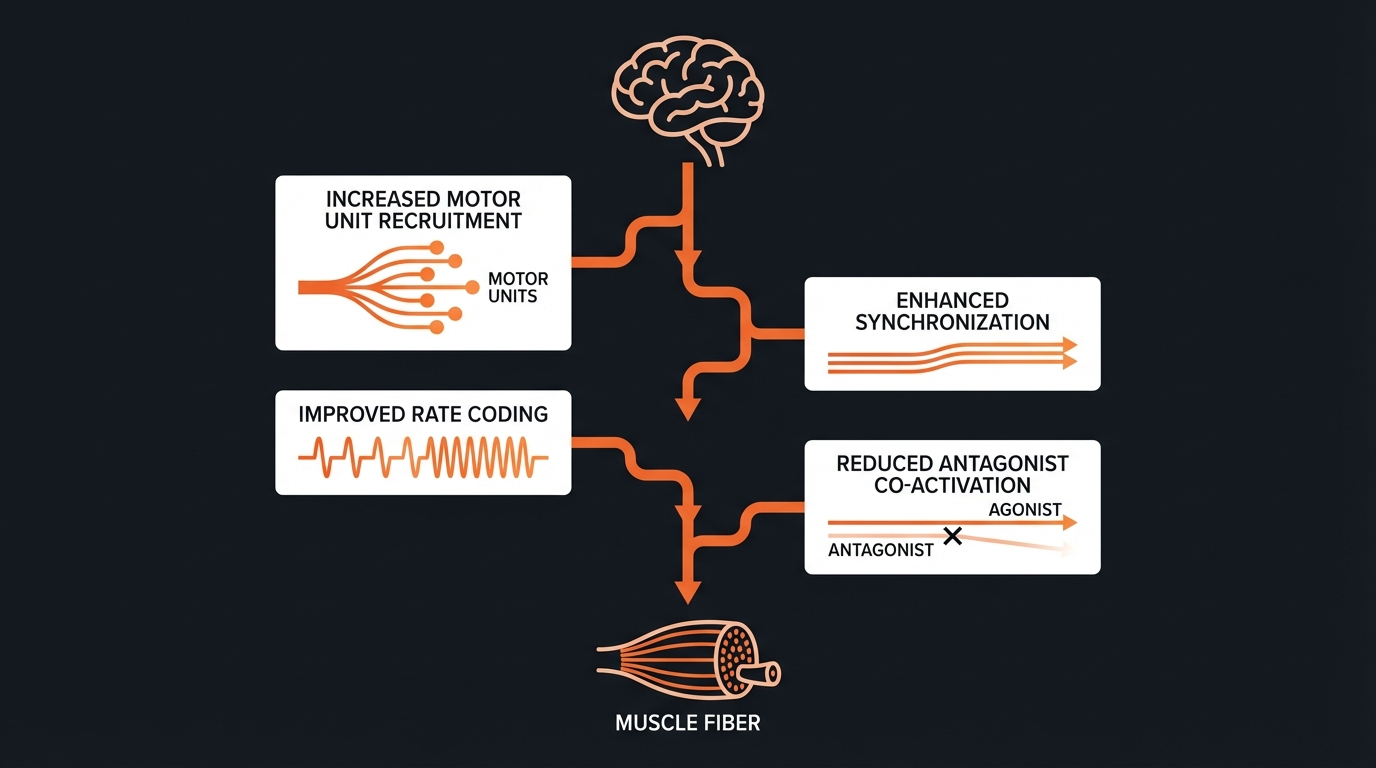
The "mind-muscle connection" is real, not just gym-bro talk. When you deliberately focus on the muscle you're working, you get better activation. A study from the National Center for Biotechnology Information confirmed that focused attention during exercise improves both performance and mental resilience. Think of it as a form of active meditation. You're training your brain to lock in and block out distractions -- a skill that pays off well outside the gym.
The Role of Goal Setting
Goal setting matters for strength training, and not just because you want a bigger squat. The process of setting a target, working toward it, and hitting it builds discipline. SMART goals (Specific, Measurable, Achievable, Relevant, Time-bound) give you a clear framework:
- •Specific: Know exactly what you're after -- a certain weight, a rep PR, better form on a lift.
- •Measurable: Track your numbers so you can see progress.
- •Achievable: Push yourself, but be honest about what's realistic right now.
- •Relevant: Your goals should line up with what actually matters to you.
- •Time-bound: Give yourself a deadline. Open-ended goals tend to drift.
Every time you hit a target you set for yourself, you're reinforcing the belief that you can do hard things. That compounds over time.
Overcoming Mental Barriers
Strength training means regularly pushing through discomfort. That's the point. But many lifters hit mental barriers -- fear of injury, self-doubt, or just plain gym anxiety -- that hold them back more than any physical limitation.
- •Visualization: Before a heavy set, picture yourself completing it. This isn't new-age nonsense. It's a mental rehearsal that primes your nervous system.
- •Positive Self-talk: Swap "I can't" for "I've done hard things before." Simple, but it works.
- •Breathing Techniques: Deep breath in through the nose, slow exhale through the mouth. Calms the nervous system and sharpens focus. Use it before big lifts.
The Social Aspect
Training with other people makes you tougher. There's accountability, friendly competition, and the simple fact that you'll push harder when someone is watching. A study from the American Psychological Association found that social interaction during exercise improves both mental health and motivation.
Find a training partner, join a lifting group, or even just become a regular at your gym. Having people around who share your goals creates a support system you didn't know you needed.
Real-life Examples
I've seen this play out dozens of times. One guy, John, started training at 45. He was stressed, out of shape, and intimidated by the gym. He started with small goals -- just showing up three times a week, learning to squat properly. Six months later, he wasn't just stronger physically. He was calmer, more confident, and handling work stress that used to overwhelm him. The discipline he built under the bar carried over to everything else.
Elite athletes use these same mental tools -- visualization, self-talk, breathing -- to perform under pressure. But you don't need to be a pro athlete to benefit. Anyone who trains consistently and intentionally will develop mental toughness as a byproduct.
Conclusion
Strength training builds more than muscle. A strong mind-muscle connection, clear goals, strategies for pushing through mental barriers, and a solid training community all contribute to mental toughness that goes well beyond the gym. The barbell doesn't care about your bad day. It just asks you to show up and do the work. That's where the mental growth happens.
Put these strategies into practice in your next training session and see what changes.
Frequently Asked Questions
- Does lifting weights actually improve mental health?
- The research is clear: strength training reduces symptoms of depression and anxiety, improves sleep, and boosts self-confidence. There's something about loading a heavy barbell that teaches you you're capable of more than you thought. Most lifters will tell you the gym saved their mental health.
- How do I stay motivated to work out when I don't feel like it?
- Stop relying on motivation -- build discipline instead. Set a non-negotiable schedule and show up even when it's a trash day. On days you feel terrible, just commit to warming up. Nine times out of ten, once you start, you'll finish the workout.
- Why do I feel so good after lifting heavy?
- Heavy lifting triggers a massive release of endorphins, dopamine, and serotonin. It also gives you a tangible sense of accomplishment -- you literally just moved something heavy that you couldn't move six months ago. That physical evidence of progress is a powerful mood booster.
- Can lifting weights help with stress and anxiety?
- It's one of the best stress relievers that exists. The physical exertion burns off cortisol, the focus required gives your brain a break from anxious thoughts, and the routine provides structure. Many therapists now recommend strength training as part of anxiety treatment.