Training with a Partner vs Solo: Which Gets Better Results?
Some people swear by training partners. Others would rather train alone. Here is what the research and real experience say about which approach gets better results.
 Jeff·Feb 10, 2026·12 min read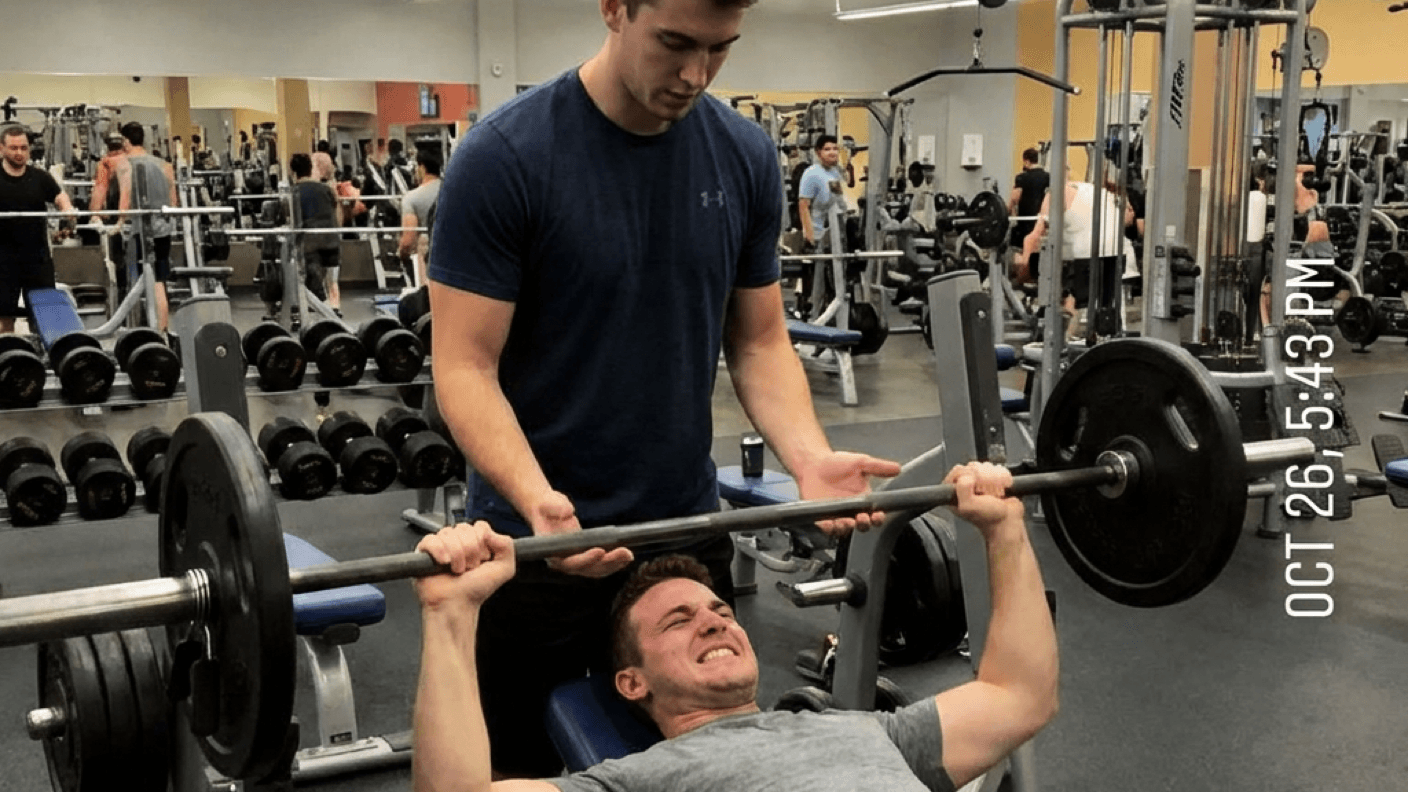
Key Takeaways
- Training with a partner makes you work harder and train longer, but only if they're about 10-40% stronger than you.
- You'll show up more consistently when someone is counting on you being there.
- Partners are clutch for heavy compounds like bench and squats where you need a real spotter to push to failure safely.
- A bad partner who's always late, talks too much, or has completely different goals will wreck your progress worse than training alone.
- The sweet spot is finding someone with similar goals who matches your schedule and intensity without turning every session into social hour.
Get This on WhatsApp
Get a quick summary and link sent straight to your WhatsApp.
Send Me This ArticleThe great training partner debate
I have trained both ways extensively. For the first three years of my lifting career, I trained exclusively with my buddy Marcus. We were at the gym together five days a week, spotted each other on every heavy set, and pushed each other in ways I probably would not have pushed myself.
Then Marcus moved across the country and I started training alone. For the first two weeks, I hated it. The gym felt empty and the heavy sets felt scarier without someone standing behind the bar. But something interesting happened around week three: I started getting more done in less time. My sessions got shorter, more focused, and honestly, more productive.
Both approaches worked. Both had trade-offs. And the right answer depends on who you are, what your goals are, and whether you can find a partner who actually makes you better rather than worse.
What the research says about training with a partner
The research on training partners is surprisingly consistent: exercising with a partner improves performance compared to exercising alone. But the devil is in the details.
Feltz et al. (2011) published a meta-analysis examining the effect of training with others versus alone and found that people exercised harder and longer when working out with a partner. The effect was strongest when the partner was slightly more capable than the individual (about 40% better, to be specific). Too much of a gap and the effect reversed because the weaker person felt outclassed and gave up.
Irwin et al. (2012) found that having a training partner increased exercise duration by an average of 24 minutes per session. That is a lot of extra volume over weeks and months.
A study by Stocker et al. (2019) showed that partner-based resistance training improved adherence rates compared to individual training. People were simply more likely to show up when someone was expecting them.
So the research supports training with a partner for three main outcomes: you work harder, you train longer, and you show up more consistently. But these benefits are not automatic. They depend entirely on the quality of the partnership.
The Kohler effect: how a partner makes you work harder
The most interesting finding in the training partner research is the Kohler effect. Named after Otto Kohler who first described it in the 1920s, this is the phenomenon where the weaker member of a group works harder to keep up with the stronger member.
Feltz et al. (2011) demonstrated this in exercise settings. When people were paired with a slightly superior partner (someone who could plank longer, cycle harder, or lift more), the weaker person's performance increased significantly compared to when they worked alone. The effect was robust across different types of exercise and different study designs.
The key word is "slightly." The partner needs to be better than you, but not so much better that catching up feels impossible. If your training partner benches 400 and you bench 185, you are not going to experience the Kohler effect. You are going to experience demoralization.
The ideal partner is about 10-40% stronger or more experienced than you. Close enough that pushing yourself feels like you might close the gap. Far enough ahead to keep you reaching.
This also works in reverse. If you are the stronger partner, you benefit from the social facilitation effect, which is the well-documented tendency for people to perform better on well-learned tasks when others are watching. So even the stronger partner gains something from the arrangement.
When a training partner helps
Based on both the research and a lot of lived experience, here are the situations where a training partner adds genuine value:
Heavy compound lifts. Squats, bench press, overhead press, and deadlifts are all safer with a spotter. A good training partner lets you push to true failure on bench press without worrying about the bar pinning you. They can watch your squat depth and form from behind. They give you the confidence to attempt weights you might not try alone.
Accountability on bad days. We all have days where the couch sounds better than the gym. Knowing that someone is waiting for you at 6 AM is a powerful motivator. You might let yourself down, but you are less likely to let someone else down. This accountability effect is one of the strongest benefits a partner provides.
Forced reps and advanced techniques. Certain training techniques require a partner. Forced reps (where the spotter assists just enough to help you grind through reps past failure) are impossible to do safely alone. Negatives (loading more weight than you can lift concentrically and controlling the eccentric with a partner's help on the concentric) require two people. These techniques are not necessary, but they are useful tools for advanced lifters.
Energy and competition. There is a specific energy that comes from training alongside someone who is working as hard as you are. It is not just the Kohler effect. It is something more primal. When you see your partner grinding out a rep, grunting through the last set, refusing to quit, something in you responds. You match their intensity. You feed off each other.
The best training sessions of my life were with Marcus. Sessions where we pushed each other to places neither of us would have gone alone. PRs that happened because the other person was there, refusing to let you sandbag.
When a training partner hurts
A bad training partner is worse than no partner at all. Here is when the arrangement falls apart:
Mismatched schedules. If you are constantly rearranging your day to accommodate your partner's availability, training becomes a logistical headache instead of a routine. The inconsistency this creates can be more damaging than the partner benefits.
Vastly different goals. If you are training for strength and your partner wants to do high-rep pump work, every session becomes a compromise. Nobody gets the training stimulus they actually need. You end up doing their workout, they do yours, and both of you progress slower than you would alone.
Too much socializing. Some training partners turn every session into a social hour. Five minutes of lifting, ten minutes of conversation between sets, debates about what to do next. What should be a 60-minute session becomes a 90-minute hangout with some exercise sprinkled in. If your rest periods are longer because of chatting rather than because of actual recovery needs, your partner is a net negative.
Ego competition instead of supportive competition. Healthy competition makes both people better. Toxic competition makes both people dumber. If your partner loads weight they cannot handle because you just set a PR, or if you skip warm-up sets because you do not want to look weak, the partnership is making your training worse and more dangerous.
Reliability problems. Nothing kills a training partnership faster than one person constantly canceling, showing up late, or not being present during the session. If you cannot count on your partner to show up and focus, you are better off alone.
The case for training solo
Here is the thing nobody in the "find a training partner" crowd wants to admit: some of the most successful lifters in the world train alone.
Solo training has real advantages:
Complete schedule flexibility. You go when you want, for as long as you want. No coordination required. If your schedule changes week to week, solo training eliminates the biggest friction point of partner training.
Total focus. No conversation, no waiting for someone else to finish their set, no compromising on exercise selection. You put your headphones in and enter your own world. For people who train as a form of meditation or stress relief, this quality of focused solitude is the whole point.
Your program, your pace. You rest exactly as long as you need. You do the exercises that are right for your goals. You superset when you want, take longer breaks when you need them, and adjust on the fly without negotiation.
Self-reliance. When you train alone, you develop an internal drive that does not depend on anyone else. If you can push through hard sets without someone behind you yelling encouragement, you are building a mental toughness that transfers to everything in your life. You learn to motivate yourself, which is a skill that a training partner can actually atrophy if you are not careful.
Introvert-friendly. If social interaction drains your energy (and for a significant portion of the population, it does), the gym might be one of the few places where you can be alone with your thoughts. Forcing a social component into that space can turn something restorative into something exhausting.
I know a competitive powerlifter who trains in his garage, alone, in silence. No music, no partner, no distractions. He pulled 700 pounds that way. It is not the social interaction that moves the weight. It is the intention.
Different personalities different approaches
At the risk of oversimplifying, here is a rough guide based on personality type:
You probably benefit from a partner if:
- •You struggle with accountability and are prone to skipping sessions
- •You thrive on social energy and competition
- •You train heavy compound lifts and want a reliable spotter
- •You are a beginner who is still learning and could benefit from someone slightly ahead of you
- •You find solo training boring and that boredom reduces your effort
You probably benefit from training solo if:
- •You are self-motivated and do not need external accountability
- •You train at unusual or inconsistent times
- •You use the gym as decompression time and prefer solitude
- •You are on a very specific program and do not want to compromise
- •You find that conversation and social dynamics drain your training focus
- •You are introverted and need that alone time
Neither is inherently better. The best approach is the one that gets you to the gym consistently and allows you to train with focus and intensity when you are there.
How to find a good training partner
If you decide a training partner would benefit you, finding the right person matters a lot. Here is what to look for:
Similar strength level. Within 10-40% of each other on key lifts. Close enough that you can use the same equipment with minor weight changes. Far enough apart that the weaker partner benefits from the Kohler effect.
Compatible goals. You do not need identical goals, but they should be in the same neighborhood. Two people who both want to get bigger and stronger can train together effectively even if one is more focused on strength and the other on hypertrophy. A bodybuilder and a marathon runner? That is a harder match.
Compatible schedules. This is non-negotiable. If you cannot reliably be at the same place at the same time at least 3 days per week, the partnership will not last.
Good communication. A training partner needs to be honest. "That rep did not count, you were two inches high." "You are rounding your back, let me see the next set." Honesty about form, effort, and performance is how the partnership produces results. If your partner only tells you what you want to hear, they are a friend who happens to be at the gym, not a training partner.
Reliability. This is the single most important trait. A training partner who cancels 30% of the time is not a training partner. They are an acquaintance with a gym membership.
Where to look: Ask people at your gym who train at the same time you do. Post in local fitness groups on Reddit or Facebook. Check if your gym has a training partner board. Some fitness apps have partner-matching features. Or just notice who trains hard and consistently at your gym and strike up a conversation.
Red flags in a training partner
Avoid anyone who:
- •Wants to talk more than train
- •Pushes you to use weight you are not comfortable with (there is a line between encouragement and recklessness)
- •Makes the partnership feel one-sided (they get spotted every set but "forget" to spot you)
- •Is chronically late or unreliable
- •Takes everything as a competition in a way that compromises safety
- •Gives unsolicited form advice that contradicts your coach or program
- •Makes you feel bad about your current level instead of encouraging progress
A bad training partner will set you back further than no partner at all. Be selective. And if a partnership is not working, end it. You can still be friends outside the gym.
The hybrid approach
Here is what I have found works best for most people, and it is what I do now: train solo most of the time with occasional partner sessions.
My regular training is alone. I have my program, my schedule, my headphones, my own little world in the gym. This gives me the consistency and focus I need for productive daily training.
But once or twice a month, I train with a friend who is around the same strength level. We do a heavy session together, spot each other on max attempts, push each other through brutal sets, and feed off the competitive energy. These sessions are some of the hardest and most enjoyable workouts of the month.
This hybrid approach gives you the best of both worlds. The consistency and focus of solo training with the periodic intensity boost of partner training. You do not depend on anyone else for your routine, but you get the benefits of training with someone when the opportunity arises.
Whatever you choose, remember that the method matters less than the consistency. A solo lifter who shows up five days a week for years will build a better physique than a pair of training partners who can only coordinate three sessions a month. The best training situation is the one you actually do. Regularly. For years.
Everything else is details.
Frequently Asked Questions
- Is it better to work out alone or with a partner?
- Both work, but a solid training partner gives you a slight edge on heavy compounds because of forced accountability and built-in spotting. If your partner is unreliable or has a completely different schedule, go solo — consistency beats everything.
- What should I look for in a gym partner?
- Similar strength level, matching schedules, and compatible training goals. The most important thing is reliability — a partner who cancels constantly is worse than no partner at all.
- Can a training partner help me lift more weight?
- Yes. Research shows people push harder with a partner present, adding roughly 5-10% more output. The competitive element and having a spotter who lets you train closer to failure both contribute to better performance.
- How do I train with a partner who's stronger or weaker than me?
- Just change the weight between sets — it takes 30 seconds. The real issue is program compatibility, not strength levels. As long as you're running similar exercises, different loads are easy to manage.