Conditioning for Lifters: Cardio That Won't Kill Your Gains
You can be strong and well-conditioned at the same time. The trick is choosing the right type, amount, and timing of cardio so it supports your lifting instead of undermining it.
 Sam·Feb 8, 2026·8 min read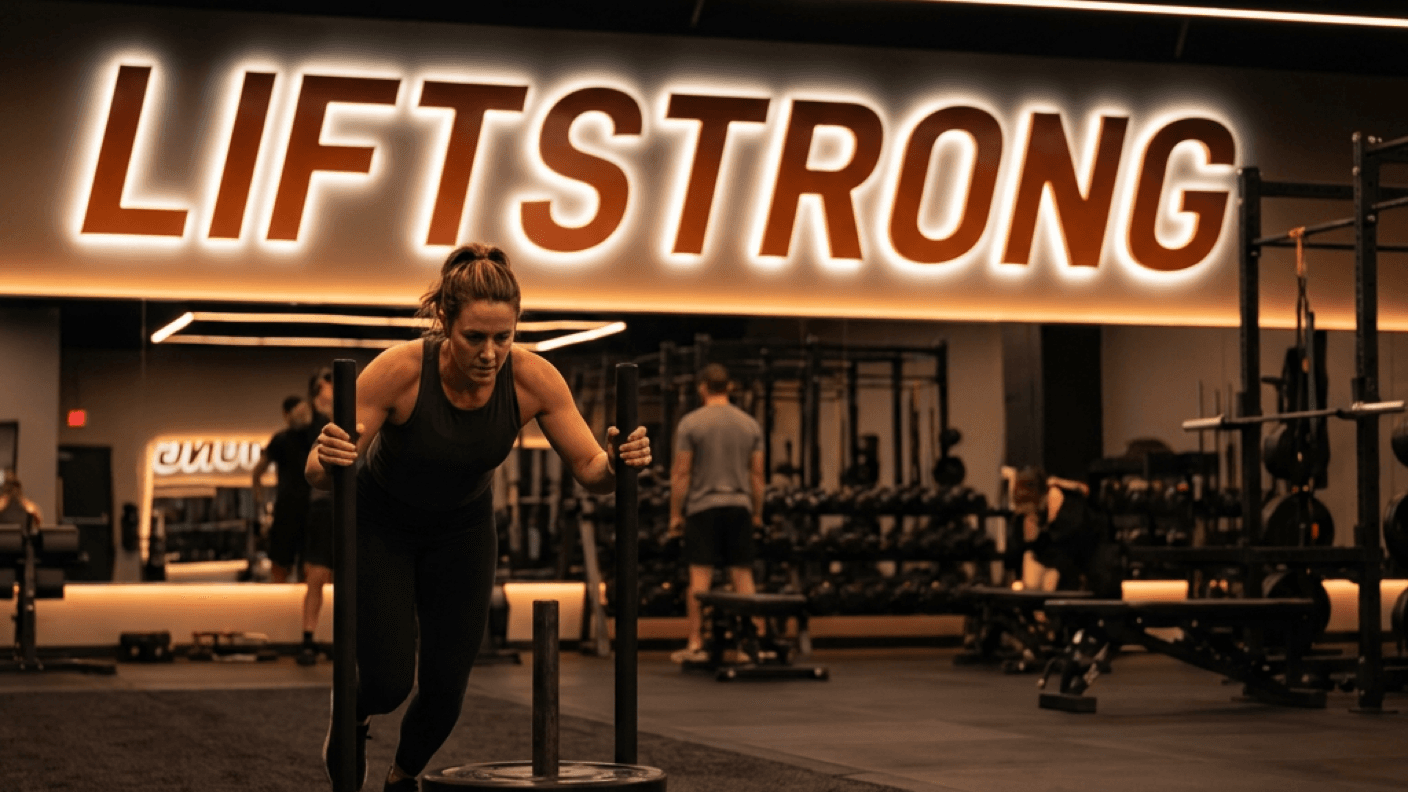
Key Takeaways
- Low-intensity cardio like walking or easy cycling for 20-30 minutes on rest days improves recovery without cutting into your strength gains.
- High-intensity intervals should be kept to 1-2 sessions per week and placed on separate days from heavy lower body training.
- Sled pushes, bike sprints, and rowing are the best conditioning tools for lifters because they build work capacity with minimal muscle damage.
- Doing cardio immediately after lifting is fine for fat loss goals, but keep it to 20 minutes so you do not tank your recovery.
- If your heart rate takes more than 3 minutes to drop below 120 BPM between sets, your conditioning is limiting your training.
Get This on WhatsApp
Get a quick summary and link sent straight to your WhatsApp.
Send Me This ArticleWhy Lifters Need Conditioning
There is a stereotype that strength athletes should avoid cardio like it is kryptonite for muscle. This is wrong, and it has given a lot of lifters permission to have terrible cardiovascular fitness while hiding behind the phrase "I am not doing cardio because I do not want to lose my gains."
Here is why conditioning matters even if your only goal is getting bigger and stronger:
Heart health. Your heart is a muscle. It responds to training stimulus just like your biceps. Neglect it and you are building a strong body on a weak foundation. Cardiovascular disease does not care how much you bench.
Work capacity. Better conditioning means faster recovery between sets. If you are gasping after a set of 5 squats and need 6 minutes before you can go again, your overall training volume suffers. Lifters with better aerobic bases recover faster between sets, handle more training volume, and can train more frequently.
Recovery between sessions. A strong aerobic system improves your body's ability to shuttle nutrients, clear metabolic waste, and recover between workouts. Better conditioned lifters often report less soreness and faster recovery.
General health. Blood pressure, insulin sensitivity, sleep quality, mood, cognitive function -- all improve with regular cardiovascular exercise. You are not just a lifter. You are a human being who needs a functioning cardiovascular system for the next 40-60 years.
The Interference Effect (and Why It Is Overblown)
The "interference effect" is the idea that concurrent training (combining strength and endurance) leads to compromised gains in both. It comes from a 1980 study by Robert Hickson that showed combining heavy endurance training with strength training reduced strength gains compared to strength training alone.
This is real. But the context matters enormously.
Hickson's subjects were doing 6 days per week of intense endurance training (30-40 minutes of interval running plus 6 days of cycling at progressively higher durations). That is a massive endurance workload. Of course it interfered with strength training.
Modern research paints a more nuanced picture:
- •Low-to-moderate cardio (2-3 sessions per week, 20-30 minutes) does not meaningfully interfere with strength or muscle gains in most studies
- •The interference is dose-dependent. More cardio volume equals more interference. A little bit is fine.
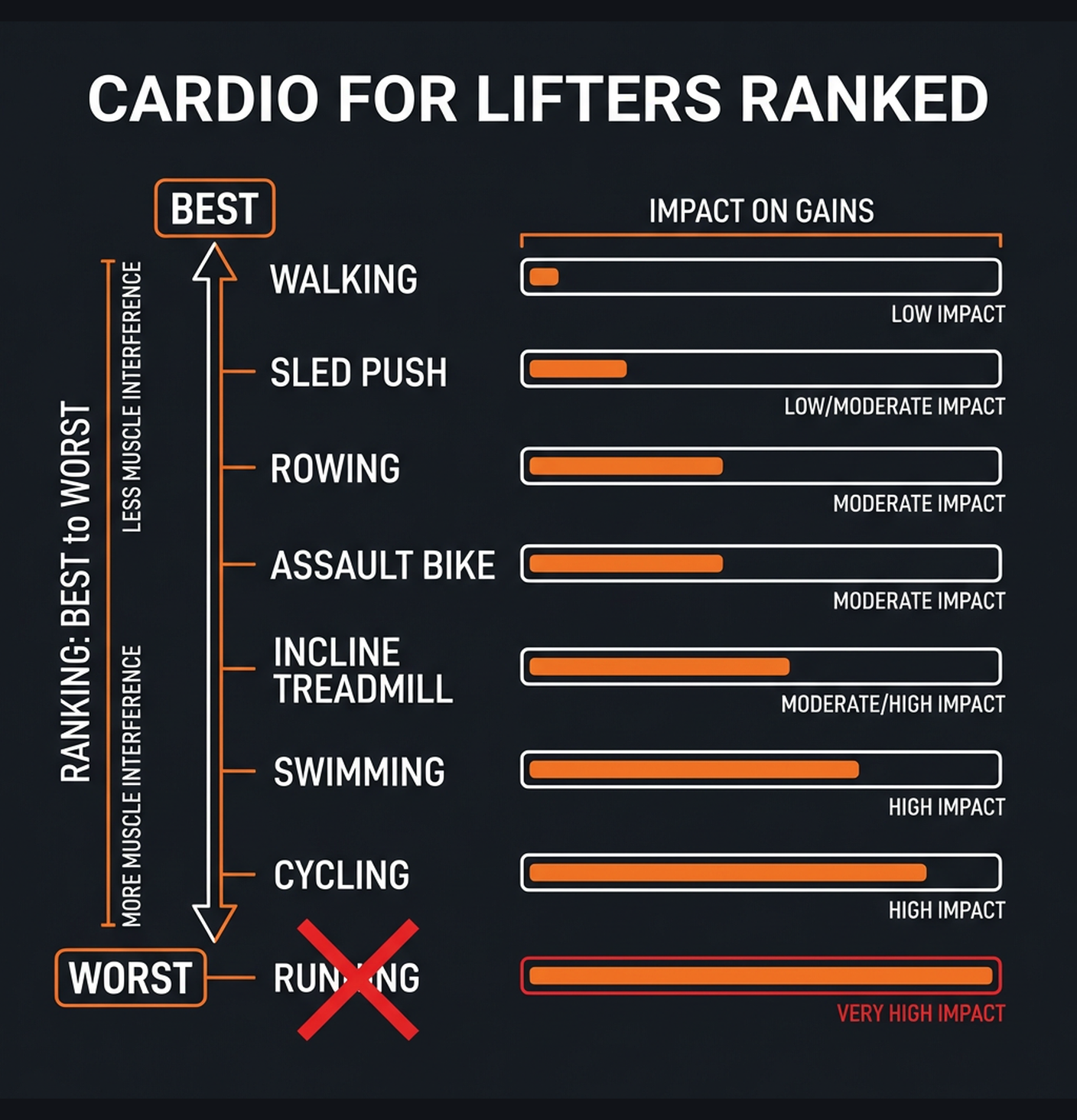
- •The type of cardio matters. High-impact, concentric-heavy modalities (running) interfere more than low-impact options (cycling, rowing, walking)
- •Molecular research shows the interference happens primarily when endurance and resistance exercise are done within the same 3-hour window
So yes, training for a marathon while trying to add 50 lbs to your squat is a bad idea. But 2-3 moderate conditioning sessions per week? That is not going to kill your gains. It is going to make you a healthier, better-recovering lifter.
The Best Conditioning Modalities for Lifters
Not all cardio is created equal. Some forms complement strength training. Others fight against it.
Walking (The King of Lifter Cardio)
Walking is the single most underrated conditioning tool for strength athletes. It requires zero recovery, builds aerobic capacity gently, aids digestion, reduces stress, and can be done every single day without any interference with your lifting.
Aim for 20-45 minutes daily. After meals is ideal. No special equipment needed. This is not "real cardio" according to Instagram fitness influencers, and that is exactly why it works so well -- it builds your aerobic base without adding systemic stress.
Sled and Prowler Work
Sled pushes and drags are the darling of the strength and conditioning world for good reason. They are concentric-only (no eccentric loading), which means they build work capacity and conditioning without the muscle damage and soreness that comes with exercises that have a lowering phase.
You can go heavy for short distances (conditioning + leg strength), light for long distances (aerobic work), or moderate for intervals. Sleds are versatile, easy to recover from, and specific to lower body strength training.
Rowing Machine (Concept2 Erg)
The rower hits the whole body -- legs, back, arms -- in a low-impact motion. You can use it for steady-state work (20-30 minutes at moderate intensity) or intervals (30 seconds hard, 60 seconds easy). It also reinforces the hip hinge pattern, which complements deadlift training.
Assault/Air Bike
The fan bike is brutal but effective. Because the resistance scales with your effort (pedal harder, resistance increases), it is self-regulating. Great for intervals: 10-20 seconds all-out effort followed by 40-60 seconds easy. These sessions are short (10-15 minutes) and extremely effective for building your aerobic capacity.
Incline Treadmill Walking
Set the treadmill to 10-15% incline and walk at 3.0-3.5 mph. This is harder than it sounds. It elevates heart rate into the aerobic zone (120-140 bpm) without the impact of running. It also hammers the glutes and calves, which are muscles that benefit your squat and deadlift.
What to Avoid
Long-Distance Running
Running for 45-60+ minutes creates a lot of eccentric stress on the legs (every footstrike involves absorbing 2-3x your body weight). This causes significant muscle damage to the quads, hamstrings, and calves -- the same muscles you are trying to grow and strengthen with your lower body training.
Running is also catabolic at high volumes and can lead to overuse injuries (shin splints, knee pain, hip issues) that directly interfere with your lifting. Occasional short runs (15-20 minutes) are fine. Regular long-distance running while trying to build strength is working against yourself.
HIIT Classes That Mimic Strength Training
Those bootcamp classes with barbell thrusters, kettlebell swings, box jumps, and burpees for 45 minutes straight? They add training volume and fatigue to the same muscles and joints you are already loading with your strength work. You are essentially doubling your training stress without doubling your recovery.
If you want to do HIIT, use modalities that do not overlap with your lifting: bike sprints, sled pushes, rowing intervals. Keep the HIIT to 1-2 sessions per week and do not go longer than 15-20 minutes.
How Much Conditioning Is Enough?
Here is a practical recommendation for lifters who train 3-5 days per week:
| Type | Frequency | Duration | Intensity |
|---|---|---|---|
| Walking | Daily | 20-45 min | Low (can hold a conversation) |
| Steady-state (row, bike, incline walk) | 1-2x/week | 20-30 min | Moderate (heart rate 120-140 bpm) |
| Intervals (bike, sled, rower) | 1x/week | 10-15 min | High (short bursts with rest) |
That is it. Walking every day plus 2-3 dedicated conditioning sessions per week. Total additional training time: maybe 90 minutes per week. This is manageable for anyone and will not interfere with strength gains.
When to Do Conditioning
Timing matters more than most lifters realize.
Best case scenario: Separate conditioning from lifting by at least 6 hours. Lift in the morning, do conditioning in the evening, or vice versa. This minimizes the molecular interference between the two types of training.
Second best: Do conditioning after lifting, never before. If you show up to squat day with fatigued legs from a hard bike session, your squat performance will suffer. But doing 20 minutes on the rower after you finish your lifting session is fine -- your main work is already done.
Acceptable: Do conditioning on your off days from lifting. Monday/Wednesday/Friday lifting, Tuesday/Thursday conditioning. This works well for recovery-focused sessions like walking or easy steady-state.
Avoid: Hard conditioning right before heavy lifting. This applies especially to lower body -- do not do heavy sled work or bike intervals and then try to squat. Your legs will not perform, and you are increasing injury risk.
LISS vs HIIT: Which Is Better for Lifters?
Low-Intensity Steady State (LISS) includes walking, easy cycling, light rowing, and incline treadmill at a conversational pace. Heart rate stays in the 120-140 bpm range.
High-Intensity Interval Training (HIIT) includes sprints, hard sled pushes, assault bike intervals, and rowing sprints. Heart rate spikes to 160-180+ bpm during work intervals.
Both have a place. But if you are forced to pick one, LISS is the better choice for lifters.
Here is why: LISS builds the aerobic base that supports everything else. It improves recovery, requires almost no recovery itself, and can be done frequently without interfering with strength training. HIIT is more time-efficient but also more fatiguing, harder to recover from, and can interfere with lifting if overdone.
The ideal approach is mostly LISS with a small amount of HIIT. Think of it as 80% easy, 20% hard. Most of your conditioning should feel comfortable. One session per week should be genuinely challenging.
The Bottom Line
You do not have to choose between being strong and being conditioned. Walk every day. Do 2-3 moderate conditioning sessions per week. Pick modalities that do not beat up your joints or compete with your lifting. Time them intelligently.
Your heart will thank you. Your work capacity will improve. Your recovery between sets and between sessions will get better. And no, you will not lose your gains. The lifters who avoid all cardio are not protecting their muscle -- they are just out of shape.
Frequently Asked Questions
- Will cardio kill my muscle gains?
- Not if you do it right. Low to moderate intensity cardio like walking, cycling, or easy rowing has minimal impact on muscle growth. The interference effect mostly shows up with high-volume running or doing intense cardio immediately before lifting.
- What is the best type of cardio for lifters?
- Low-impact options like cycling, rowing, swimming, and incline walking are best because they cause less muscle damage than running. The sled push is another great choice since it has no eccentric component, meaning almost zero soreness the next day.
- When should I do cardio relative to my lifting sessions?
- Ideally, separate cardio from lifting by at least 6-8 hours, or do it on off days. If you must do both in one session, lift first and do cardio after. Doing intense cardio before lifting reduces your strength output and compromises your training quality.
- How much cardio should a strength athlete do per week?
- Two to three sessions of 20-30 minutes at a moderate intensity is plenty for general health without interfering with recovery. You do not need to run a 5K every day. If fat loss is the goal, increase gradually and monitor whether your lifting performance drops.