Longevity Training: How to Build Strength That Lasts Decades
Strength is the single best predictor of how long and how well you will live. Here is how to train in your 30s, 40s, 50s, and beyond to stay strong for life.
 Jeff·Apr 5, 2026·9 min read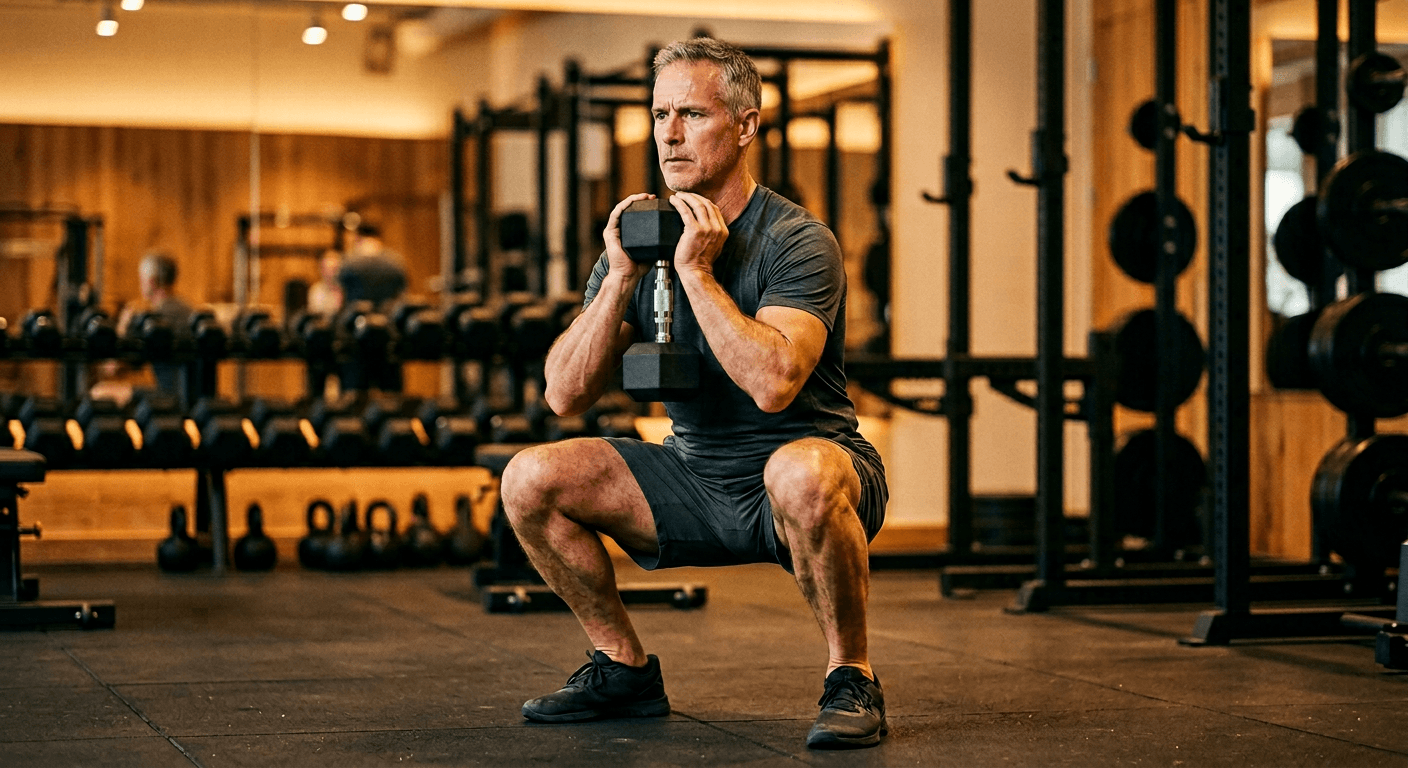
Get This on WhatsApp
Get a quick summary and link sent straight to your WhatsApp.
Send Me This ArticleStrength Is the Best Predictor of How Long You Will Live
This is not hyperbole. Multiple large-scale studies have shown that muscular strength -- particularly grip strength and lower body strength -- is one of the strongest independent predictors of all-cause mortality. A 2018 study in the BMJ following over 500,000 people found that low grip strength was associated with a higher risk of death from heart disease, respiratory disease, cancer, and all causes combined.
Put simply: weak people die sooner. Strong people live longer and live better.
The problem is that most training advice is written for 25-year-olds trying to maximize their bench press or get stage-ready for a bodybuilding show. Very little quality information exists for the lifter who wants to be squatting, carrying groceries, playing with grandkids, and living independently at 80. That is what longevity training is about.
Sarcopenia: The Silent Thief
Starting around age 30, you begin losing muscle mass at a rate of approximately 3-8% per decade. This process, called sarcopenia, accelerates after age 50 and becomes dramatic after 70. Without intervention:
- •By age 50, most people have lost 10-15% of their peak muscle mass
- •By age 70, that number can reach 25-30%
- •By age 80, up to 50% of muscle mass may be gone
But here is the critical point: sarcopenia is not inevitable. It is the result of disuse, not simply aging. People who maintain consistent resistance training throughout their lives retain dramatically more muscle mass than sedentary individuals. Studies of lifelong strength athletes show muscle quality and function far superior to sedentary people 20-30 years younger.
You cannot stop aging. You can dramatically slow its effects on your body. The barbell is the closest thing we have to an anti-aging drug.
The Decade Athlete Mindset
The shift from "performance training" to "longevity training" is not about giving up. It is about redefining what winning looks like.
A 25-year-old wins by adding 10 lbs to their squat. A 50-year-old wins by still being able to squat. A 70-year-old wins by getting off the toilet unassisted.
The decade athlete thinks in 10-year windows:
- •What do I need to be able to do at 50? 60? 70? 80?
- •What are the biggest risks to my independence at each stage?
- •What am I doing today to ensure I am still training in 10 years?
This is not about lowering your standards. It is about raising them -- holding yourself to the standard of being strong, mobile, and capable for the rest of your life.
Training Principles for Longevity
Joint Health Over Personal Records
A torn rotator cuff at 28 is a setback. A torn rotator cuff at 55 can be career-ending for your training. As you age, the risk-reward calculation shifts. That does not mean you never push hard. It means you pick your battles wisely.
- •Stop ego-lifting. Use a weight you can control through a full range of motion.
- •If an exercise consistently causes joint pain, find an alternative. Dumbbell bench press instead of barbell. Trap bar deadlift instead of conventional. The muscle does not care what implement loaded it.
- •Warm up properly. 10-15 minutes of targeted warm-up is not optional after 40.
Movement Quality Over Quantity
One perfect rep is worth more than ten sloppy ones. This becomes increasingly true as you age because:
- •Your connective tissue recovers more slowly
- •Compensatory movement patterns lead to injuries faster
- •The consequences of injury are more severe
Film yourself occasionally. Get a training partner or coach to check your form. Movement quality should improve every decade, even as absolute numbers may eventually decline.
Deload Discipline
Young lifters can get away with pushing hard for months without a deload. After 40, that approach leads to accumulation injuries -- the kind that build slowly until something breaks.
Program deloads proactively:
- •30s: Deload every 6-8 weeks
- •40s: Deload every 4-6 weeks
- •50s and beyond: Deload every 3-4 weeks
A deload does not mean doing nothing. Reduce weights by 40-50% and volume by 30%, focus on movement quality, and let your joints and connective tissue recover.
Mobility Work Is Training
After 40, mobility work is not a nice-to-have. It is a survival skill. Spend 10-15 minutes daily on:
- •Hip flexor stretches and 90/90 positions
- •Thoracic spine rotations
- •Ankle mobility drills
- •Shoulder CARs (Controlled Articular Rotations)
- •Deep squat holds
The goal is to maintain the ranges of motion you need for your lifts and for daily life. Use it or lose it is brutally true for mobility.
Grip Strength: A Longevity Biomarker
Grip strength deserves special attention. It is one of the most reliable biomarkers of biological age and overall health. Research consistently shows:
- •Strong grip correlates with lower rates of cardiovascular disease
- •Grip strength predicts disability in old age better than blood pressure
- •A decline in grip strength often precedes broader physical decline
Train your grip directly. Dead hangs, farmer's walks, towel pull-ups, and plate pinches are all excellent options. If you can hang from a bar for 60 seconds and farmer's walk your bodyweight (total, both hands), you are in good shape.
Minimum Effective Dose for Maintaining Muscle
Life gets busy. Careers, families, responsibilities all compete for your training time. The good news: maintaining muscle requires far less stimulus than building it.
Research suggests that as few as 2 training sessions per week, 6-9 hard sets per muscle group per week, is sufficient to maintain muscle mass and most of your strength. That is roughly 45-60 minutes twice a week.
The key is that those sessions need to include genuine effort. Maintenance is not the same as going through the motions. Two focused sessions with challenging weights maintain more muscle than four half-hearted sessions.
Programming by Decade
Training in Your 30s
You are still in your physical prime, but the foundation you build now determines your trajectory for the next 40 years.
Focus areas:
- •Build the biggest strength and muscle base you can
- •Establish bulletproof movement patterns
- •Start prioritizing mobility and joint health before problems appear
- •Build an aerobic base (Zone 2 cardio, 2-3x/week)
Training structure: 4 days per week. Heavy compounds, moderate accessory work. Push hard, but smart.
Training in Your 40s
Recovery starts to slow noticeably. Hangovers are worse, sleep is more disrupted, and injuries take longer to heal. Adjust accordingly.
Focus areas:
- •Maintain strength on major lifts, but stop chasing 1-rep maxes
- •Work in the 3-6 rep range for strength, 8-12 for hypertrophy
- •Increase warm-up time to 10-15 minutes
- •Add dedicated mobility work (10 min daily)
- •Deload every 4-6 weeks
- •Prioritize sleep (7-9 hours, no negotiation)
Training structure: 3-4 days per week. Full-body or upper/lower split. Include one day focused on carries, mobility, and conditioning.
Training in Your 50s
This is where consistency beats intensity. Your goal is to keep showing up decade after decade.
Focus areas:
- •Train 3 days per week with full-body sessions
- •Use moderate weights (RPE 7-8, leave 2-3 reps in the tank)
- •Emphasize balance and unilateral work (single-leg exercises, lunges)
- •Train grip strength directly twice per week
- •Daily mobility work becomes essential
- •Deload every 3-4 weeks
- •Annual check-ups should include DEXA scans for bone density
Training structure:
| Day | Focus | Example Exercises |
|---|---|---|
| Monday | Lower emphasis | Goblet Squat, RDL, Lunges, Leg Press |
| Wednesday | Upper emphasis | DB Bench, Cable Row, DB Shoulder Press, Chin-ups |
| Friday | Full body + carries | Trap Bar DL, Push-ups, Farmer's Walks, Core work |
Training in Your 60s and Beyond
Now the goal is functional independence. Can you get off the floor? Carry luggage? Walk up stairs without holding the railing? Catch yourself if you trip?
Focus areas:
- •2-3 training sessions per week
- •Emphasize getting up and down from the floor (Turkish get-ups, floor-to-standing transitions)
- •Balance training becomes critical for fall prevention
- •Continue heavy-enough resistance training (relative to your capacity)
- •Walk daily (30+ minutes)
- •Train grip, carry heavy things, maintain hip and ankle mobility
Falls are the leading cause of injury-related death in adults over 65. Strength training, balance work, and maintaining mobility are literally life-saving at this stage.
Recovery Changes With Age
Sleep
Your sleep architecture changes as you age. You get less deep sleep and are more easily disrupted. Fight back:
- •Keep a consistent sleep and wake time
- •Cool, dark room (65-68 degrees)
- •Limit caffeine after noon (your clearance rate slows with age)
- •Consider magnesium glycinate before bed
Stress Management
Cortisol management becomes increasingly important. Chronic stress accelerates muscle loss and impairs recovery. Find what works: walking, meditation, time in nature, therapy. This is not soft science -- it directly impacts your training results.
Recovery Between Sessions
Allow 48-72 hours between training the same muscle groups after age 40. If you trained heavy lower body on Monday, doing heavy squats again on Wednesday is probably too soon. This is why full-body sessions 3 days per week with rest days between them works so well for older lifters.
Nutrition for Aging Lifters
Protein
Older adults need MORE protein, not less. After 40, muscle protein synthesis becomes less responsive to protein intake (a phenomenon called anabolic resistance). To compensate:
- •Aim for 1.0-1.2 grams per pound of bodyweight
- •Spread protein across 4+ meals
- •Each meal should contain at least 35-40 grams (the threshold is higher than for younger lifters)
- •Leucine-rich protein sources (whey, eggs, meat) are particularly important
Vitamin D
Deficiency is epidemic, especially in people over 50. Low vitamin D is linked to muscle weakness, increased fall risk, and bone loss. Get your blood levels tested. Supplement 2,000-5,000 IU daily to maintain levels of 40-60 ng/mL.
Omega-3 Fatty Acids
EPA and DHA from fish oil help manage inflammation, support joint health, and may improve muscle protein synthesis. Aim for 2-3 grams of combined EPA/DHA daily.
Creatine
Creatine is not just for young bodybuilders. Research in older adults shows benefits for muscle mass, strength, and even cognitive function. Take 5 grams daily.
Calcium and Bone Health
Bone density matters. Strength training is the best stimulus for maintaining bone density, but adequate calcium (1,000-1,200 mg/day from food and supplements) and vitamin K2 support the process.
The Bottom Line
The best training program is one you will still be doing in 20 years. That requires a shift in mindset from short-term performance to long-term capability. Train heavy enough to maintain muscle and strength. Move well. Take care of your joints. Eat enough protein. Sleep. Deload before you are forced to.
The lifter who is still squatting at 70 did not get there by accident. They got there by being smart, consistent, and humble enough to adapt their training to their body's changing needs. Start thinking that way now, regardless of your age, and you will be building strength that lasts decades.
Frequently Asked Questions
- What should I know about strength is the best predictor of how long you will live?
- This is not hyperbole. Multiple large-scale studies have shown that muscular strength -- particularly grip strength and lower body strength -- is one of the strongest independent predictors of all-cause mortality.
- What should I know about sarcopenia: the silent thief?
- Starting around age 30, you begin losing muscle mass at a rate of approximately 3-8% per decade. This process, called sarcopenia, accelerates after age 50 and becomes dramatic after 70. Without intervention:
- What should I know about decade athlete mindset?
- The shift from "performance training" to "longevity training" is not about giving up. It is about redefining what winning looks like.
- What should I know about joint health over personal records?
- A torn rotator cuff at 28 is a setback. A torn rotator cuff at 55 can be career-ending for your training. As you age, the risk-reward calculation shifts. That does not mean you never push hard. It means you pick your battles wisely.
- What should I know about movement quality over quantity?
- One perfect rep is worth more than ten sloppy ones. This becomes increasingly true as you age because: