How to Brace Your Core: The Lifter's Guide to Breathing Under Load
Proper bracing is the single biggest difference between a safe heavy lift and a dangerous one. Learn the Valsalva maneuver, when to breathe, and how bracing actually protects your spine.
 Jeff·Mar 8, 2026·8 min read
Key Takeaways
- Breathe into your belly (not your chest), close your throat, and bear down to create 360 degrees of pressure around your spine before every heavy rep.
- Never exhale during the hard part of a squat, deadlift, or press -- that releases the pressure protecting your spine.
- A lifting belt amplifies your brace by 15-25% but is not a substitute for learning to brace properly without one.
- Practice belly breathing and bracing drills for 2-3 minutes before every session until it becomes automatic.
- The Valsalva maneuver is safe for healthy lifters -- the brief blood pressure spike is far less risky than the spinal injury you risk by not bracing.
Get This on WhatsApp
Get a quick summary and link sent straight to your WhatsApp.
Send Me This ArticleWhy Bracing Matters More Than Core Strength
You can plank for five minutes and still get folded in half by a heavy squat. Core strength and core stability under load are two different things. Planks build endurance. Bracing builds the kind of intra-abdominal pressure that turns your torso into a rigid cylinder so your spine stays neutral when hundreds of pounds are trying to bend it.
Every serious lifting injury you've heard about -- the guy who rounded his back on a deadlift, the lifter who collapsed forward in a squat -- involves a bracing failure. The weight didn't break them. Their inability to maintain trunk rigidity broke them.
Learning to brace properly is the single most important technique skill you'll develop as a lifter. More important than your grip. More important than your stance width. More important than whatever squat cue you read on Reddit last week.
The Valsalva Maneuver: What It Is and How to Do It
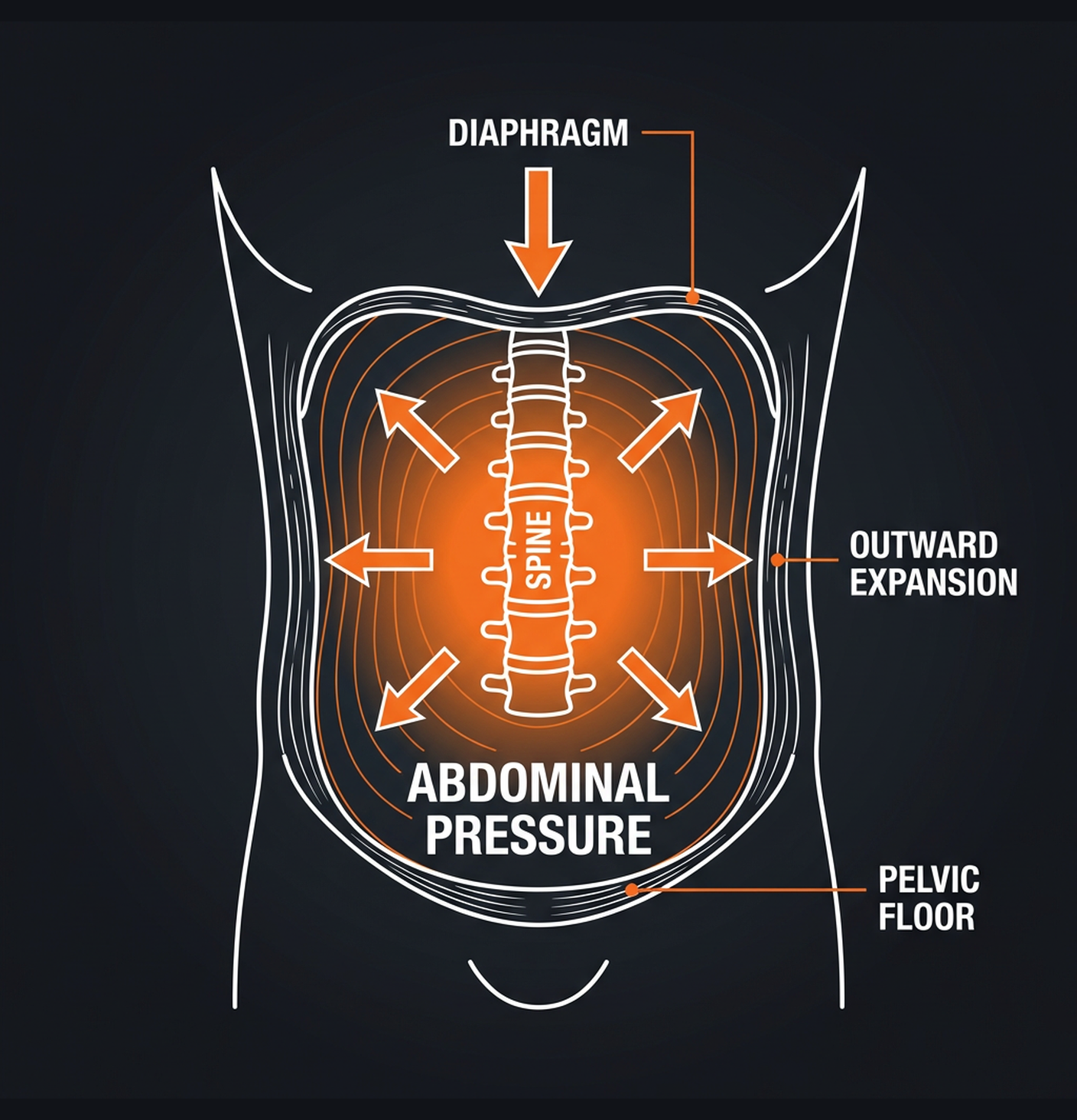
The Valsalva maneuver is the technical name for what lifters call bracing. It's a coordinated sequence of breathing and muscular contraction that maximizes intra-abdominal pressure (IAP).
Here's how to do it, step by step:
Step 1: Take a Big Belly Breath
Stand in front of a mirror. Place your hands on the sides of your waist, fingers on your obliques. Now breathe in -- but not into your chest. Breathe into your belly and sides. You should feel your hands getting pushed outward, not upward.
This is diaphragmatic breathing. Your diaphragm drops down, your belly expands in all directions (front, sides, and back), and your lungs fill from the bottom up. If your shoulders rise when you breathe in, you're chest breathing. That's wrong.
Think about breathing into your belt. Your entire midsection should expand like a balloon being inflated.
Step 2: Lock It Down
Once you've taken that big breath, close your glottis (the back of your throat) and bear down like you're trying to push your belly button out through your spine. Simultaneously:
- •Tighten your abs like you're about to get punched
- •Push your obliques outward against your hands (or belt)
- •Squeeze your glutes
- •Lock your ribcage down -- don't let it flare up
You should feel enormous pressure building in your abdomen. Your midsection should be rock hard in every direction. Front, sides, back -- all rigid.
Step 3: Hold It Through the Rep
Maintain that pressure through the entire repetition. On a squat, that means from the moment you unrack until you're back at the top. On a deadlift, from the moment you start pulling until lockout.
Do not exhale during the hard part of the lift. Do not let that pressure escape. One small leak and your spine loses its brace.
Step 4: Reset at the Top
Once you complete the rep and you're back in a stable position, exhale and take a fresh breath. Then re-brace for the next rep.
Every rep gets a fresh brace. No exceptions. You should never be grinding through your fourth squat rep on a breath you took before your first.
Common Bracing Mistakes
Chest Breathing
The most common mistake by far. When you breathe into your chest, your diaphragm doesn't descend, your belly stays flat, and you get zero intra-abdominal pressure. Your upper back might feel tight but your lower back is completely unprotected.
Fix: Practice belly breathing lying on the floor. Put a book on your stomach and make it rise when you inhale. Do this for five minutes before every training session until it becomes automatic.
Sucking In Your Stomach
This one comes from years of being told to "pull your belly button to your spine" in fitness classes. That cue is useful for Pilates. It's dangerous for heavy lifting. Sucking in reduces IAP instead of building it. You want your belly pushing OUT, not pulling in.
Breathing Out During the Concentric
Some trainers teach "exhale on the way up." For bodyweight exercises or light dumbbell work, sure. For heavy compound lifts, absolutely not. Exhaling releases pressure, and pressure is what protects your spine. Save the exhale for after you complete the rep.
Only Bracing the Front
Your core wraps all the way around. If you're only tightening your front abs and ignoring your obliques and lower back, you have a brace with three walls instead of four. Push pressure out in every direction -- 360 degrees of tension.
When to Breathe During Each Lift
Squat
Breathe and brace at the top, before you descend. Hold through the bottom and the drive back up. Exhale at the top. Re-brace. Repeat.
Deadlift
Breathe and brace before you pull. Some lifters prefer to set up, grab the bar, then take their breath and brace from the bent-over position. Others brace while standing, then hinge down to the bar. Both work -- try both and see which gives you more tension.
Hold the breath through the entire pull to lockout. Exhale at the top. If you're doing touch-and-go reps, re-brace at the top between each rep, not at the bottom.
Bench Press
Breathe and brace before the unrack. Maintain pressure as you lower the bar. Drive the bar up while holding the brace. Exhale at lockout or near lockout. Some lifters hold their breath for 2-3 bench reps since the load on the spine is much lower, but re-bracing each rep is fine too.
Overhead Press
Same as squat. Brace before the press, hold through the rep, exhale at lockout. The overhead press is where bracing failures are most obvious because any loss of trunk rigidity makes you lean back excessively.
Do You Need a Lifting Belt?
A belt doesn't replace bracing. It amplifies it.
A good belt gives your abs something to push against, which increases the IAP you can generate. Research from Kingma et al. (2006) showed that wearing a belt during heavy lifting increased intra-abdominal pressure by about 15-25% compared to lifting without one. That extra pressure means more spinal stability.
When to Use a Belt
- •Working sets above 80% of your 1RM on squats, deadlifts, and overhead presses
- •High-rep sets where fatigue might compromise your brace late in the set
- •Any set where you want maximum trunk stability
When NOT to Use a Belt
- •Warm-up sets (practice bracing without it)
- •Accessory exercises (curls, lateral raises, etc.)
- •Every set of every exercise (you need to build the skill of bracing without external support)
A belt is a tool, not a crutch. If you can't brace properly without a belt, adding one just masks the problem.
How Tight Should Your Belt Be?
Tight enough that you have to actively push against it when you brace. Loose enough that you can still take a full belly breath. Most lifters wear it one notch tighter than comfortable when relaxed. If you can't breathe into it, it's too tight.
Is the Valsalva Maneuver Dangerous?
You'll hear warnings about blood pressure spikes during the Valsalva. Here's what the research actually says:
Yes, blood pressure increases temporarily during heavy lifting with a Valsalva maneuver. Systolic pressure can spike to 300+ mmHg during a heavy squat. This sounds alarming until you realize that this spike lasts only a few seconds and returns to baseline almost immediately after the set.
For healthy individuals with no cardiovascular conditions, this is not dangerous. Your blood vessels are elastic and designed to handle temporary pressure fluctuations. The risk of NOT bracing (spinal injury) is dramatically higher than the risk of a brief blood pressure spike.
However: If you have diagnosed hypertension, a history of stroke or aneurysm, or any cardiovascular condition, talk to your doctor before performing the Valsalva with heavy loads. This is one of the few situations where the standard "exhale on exertion" advice may actually be more appropriate.
How to Practice Bracing
Drill 1: Deadbug With Breath Hold
Lie on your back, knees bent at 90 degrees, arms reaching toward the ceiling. Take a big belly breath and brace hard. Now slowly extend one arm overhead and the opposite leg toward the floor while maintaining that brace. If your lower back lifts off the floor, you lost the brace. Reset and try again.
Drill 2: Standing Belt Brace
Wrap your lifting belt around your waist. Take a belly breath and push out against the belt in all directions. Hold for 5 seconds. Release. Repeat 5 times. You should feel equal pressure front, sides, and back. If one area feels weaker, focus your attention there.
Drill 3: Goblet Squat Pause
Grab a moderate kettlebell or dumbbell and do goblet squats with a 3-second pause at the bottom. Brace before you descend and hold it through the pause. This teaches your body to maintain pressure under load in the hardest part of the range of motion.
Putting It All Together
Bracing is a skill. Like any skill, it gets better with deliberate practice. Spend 2-3 minutes before every session practicing belly breathing and bracing drills. Within a few weeks, it'll become automatic.
Start with light weights and focus on feeling the pressure build in your midsection before each rep. Once you can consistently brace well at moderate loads, you're ready to push heavy weight with confidence.
Your core doesn't just need to be strong. It needs to be pressurized. That's what bracing does, and it's what separates lifters who get strong from lifters who get hurt.
Frequently Asked Questions
- What is the Valsalva maneuver in lifting?
- The Valsalva maneuver is a breathing technique where you take a deep belly breath, close your throat, and bear down to create maximum pressure in your abdomen. This pressure turns your torso into a rigid cylinder that protects your spine during heavy lifts like squats and deadlifts.
- Should I exhale on the way up during squats?
- Not during heavy squats. Exhaling releases intra-abdominal pressure, which is what protects your spine. Hold your breath through the entire rep and exhale at the top when you are back in a stable position. The exhale-on-exertion cue is fine for light weight but dangerous for heavy compound lifts.
- Is the Valsalva maneuver dangerous for blood pressure?
- For healthy individuals, no. Blood pressure spikes briefly during the lift but returns to normal almost immediately. The risk of spinal injury from NOT bracing is far greater. However, if you have diagnosed hypertension, history of stroke, or cardiovascular conditions, consult your doctor before using the Valsalva with heavy loads.
- How do I know if I am bracing correctly?
- Place your hands on the sides of your waist. When you breathe and brace, you should feel your midsection push out in all directions, including into your hands on the sides and into your lower back. Your whole torso should feel rock hard. If only your front abs tighten and your sides stay soft, you are not bracing properly.
- Do I need a lifting belt to brace properly?
- No. A belt amplifies your brace by giving your abs something to push against, increasing intra-abdominal pressure by about 15-25%. But you should be able to brace effectively without one first. Use a belt for heavy working sets above 80% of your max, not as a substitute for learning the skill.