How to Find a Good Personal Trainer: Red Flags and Green Flags
Most personal trainers are mediocre at best. Here is how to spot the good ones, avoid the bad ones, and not waste your money.
 Jeff·Feb 10, 2026·11 min read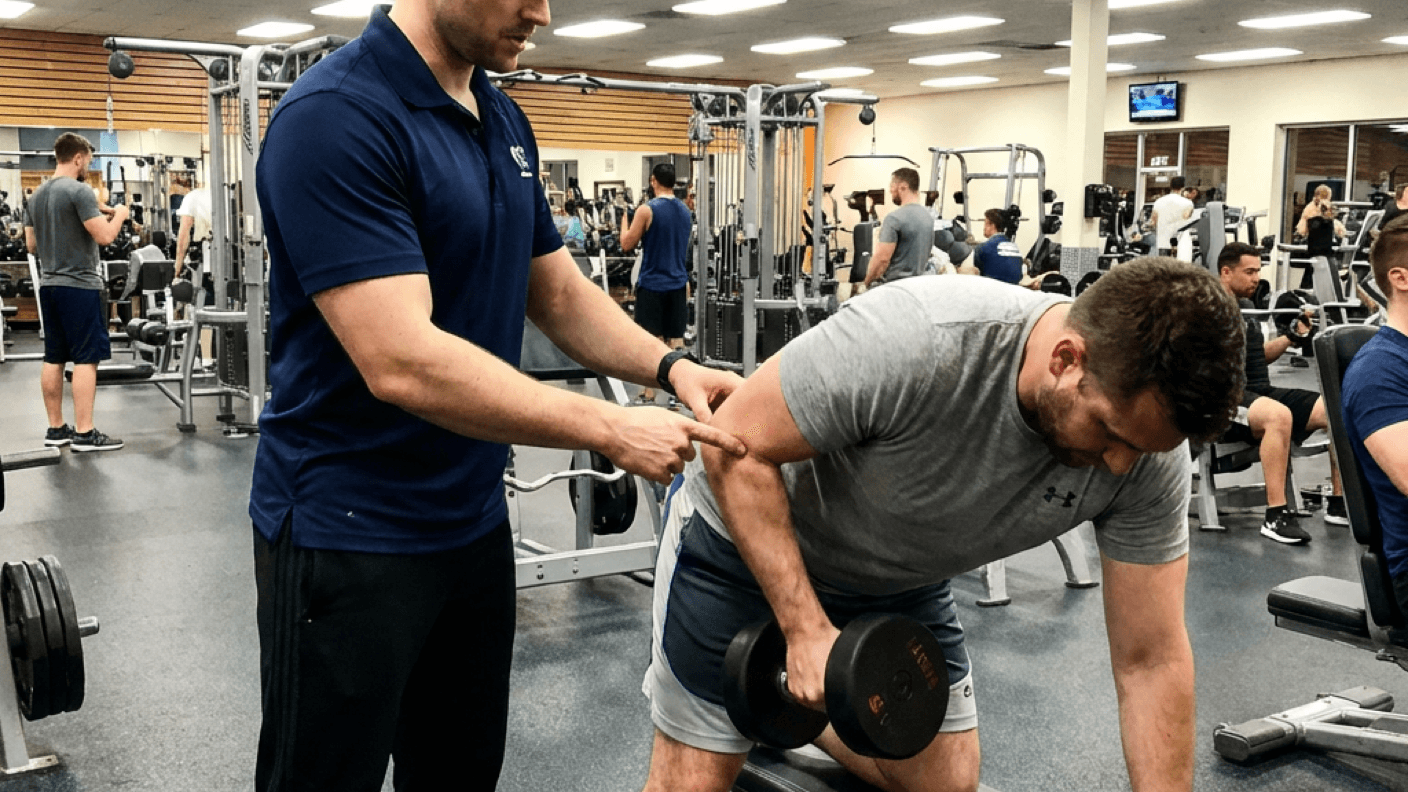
Key Takeaways
- A trainer who destroys you on the first session instead of assessing your movement and history is showing off, not coaching.
- Run away from trainers who use the same cookie-cutter program for everyone or don't watch your form while you lift.
- Look for trainers with NSCA-CSCS or ACSM certifications plus real experience, not just weekend cert mill credentials.
- Good trainers explain why you're doing each exercise and progress your workouts over time instead of keeping you stuck on the same routine.
- Your trainer should refer you to doctors or physical therapists when needed instead of trying to handle everything themselves.
Get This on WhatsApp
Get a quick summary and link sent straight to your WhatsApp.
Send Me This ArticleThe personal training industry has a problem
I am going to say something that might piss off some people in my industry: most personal trainers are not very good. Not because they are bad people. Most of them genuinely want to help. But the barrier to entry in personal training is absurdly low, the education is often outdated or superficial, and the financial incentives push trainers toward keeping clients dependent rather than teaching them to train independently.
You can get certified as a personal trainer in a weekend. Some certifications are entirely online, open-book, and require zero practical assessment. You could pass many of them without ever touching a barbell. That is not preparation for coaching real humans with real bodies and real goals.
I have worked alongside trainers who were excellent and trainers who were genuinely dangerous. I once watched a trainer put a 60-year-old woman with knee problems through box jumps on her first day. I have seen trainers text between sets while their client did exercises with form that would make a physical therapist cry.
This is not to scare you away from hiring a trainer. A good trainer can be one of the best investments you make in your fitness. The problem is sorting the good ones from the bad ones. So let me help you do that.
What certifications actually mean (and do not mean)
Certifications are the bare minimum. They are a starting point, not a guarantee of competence. That said, some certifications are significantly better than others.
The reputable ones
NSCA-CSCS (Certified Strength and Conditioning Specialist). This is widely considered the gold standard. It requires a bachelor's degree in a related field, a practical and written exam, and continuing education. If your trainer has a CSCS, they have at least a baseline of real education.
ACSM-CPT (American College of Sports Medicine). Another well-respected certification with a legitimate exam and educational requirements.
NASM-CPT (National Academy of Sports Medicine). Very popular, solid curriculum, and their corrective exercise specialization (CES) is genuinely useful for trainers working with clients who have movement limitations.
The ones that mean less
ACE-CPT. Not terrible, but the exam is easier and the requirements are lower. An ACE cert alone does not tell you much.
ISSA. Mostly online, open-book exam, aggressive marketing. Having an ISSA certification is better than having nothing, but it is the participation trophy of personal training certs.
Any certification you have never heard of. If you Google the cert and the top results are all ads to buy it, that is not a good sign.
What actually matters more than the cert
Experience. A trainer with 5 years of hands-on coaching and a basic certification will almost always be better than a freshly minted CSCS who has never trained anyone outside of a textbook scenario. Certifications test knowledge. Experience builds skill.
Ask how long they have been training clients. Ask about their own training background. Ask if they have worked with people who have similar goals to yours. These questions tell you more than any set of letters after their name.
Red flags that should make you run
These are not minor concerns. If you see these, find a different trainer.
They put you through an intense workout on day one. A good trainer spends the first session assessing your movement, asking about your history, and establishing baselines. A bad trainer tries to destroy you on day one to make you feel like you "got your money's worth." That is not coaching. That is performance.
They use the same program for every client. If your trainer gives you the exact same workout they give their other clients, regardless of your goals, limitations, and experience level, they are not programming for you. They are running a template.
They never watch your form. If your trainer is checking their phone, chatting with other trainers, or looking elsewhere while you perform exercises, they are not doing their job. The entire point of paying for a trainer is having someone who watches your movement and corrects problems.
They make claims about spot reduction. "This exercise will burn the fat off your love handles." No it will not. That is not how fat loss works. Any trainer who says otherwise either does not understand basic physiology or is lying to you.
They push supplements aggressively. Especially if they sell their own brand or earn commission on supplement sales. A good trainer might recommend creatine or a protein powder. A bad trainer will try to sell you a stack of overpriced pills that you do not need.
They discourage you from learning. A trainer who does not want you to understand why you are doing something is a trainer who wants you to stay dependent on them for as long as possible. If you ask "why this exercise?" and they cannot give you a clear answer, that is a problem.
They dismiss pain. "No pain, no gain" is not a coaching philosophy. If you tell your trainer something hurts and they tell you to push through it, find someone else. Pain is information. A good trainer listens to it.
Green flags that suggest a good trainer
They ask about your injury history before anything else. Before they have you pick up a single weight, they want to know about past injuries, surgeries, chronic pain, and movement limitations. This tells you they are thinking about safety first.
They assess your movement. Overhead squat test, single-leg balance, shoulder mobility check, hip hinge pattern. These do not need to be formal assessments with scoring sheets. But a good trainer watches how you move before programming exercises.
They explain the "why." Good trainers educate. When they prescribe an exercise, they can tell you why. "We are doing Romanian deadlifts because your hamstrings are weak relative to your quads, and that imbalance is contributing to the knee discomfort you mentioned." That is coaching.
They program progressions. Your workouts should change over time in a structured way. More weight, more reps, more challenging variations. If you have been doing the same workout for two months, your trainer is not progressing you.
They have a cancellation policy. This sounds weird, but hear me out. Trainers who run a professional business have clear policies about cancellations, scheduling, and payment. Trainers who operate casually tend to be casual about everything, including your results.
They practice what they preach. Your trainer does not need to look like a fitness model. But they should have a regular training practice of their own. A trainer who does not train is like a chef who does not cook. Something is off.
They refer out when appropriate. A good trainer knows the limits of their scope of practice. If you have a medical issue, they refer you to a doctor. If you have a complex injury, they refer you to a physical therapist. If you need nutrition counseling beyond basic guidelines, they refer you to a registered dietitian. A trainer who claims to do it all is probably not doing any of it well.
The first session tells you everything
Pay close attention during your first session or consultation. This is your interview of the trainer, not the other way around. Here is what to look for:
Do they listen? A good trainer asks more questions than they answer in the first session. They want to understand your goals, your history, your schedule, your preferences. A bad trainer talks at you about their philosophy without asking what you actually want.
Do they watch? When you perform a movement, are their eyes on you? Can they identify what you are doing well and what needs correction?
Do they adjust? If an exercise is too hard or too easy, do they modify it on the fly? Rigid adherence to a pre-written plan when the plan clearly is not working shows a lack of adaptability.
Do you feel comfortable? This is subjective but important. You are going to spend significant time with this person. If something feels off, if they are condescending, overly aggressive, dismissive, or just generally someone you would not want to be around, trust that feeling.
Most gyms offer a free or discounted trial session with their trainers. Take advantage of this. Use it as an audition. You are the one paying. You get to be selective.
What to expect from a good trainer
Once you find a good trainer, here is what a productive coaching relationship looks like:
A structured program that changes over time. Not random workouts. A plan with phases, progressions, and deloads. Your trainer should be able to tell you what the next 4-8 weeks look like in broad strokes.
Education alongside instruction. Over time, your trainer should be teaching you how to train independently. They should be explaining form cues, programming principles, and recovery strategies. The goal of good coaching is to make the client not need the coach forever.
Regular check-ins on progress. Periodic assessments (every 4-8 weeks) to measure whether you are actually improving. This might include strength tests, movement re-assessments, body composition measurements, or simply reviewing your training log.
Communication outside of sessions. A good trainer answers your questions between sessions. Not necessarily instantly, but within a reasonable time. If you are paying 80 dollars a session and they go silent the other 23 hours of the day, you are not getting full value.
Honest feedback. Including telling you things you might not want to hear. "You need to eat more." "You are not training hard enough." "Your sleep is the problem, not your program." A trainer who only tells you what you want to hear is not coaching you. They are entertaining you.
Online coaching vs in-person training
Online coaching has exploded in the last few years and for many people it is a better option than in-person training. Here is how they compare:
In-person training is best for: complete beginners who need hands-on form correction, people recovering from injuries, anyone who needs real-time accountability (your trainer is literally standing there watching you).
Online coaching is best for: intermediate and advanced lifters who already know how to perform exercises, people with busy or unpredictable schedules, people who want programming and guidance without the in-person cost.
Online coaching typically costs 150 to 300 dollars per month and includes a custom program, regular check-ins (weekly or biweekly), and form review via video. Good online coaches include people like Jordan Syatt, Jeff Nippard's coaching team, and various coaches on platforms like TrueCoach or TrainHeroic. The same red and green flags apply.
How much should a personal trainer cost
This varies wildly by location, experience, and setting.
Big box gym trainers (LA Fitness, 24 Hour, Planet Fitness): $30-60 per session. Quality varies enormously. Some are great. Many are not. These trainers often have high client loads and heavy sales pressure from management.
Boutique studio or independent trainers: $60-120 per session. Usually better quality because they have chosen to build their own business, which requires a reputation for results.
High-end or specialized trainers: $120-250+ per session. These are trainers with extensive experience, advanced certifications, maybe a background in physical therapy or sports science. Worth it if you can afford it and have specific needs.
Online coaching: $100-300 per month. Best value for the money if you do not need in-person instruction.
Is a personal trainer worth the money? For the right trainer, absolutely. A good trainer can compress years of trial-and-error into months of efficient progress. A bad trainer can waste your money and possibly injure you. The quality of the trainer matters infinitely more than the price.
When you do not need a trainer
Not everyone needs a personal trainer. You can probably train effectively on your own if:
- •You have been training consistently for 1-2 years and understand basic movement patterns
- •You can squat, hinge, push, pull, and lunge with good form
- •You understand progressive overload and can program your own training
- •You have access to good free resources (Jeff Nippard, Renaissance Periodization, Stronger By Science, and others publish excellent evidence-based content)
- •You are self-motivated and do not need external accountability
If that describes you, save your money and invest in a good training app or book instead.
When you absolutely do need one
Some situations genuinely benefit from professional guidance:
- •You are a complete beginner and have no idea where to start
- •You are coming back from a serious injury and need someone to work around your limitations
- •You have a specific athletic goal (powerlifting competition, sport-specific training) and need specialized programming
- •You have tried training on your own for 6+ months and made no progress
- •You struggle with accountability and need someone to hold you to your commitments
- •You have a medical condition (diabetes, heart disease, autoimmune disorder) that affects your training
In these cases, a good trainer is not a luxury. They are a tool that can meaningfully improve your health and your results. Find the right one, communicate clearly about your goals, and give the relationship at least 8-12 weeks before you evaluate whether it is working.
Frequently Asked Questions
- How do I know if my personal trainer is good?
- A good trainer writes your program in advance, tracks your progress, and adjusts based on data — not just making you tired every session. If every workout feels random and you're always sore but never stronger, that's a red flag.
- What are red flags in a personal trainer?
- Copying workouts from Instagram, never tracking your lifts, pushing supplements they sell, giving the same program to every client, and making every session about soreness rather than progression. Run if they can't explain why you're doing an exercise.
- How much should a personal trainer cost?
- Expect $50-100 per session for a competent trainer at a commercial gym. Online coaching runs $150-300 per month and is often better value since you get a full program, not just supervised workouts.
- Do I need a personal trainer as a beginner?
- Not necessarily, but 5-10 sessions with a good one can save you months of trial and error. Learn the big compound lifts with proper form, then go solo with a proven beginner program like 5x5.