Intermittent Fasting 101: A Beginner's Guide to Time-Restricted Eating
Intermittent fasting for beginners: set eating windows, switch your body to burning stored fat, and unlock weight loss, sharper focus, less inflammation.
 Jeff·Aug 20, 2024·3 min read
Key Takeaways
- Intermittent fasting is just eating in a time window instead of worrying about what foods to eat.
- Your body switches from burning glucose to burning stored fat during the fasting periods.
- The easiest method is 16/8 where you fast for 16 hours and eat during an 8 hour window.
- Start slow by gradually shrinking your eating window and drink plenty of water during fasts.
- You won't lose muscle as long as you keep eating protein and lifting weights.
Get This on WhatsApp
Get a quick summary and link sent straight to your WhatsApp.
Send Me This ArticleWelcome to your Intermittent Fasting 101: A Beginner's Guide to Time-Restricted Eating. Are you curious about shedding those extra pounds, boosting your metabolism, or simply feeling more energetic? This guide is designed to walk you through the essentials of intermittent fasting, a popular method of weight management and lifestyle improvement.
What is Intermittent Fasting?
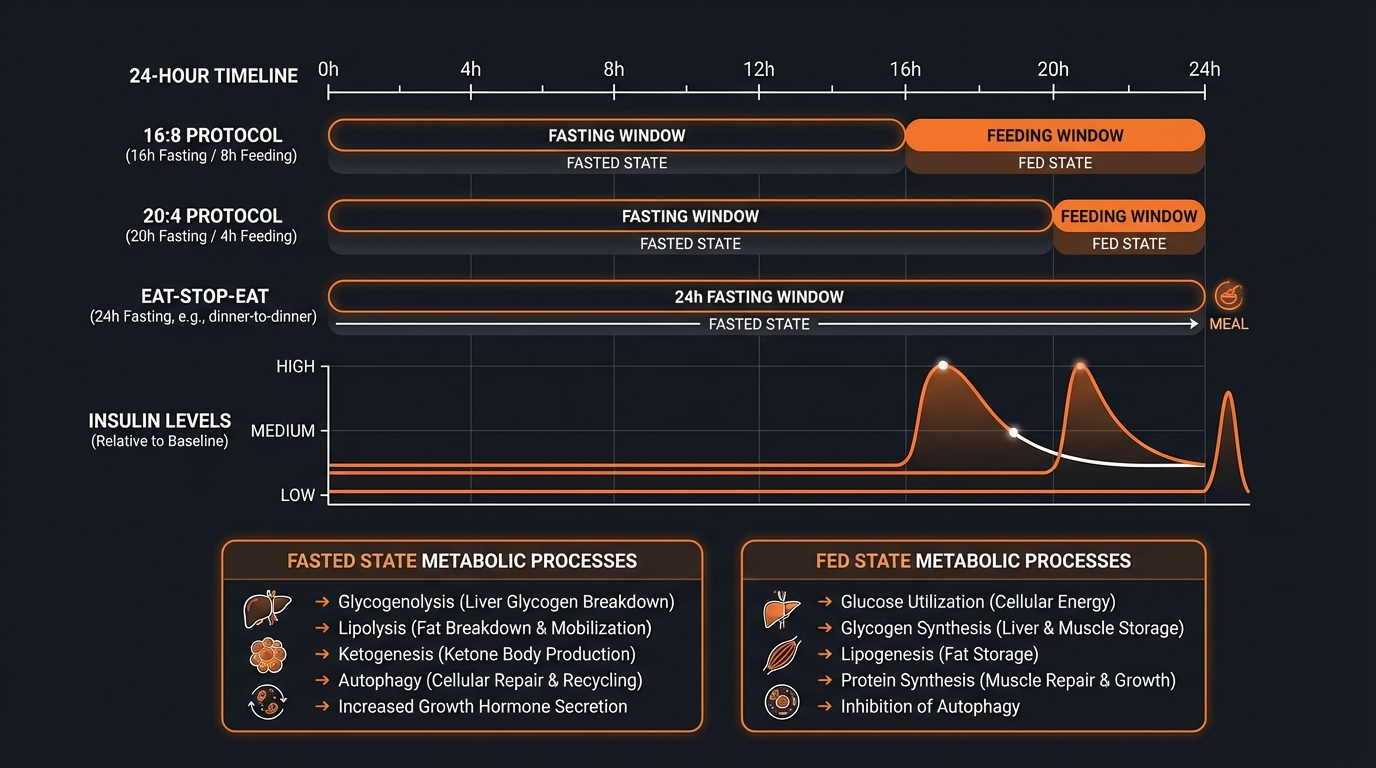
Intermittent fasting (IF) is a systematic approach to eating that alternates between periods of fasting and eating. Rather than focusing on what you eat, it focuses on when you eat. This regimen doesn't prescribe specific foods but rather sets eating windows to help your body manage nutrients more efficiently.
How Does Intermittent Fasting Work?
During fasting periods, your body switches from using glucose as its primary energy source to burning stored fats. It may initially sound daunting, but this natural metabolic shift can have numerous health benefits. Here's a snapshot:
- •Improved metabolic health
- •Weight loss and fat reduction
- •Enhanced mental clarity
- •Reduced inflammation
According to a study published in *The New England Journal of Medicine*, intermittent fasting can lead to improved biomarkers associated with aging, diabetes, cardiovascular disease, and cancer.
Popular Intermittent Fasting Methods
There are several methods of intermittent fasting to choose from, each with unique advantages and challenges. Here are three common approaches:
- •16/8 Method: Fast for 16 hours and eat during an 8-hour window. For example, you might eat between 12 PM and 8 PM and fast from 8 PM to 12 PM the next day.
- •5:2 Diet: Eat normally for five days of the week and restrict calories (500-600 calories) for the remaining two non-consecutive days.
- •Eat-Stop-Eat: Fast for a full 24 hours once or twice a week, then resume normal eating patterns.
Getting Started with Intermittent Fasting
Starting intermittent fasting can be as easy as extending your overnight fast. Here are some practical tips to ease into this new routine:
- •Start Slow: Gradually reduce your eating window to make the transition smoother.
- •Stay Hydrated: Drink plenty of water, herbal teas, or black coffee to stay hydrated during fasting periods.
- •Listen to Your Body: If you feel faint or unwell, it's okay to break your fast. Health is the priority.
Remember, the body takes time to adjust to a new eating schedule. Patience is key.
Common Questions and Concerns
New to intermittent fasting? It's natural to have questions. Let’s address some common concerns:
Will I lose muscle mass?
As long as you maintain a protein-rich diet and continue strength training, the potential for muscle loss is minimal. According to a review in *Sports Medicine*, intermittent fasting combined with resistance exercise can preserve muscle mass.
Is intermittent fasting safe for everyone?
While generally safe for most healthy adults, intermittent fasting may not be suitable for everyone, including pregnant women, people with eating disorders, or individuals with certain medical conditions. Consult your healthcare provider before starting any fasting regimen.
Can I drink during fasting periods?
Yes, you can drink water, tea, coffee (without milk or sugar), and other non-caloric beverages. Staying hydrated helps suppress hunger and keeps you feeling full.
What about vitamins and supplements?
You can take vitamins and supplements during fasting, but it’s best to consult with a healthcare professional for tailored advice.
Conclusion: Unlock Your Health Potential
Intermittent fasting offers a simple, flexible framework to improve your health and well-being. From enhancing metabolic functions to promoting mental clarity, the benefits are worth the initial commitment. Ready to embark on this journey? Gradually ease into a fasting routine that suits your lifestyle and consult a healthcare provider for personalized advice. Remember, the goal is to find a sustainable path to better health.
Take the first step today and transform your eating habits. Happy fasting!
Frequently Asked Questions
- Does intermittent fasting actually work for weight loss?
- It works, but only because it helps you eat fewer calories by limiting your eating window. There's no magic fat-burning effect from skipping breakfast. If you eat the same total calories in a shorter window, you won't lose weight.
- What is the best intermittent fasting schedule?
- 16:8 (16 hours fasting, 8 hours eating) is the most popular and sustainable option. Skip breakfast, eat from noon to 8 PM. It fits most people's social lives without much friction.
- Can you build muscle while intermittent fasting?
- You can, but it's harder. Cramming enough protein into a shorter eating window is the main challenge. If muscle building is your priority, you're better off eating 3-4 meals spread throughout the day.
- Will intermittent fasting make me lose muscle?
- Not if you keep protein high and continue strength training. The risk comes from undereating protein because you're cramming meals into a short window. Hit your protein target and you'll be fine.