Pull-Up vs. Chin-Up: Which is Better for Back and Bicep Development?
Pull-up vs chin-up for back and biceps: how the overhand and underhand grips shift muscle activation, and which builds wider lats or bigger arms faster.
 Jeff·Aug 20, 2024·3 min read
Key Takeaways
- Pull-ups hit your back harder, especially the lower traps and rhomboids, while chin-ups blast your biceps almost twice as much due to the underhand grip.
- Pull-ups are tougher to perform because of the wider grip and range of motion, making them better for overall back strength.
- Chin-ups let you focus more on bicep growth and arm strength while still working your lats.
- You should do both exercises in your routine to hit different muscle groups and get balanced upper body development.
- Warm up properly and focus on controlled form to avoid shoulder and elbow injuries with either movement.
Get This on WhatsApp
Get a quick summary and link sent straight to your WhatsApp.
Send Me This ArticlePull-Ups and Chin-Ups are popular exercises renowned for their efficacy in developing the back and biceps. But which one is better? This article will dive deep into the benefits, techniques, and implications of each exercise to help you make an informed decision for your fitness routine.
Understanding Pull-Ups and Chin-Ups
Before comparing them, it's essential to understand what distinguishes Pull-Ups from Chin-Ups.
Pull-Ups
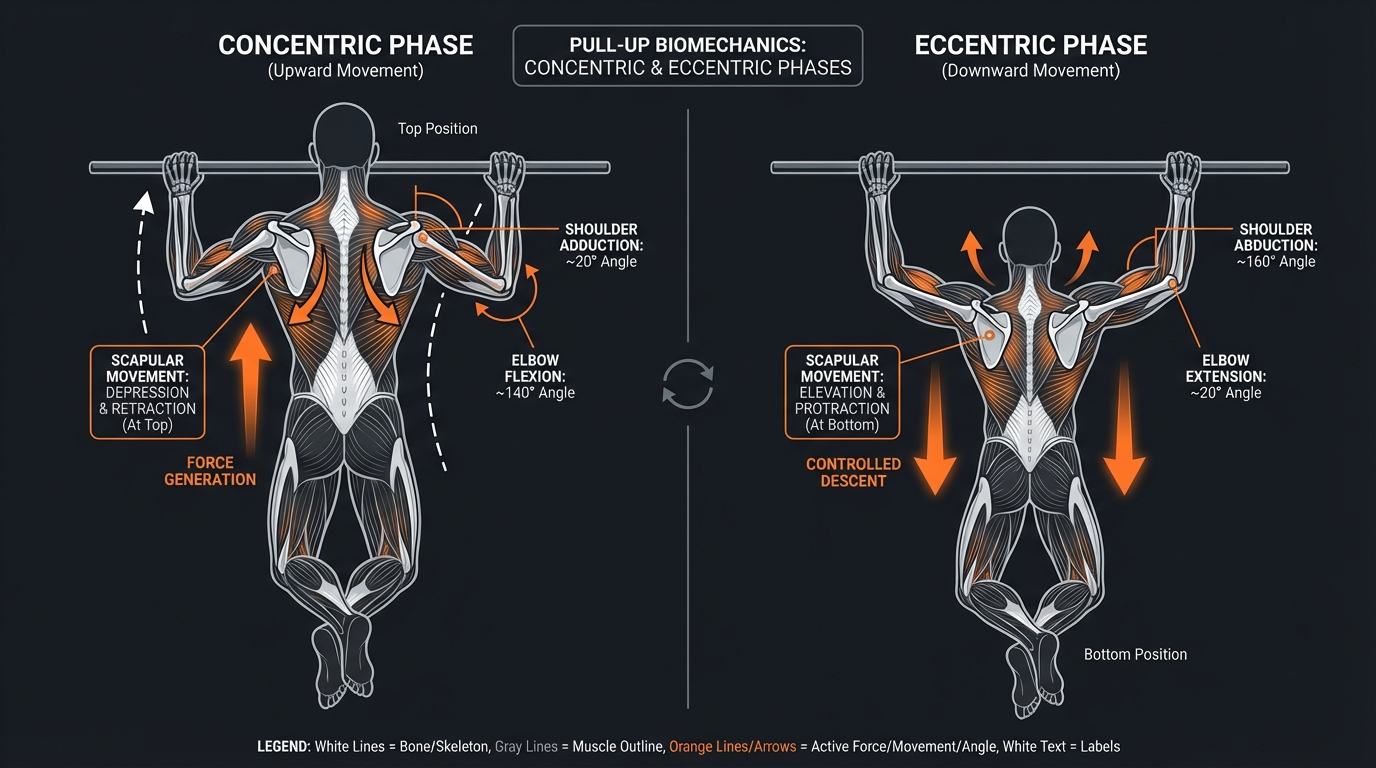
Pull-Ups are performed with an overhand (pronated) grip, with your palms facing away from you. This exercise primarily targets the upper back, specifically the latissimus dorsi, while also engaging the shoulders and arms.
Chin-Ups
Chin-Ups are done using an underhand (supinated) grip, with your palms facing towards you. This slight change in grip shifts more of the focus to the biceps while still working the latissimus dorsi and other muscles in the back.
Muscle Activation and Development
Let's explore how each exercise affects muscle activation and contributes to back and bicep development.
- •Pull-Ups: Engage more back muscles, particularly the lower trapezius and the rhomboids, enhancing overall back width and thickness.
- •Chin-Ups: Activate the biceps more effectively due to the underhand grip, allowing for greater bicep hypertrophy and arm strength.
According to an EMG study published in the Journal of Strength and Conditioning Research, Chin-Ups activate the biceps brachii almost twice as much as Pull-Ups. However, Pull-Ups show superior activation of the lower trapezius and other back muscles.
Which is More Challenging?
Both exercises are challenging but in different ways. Pull-Ups are generally considered more difficult due to the wider grip and greater range of motion required. This makes them an ideal option for those looking to build overall back strength and definition.
- •Grasp the bar with your chosen grip.
- •Hang fully extended and initiate the movement by engaging your lats.
- •Pull yourself up until your chin is above the bar.
- •Lower yourself in a controlled manner and repeat.
A case study involving a CrossFit athlete suggested that incorporating both exercises into her routine significantly improved her back and arm muscle balance, leading to a more sculpted upper body.
Common Concerns
One common question is whether Pull-Ups or Chin-Ups can cause injury. While both exercises are generally safe when performed correctly, poor form can lead to shoulder or elbow strain.
Tips for Avoiding Injury:
- •Warm up thoroughly before performing these exercises.
- •Ensure you use the correct form and grip.
- •Do not rush through your repetitions.
- •Incorporate mobility and flexibility exercises into your routine.
Practical Tips for Your Workout
If you're still unsure whether to opt for Pull-Ups or Chin-Ups, here are some practical tips:
- •Alternate between exercises: Incorporate both into your weekly workout to target different muscle groups.
- •Use assistive bands: If you're a beginner, assistive bands can help as you work towards performing unassisted reps.
- •Track your progress: Record your reps and sets to monitor improvement and make necessary adjustments.
Conclusion
In the debate of Pull-Up vs. Chin-Up: Which is Better for Back and Bicep Development?, the answer largely depends on your fitness goals and preferences. Both exercises offer unique benefits that can complement each other. For well-rounded upper body development, consider integrating both Pull-Ups and Chin-Ups into your routine.
If you're ready to transform your upper body, start by alternating these exercises and gradually increasing your reps and sets. Your back and biceps will thank you!
Frequently Asked Questions
- Are chin-ups or pull-ups better for building muscle?
- Chin-ups (palms facing you) hit the biceps harder, while pull-ups (palms facing away) emphasize the lats and upper back more. For overall development, do both. If you can only pick one, chin-ups are slightly better because most people can do more reps.
- Do pull-ups build biceps?
- Yes, but not as much as chin-ups. The overhand grip reduces bicep involvement compared to an underhand grip. If bicep growth is your goal, chin-ups and neutral-grip pull-ups will give you more bang for your buck.
- Why can I do chin-ups but not pull-ups?
- Chin-ups recruit the biceps more effectively, which gives you extra pulling power. Pull-ups rely more heavily on your lats, which are often weaker in beginners. Keep training both and your pull-up numbers will catch up.
- How many pull-ups should I be able to do?
- Being able to do 10 clean pull-ups puts you ahead of 90% of gym-goers. 15-20 is strong. If you can do 20+ strict pull-ups, you're genuinely impressive. Start with whatever you can do and add one rep per week.