Weighted Pull-Ups: How to Progress and Build Massive Back Strength
Weighted pull-ups are a phenomenal exercise for building massive back strength and enhancing your overall upper-body power. They not only target your lats but also engage your biceps, shoulders, and core.
 Jeff·Aug 20, 2024·3 min read
Key Takeaways
- Don't add weight until you can bang out 8-10 clean bodyweight pull-ups without swinging around like an idiot.
- Start light with just 5-10 pounds using a dip belt and focus on slow, controlled reps instead of ego lifting.
- Only increase weight by 5-10% once you've mastered your current load or you'll trash your joints and stall your progress.
- Train weighted pull-ups 2-3 times per week max because your muscles need recovery time to actually grow bigger and stronger.
- Keep a workout log tracking your weight, sets, and reps so you can see exactly how much you're progressing each week.
Get This on WhatsApp
Get a quick summary and link sent straight to your WhatsApp.
Send Me This ArticleIn this article, we'll dive into how to progress with weighted pull-ups and build a stronger back.
Why Weighted Pull-Ups?
Weighted pull-ups are a progressive overload exercise that can significantly increase your muscle mass and strength. According to Men's Health, adding weight to your pull-ups can improve your muscle hypertrophy and endurance. This is especially important for trainee lifters who have plateaued with bodyweight pull-ups.
- •Enhances muscle hypertrophy
- •Improves grip strength
- •Promotes better overall muscle balance
- •Increases back and upper body strength
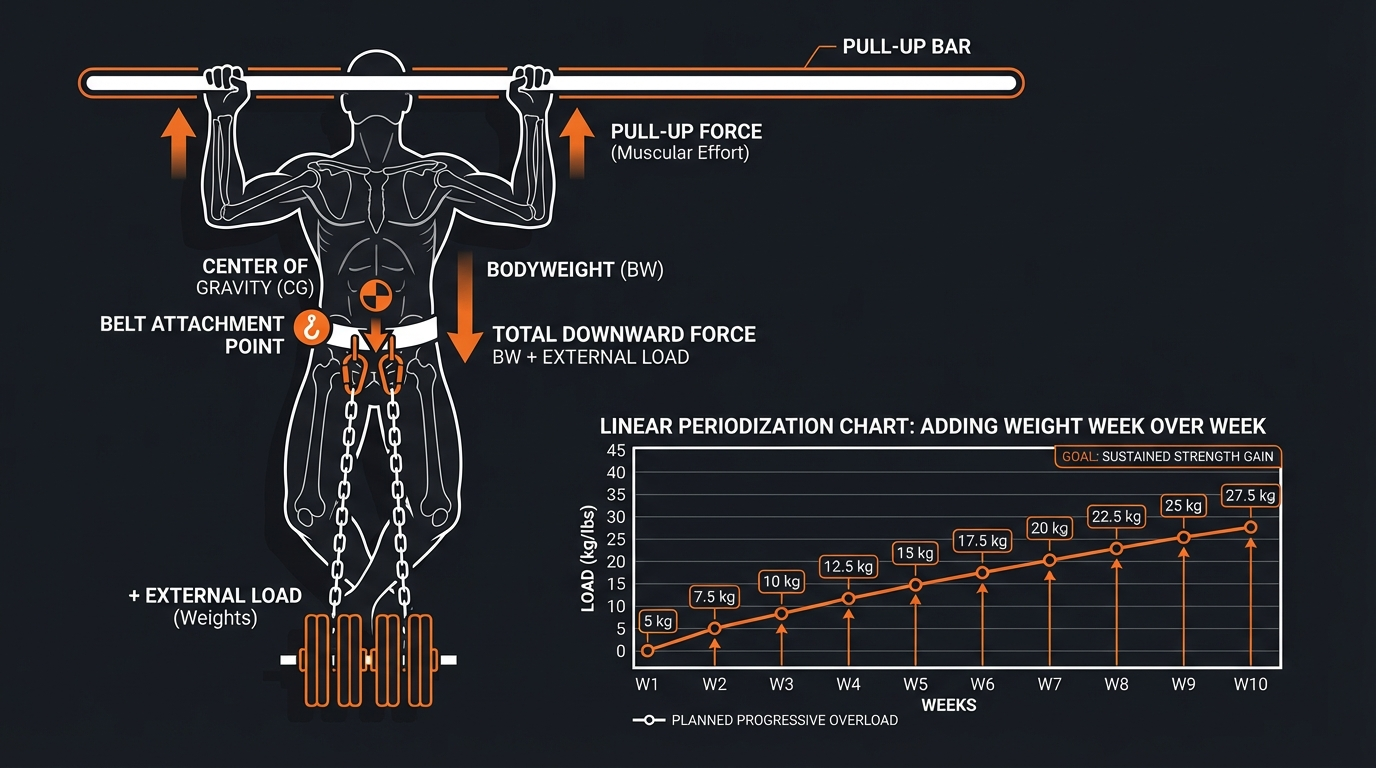
How to Get Started
Beginning with weighted pull-ups can be a challenging but rewarding endeavor. Here's a step-by-step guide to get you started:
- •Master Bodyweight Pull-Ups: Ensure you can do at least 8-10 bodyweight pull-ups with proper form before adding weights.
- •Choose Your Weight: Start with a lower weight, such as 5-10 pounds, to gauge your comfort and ability.
- •Use a Dip Belt: The safest and most effective way to add weight is by using a dip belt.
- •Focus on Form: Maintain proper pull-up form by engaging your core and avoiding swinging or kipping.
- •Incremental Progression: Gradually increase the weight and track your progress to avoid any potential injuries.
Remember, consistency is key. Track your results weekly and be patient with your progress.
Common Mistakes to Avoid
Even seasoned athletes can make mistakes when incorporating weighted pull-ups. Here are a few common errors:
Incorrect Form
Improper form can significantly limit your progress and increase the risk of injury. Avoid arching your back or using momentum to complete the rep. Instead, perform slow, controlled movements and engage your core muscles.
Not Progressing Gradually
Progression is about adding weight incrementally. Jumping to heavier weights too quickly can lead to burnout or injury. Stick to a structured plan and increase the weight by 5-10% as you gain strength.
Overtraining
Adding too many training sessions can be counter-productive. Aim for 2-3 sessions a week and give your muscles ample time to recover.
Ignoring Other Muscle Groups
While weighted pull-ups are excellent, neglecting other muscle groups can lead to imbalances. Ensure you incorporate exercises that target your chest, legs, and core as part of a well-rounded routine.
Tracking Your Progress
Keeping track of your progress is essential to stay motivated and see tangible results. Here are a few methods to help you monitor your gains:
Workout Log
Maintain a detailed log of your workouts, including the weight used and the number of sets and reps performed. This will help you identify patterns and make necessary adjustments.
Take Progress Photos
Visual progress can be very motivating. Take photos every 4-6 weeks to observe changes in muscle definition and size.
Measure Strength Gains
Periodically test your one-rep max (1RM) to measure your strength gains objectively.
Conclusion
Weighted pull-ups are an excellent way to build massive back strength and improve your overall fitness. By starting with proper form, progressing gradually, and tracking your progress, you can achieve significant gains and avoid common pitfalls. Incorporate these tips into your routine and watch as your strength and muscle mass increase.
If you found this article helpful, be sure to check out our other strength training tips and stay updated by subscribing to our newsletter. Happy lifting!
Frequently Asked Questions
- When should I start doing weighted pull-ups?
- Once you can do 3 sets of 8-10 strict bodyweight pull-ups with good form. If you add weight before that, your form will break down and your biceps will take over from your back. Master bodyweight first.
- How much weight should I add to pull-ups?
- Start with 10 lbs and add 2.5-5 lbs per week. Most people can eventually work up to 45-90+ lbs added. A dip belt is the best way to load them, or hold a dumbbell between your feet for lighter weights.
- Are weighted pull-ups better than lat pulldowns?
- For building real-world back strength and thickness, weighted pull-ups are superior because they recruit more stabilizer muscles and have a higher neuromuscular demand. Pulldowns are still useful as a supplemental exercise or for high-rep pump sets.
- How do I avoid bicep dominance on pull-ups?
- Use a slightly wider than shoulder-width grip, initiate the pull by driving your elbows down and back rather than curling, and think about pulling the bar to your chest rather than your chin. A thumbless grip also helps shift emphasis to the lats.