Prenatal Strength: Safe & Effective
Stay strong through pregnancy. Doctor-approved exercises that support you and baby.
Send to WhatsApp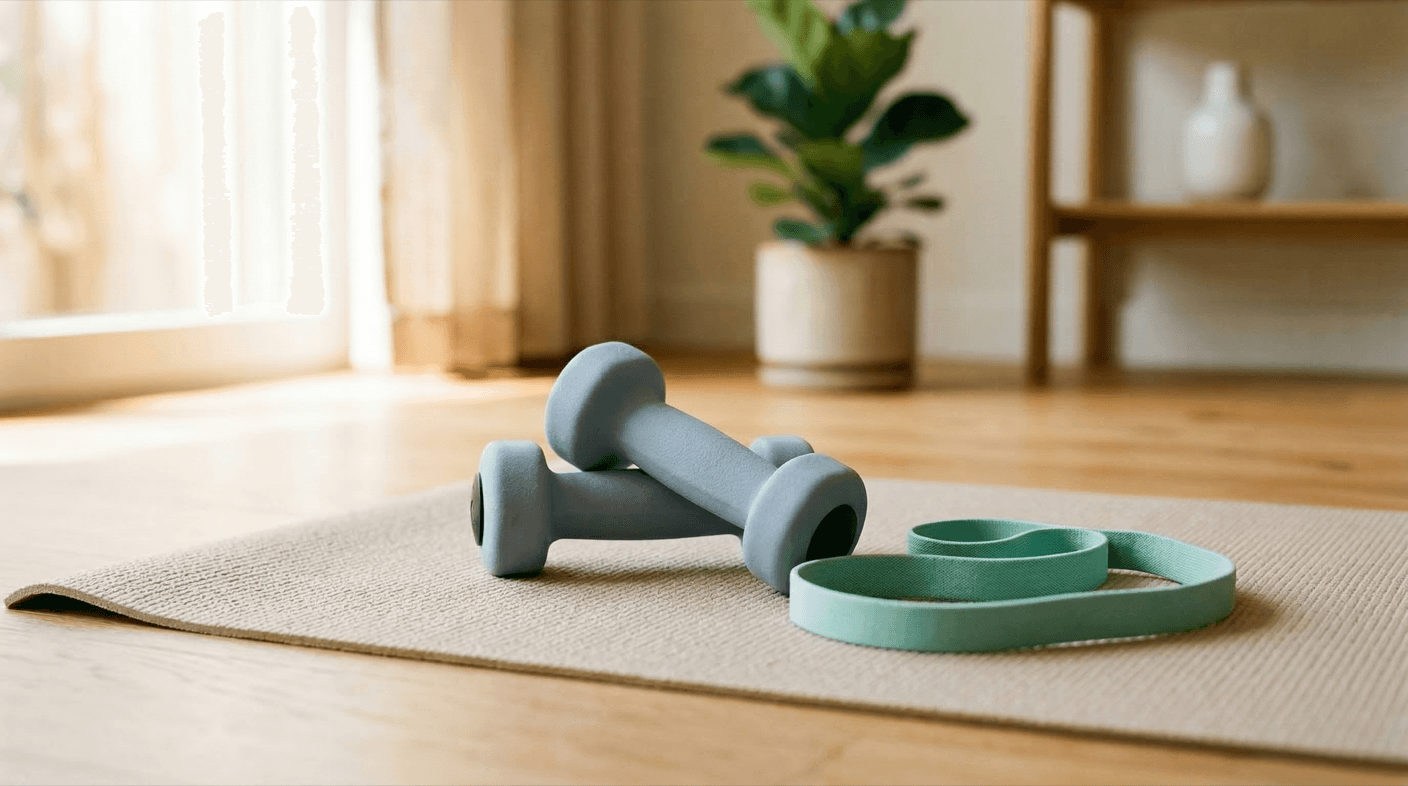
Overview
IMPORTANT: Consult your healthcare provider before starting or continuing any exercise program during pregnancy. Every pregnancy is different. Get clearance from your OB-GYN or midwife before training, and communicate any changes in how you feel during exercise. Stop immediately and contact your provider if you experience bleeding, dizziness, shortness of breath before exertion, chest pain, headache, calf pain or swelling, or regular contractions.
Strength training during pregnancy is safe and beneficial for most healthy pregnancies. Research shows it reduces the risk of gestational diabetes, improves mood, supports healthier birth weight, and can make labor and recovery easier. This program adapts across trimesters, modifying exercises as your body changes.
You will train 3 days per week. Sessions are 30-40 minutes. All exercises use dumbbells and resistance bands to avoid the need for heavy barbells and awkward positions.
General Guidelines
- •Stay hydrated. Drink water before, during, and after every session.
- •Avoid exercising flat on your back after the first trimester (reduces blood flow to the uterus).
- •Skip exercises that cause discomfort, pressure in the pelvic floor, or any pain.
- •Rate of perceived exertion should stay at 6-7 out of 10. You should be able to hold a conversation.
- •Avoid holding your breath. Exhale on the exertion phase of every rep.
Phase 1: First Trimester (Weeks 1-4 of Program)
You may feel fatigued or nauseous. Train when you feel good. Skip sessions guilt-free when you do not.
Day 1: Lower Body
- •Goblet Squat: 3x10 (60s rest)
- •Dumbbell Romanian Deadlift: 3x10 (60s rest)
- •Banded Lateral Walk: 3x12 per direction (45s rest)
- •Glute Bridge: 3x12 (45s rest)
- •Standing Calf Raise: 2x15 (30s rest)
Day 2: Upper Body
- •Dumbbell Bench Press: 3x10 (60s rest)
- •Dumbbell Row: 3x10 per side (60s rest)
- •Seated Dumbbell Shoulder Press: 3x10 (60s rest)
- •Band Pull-Apart: 3x15 (30s rest)
- •Dumbbell Curl: 2x12 (45s rest)
Day 3: Full Body
- •Sumo Squat: 3x10 (60s rest)
- •Incline Push-Up: 3x8 (60s rest)
- •Seated Cable Row (or Band Row): 3x10 (60s rest)
- •Step-Up (low step): 3x8 per leg (60s rest)
- •Bird Dog: 3x8 per side (45s rest)
Phase 2: Second Trimester (Weeks 5-8 of Program)
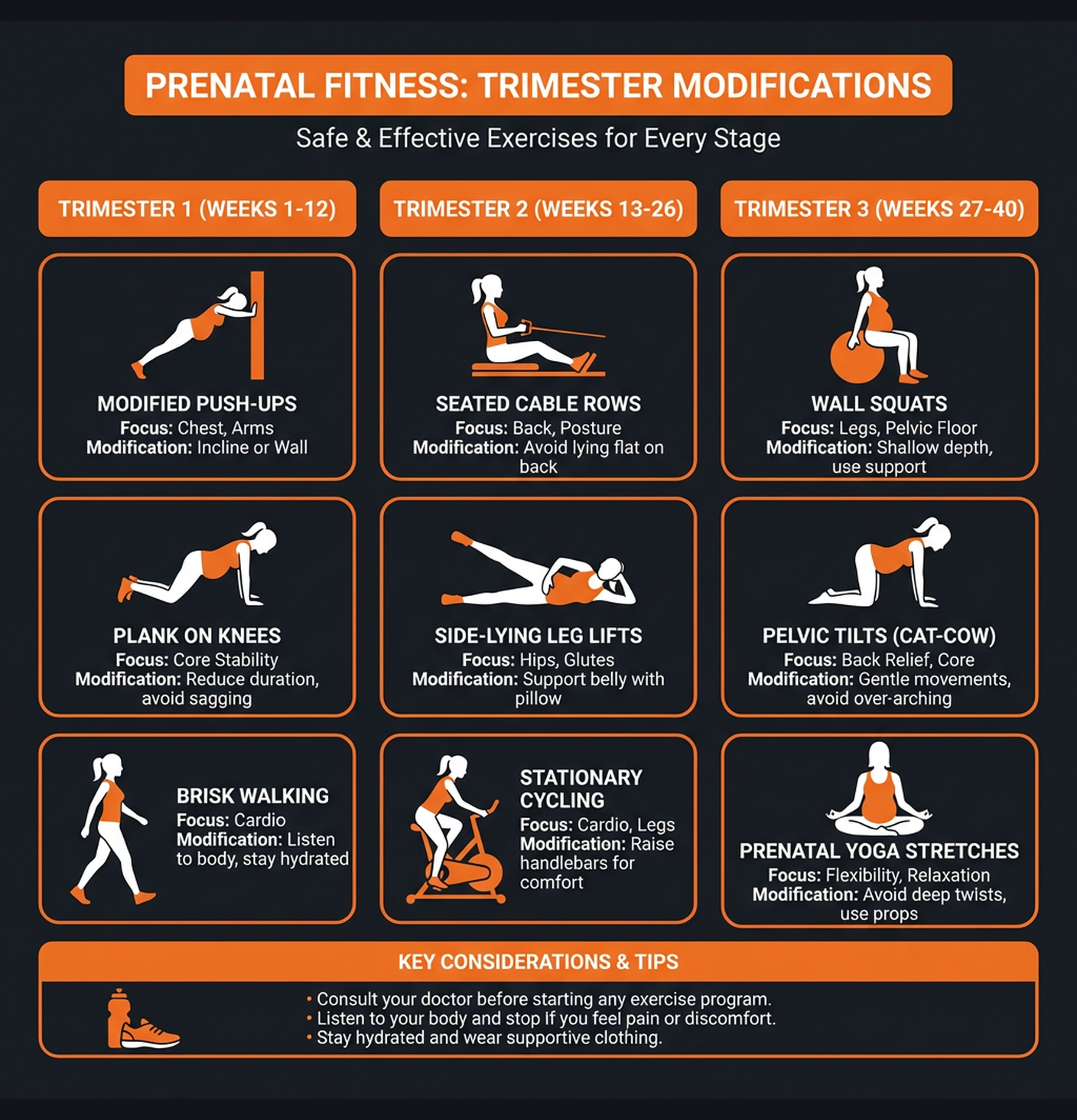
Your belly is growing. Modify or eliminate exercises that feel uncomfortable. Switch from flat bench to incline. Widen your squat stance as needed.
Day 1: Lower Body
- •Goblet Squat (wide stance): 3x10 (60s rest)
- •Dumbbell Sumo Deadlift: 3x10 (60s rest)
- •Banded Clamshell: 3x12 per side (45s rest)
- •Glute Bridge (single-leg if stable): 3x10 per side (45s rest)
- •Banded Lateral Walk: 3x10 per direction (45s rest)
Day 2: Upper Body
- •Incline Dumbbell Press: 3x10 (60s rest)
- •Dumbbell Row: 3x10 per side (60s rest)
- •Seated Dumbbell Shoulder Press: 3x8 (60s rest)
- •Band Face Pull: 3x12 (45s rest)
- •Overhead Tricep Extension: 2x12 (45s rest)
Day 3: Full Body
- •Bodyweight Squat to Box: 3x12 (60s rest)
- •Standing Band Press: 3x10 (60s rest)
- •Seated Band Row: 3x12 (45s rest)
- •Standing Kickback with Band: 3x10 per leg (45s rest)
- •Modified Side Plank: 3x15s per side (30s rest)
Phase 3: Third Trimester (Weeks 9-12 of Program)
Listen to your body more than ever. Reduce weight if needed. Prioritize movements that feel good and support daily function. Pelvic floor work becomes even more important.
Day 1: Lower Body
- •Wall Squat (ball behind back): 3x10 (60s rest)
- •Dumbbell Sumo Deadlift (light): 3x8 (60s rest)
- •Banded Glute Bridge: 3x12 (45s rest)
- •Standing Banded Hip Abduction: 3x10 per side (45s rest)
- •Pelvic Floor Breathing: 3x10 breaths
Day 2: Upper Body
- •Incline Dumbbell Press (light): 3x10 (60s rest)
- •Standing Dumbbell Row: 3x10 per side (60s rest)
- •Seated Arnold Press (light): 3x8 (60s rest)
- •Band Pull-Apart: 3x12 (30s rest)
- •Wrist Curl: 2x12 (30s rest)
Day 3: Functional Movement
- •Farmer's Walk (light dumbbells): 3x20m (60s rest)
- •Wall Push-Up: 3x10 (45s rest)
- •Seated Band Row: 3x10 (45s rest)
- •Standing March with Band: 3x10 per leg (45s rest)
- •Diaphragmatic Breathing: 5 minutes
Pelvic Floor Notes
Practice diaphragmatic breathing before every session. Inhale and let the pelvic floor relax. Exhale and gently engage (think about stopping the flow of urine). This coordination supports your pelvic floor during exercise and prepares you for labor and postpartum recovery.
When to Stop and Call Your Provider
Stop exercising and contact your healthcare provider if you experience: vaginal bleeding, regular painful contractions, fluid leaking, chest pain, dizziness or feeling faint, calf pain or swelling, decreased fetal movement, or headache that does not resolve. When in doubt, err on the side of caution.
Get a Free AI Coach on WhatsApp
Ask questions, get workout plans, and track your progress — all from WhatsApp.
Message Your CoachFrequently Asked Questions
- What should I know about overview?
- IMPORTANT: Consult your healthcare provider before starting or continuing any exercise program during pregnancy. Every pregnancy is different. Get clearance from your OB-GYN or midwife before training, and communicate any changes in how you feel during exercise.
- What should I know about phase 1: first trimester (weeks 1-4 of program)?
- You may feel fatigued or nauseous. Train when you feel good. Skip sessions guilt-free when you do not.
- What should I know about phase 2: second trimester (weeks 5-8 of program)?
- Your belly is growing. Modify or eliminate exercises that feel uncomfortable. Switch from flat bench to incline. Widen your squat stance as needed.
- What should I know about phase 3: third trimester (weeks 9-12 of program)?
- Listen to your body more than ever. Reduce weight if needed. Prioritize movements that feel good and support daily function. Pelvic floor work becomes even more important.
- What should I know about pelvic floor notes?
- Practice diaphragmatic breathing before every session. Inhale and let the pelvic floor relax. Exhale and gently engage (think about stopping the flow of urine). This coordination supports your pelvic floor during exercise and prepares you for labor and postpartum recovery.