25-Minute Foam Roller and Mobility Routine for Recovery and Flexibility
A 25-minute foam roller and mobility routine to speed recovery: ease soreness, break up fascia adhesions and boost flexibility and range of motion fast.
 Jeff·Aug 19, 2024·4 min read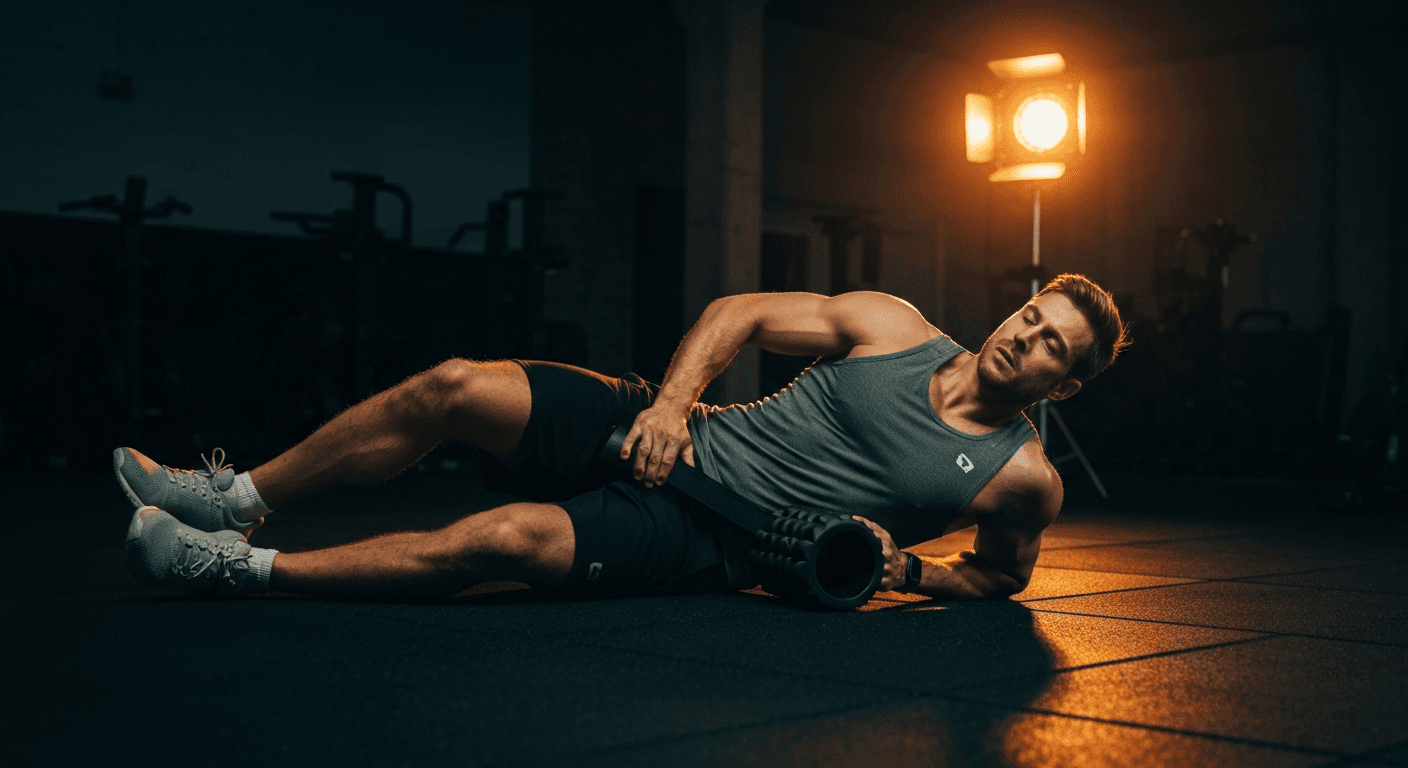
Key Takeaways
- Foam rolling breaks down fascia adhesions and reduces lactic acid buildup, which cuts down muscle soreness and speeds up recovery between workouts.
- The routine splits into 15 minutes of foam rolling (quads, hamstrings, IT band, glutes, upper back) followed by 10 minutes of mobility work.
- Do this 3-4 times per week for best results, though daily practice will give you even better gains in flexibility and recovery.
- Some discomfort during foam rolling is normal but it shouldn't be unbearable pain - start with a softer roller if you're new to it.
- Skip rolling directly over bones and joints to avoid injury, and always move slowly while listening to your body's signals.
Get This on WhatsApp
Get a quick summary and link sent straight to your WhatsApp.
Send Me This ArticleWelcome to your ultimate guide for an effective 25-Minute Foam Roller and Mobility Routine for Recovery and Flexibility!
Whether you're an athlete striving for optimal performance or someone who simply wants to improve overall well-being, this routine is designed for immediate results. By incorporating a foam roller into your regimen, you can alleviate muscle soreness, increase flexibility, and expedite recovery.
Why Foam Rolling and Mobility are Crucial for Recovery
When you engage in physical activities, your muscles undergo stress and minor injuries, often leading to soreness and stiffness. Foam rolling and mobility exercises can accelerate muscle recovery by breaking down adhesions in the fascia—the connective tissue surrounding your muscles. Coupled with mobility exercises, this routine can drastically enhance your range of motion, ensuring you're always at your peak performance.
The Science Behind Foam Rolling
According to a study published in the Journal of Athletic Training, foam rolling can significantly decrease muscle soreness and improve performance in subsequent workouts. By targeting pressure points, foam rolling helps in reducing the buildup of lactic acid, which is often the culprit behind muscle cramps and soreness.
Mobility Exercises for a Holistic Approach
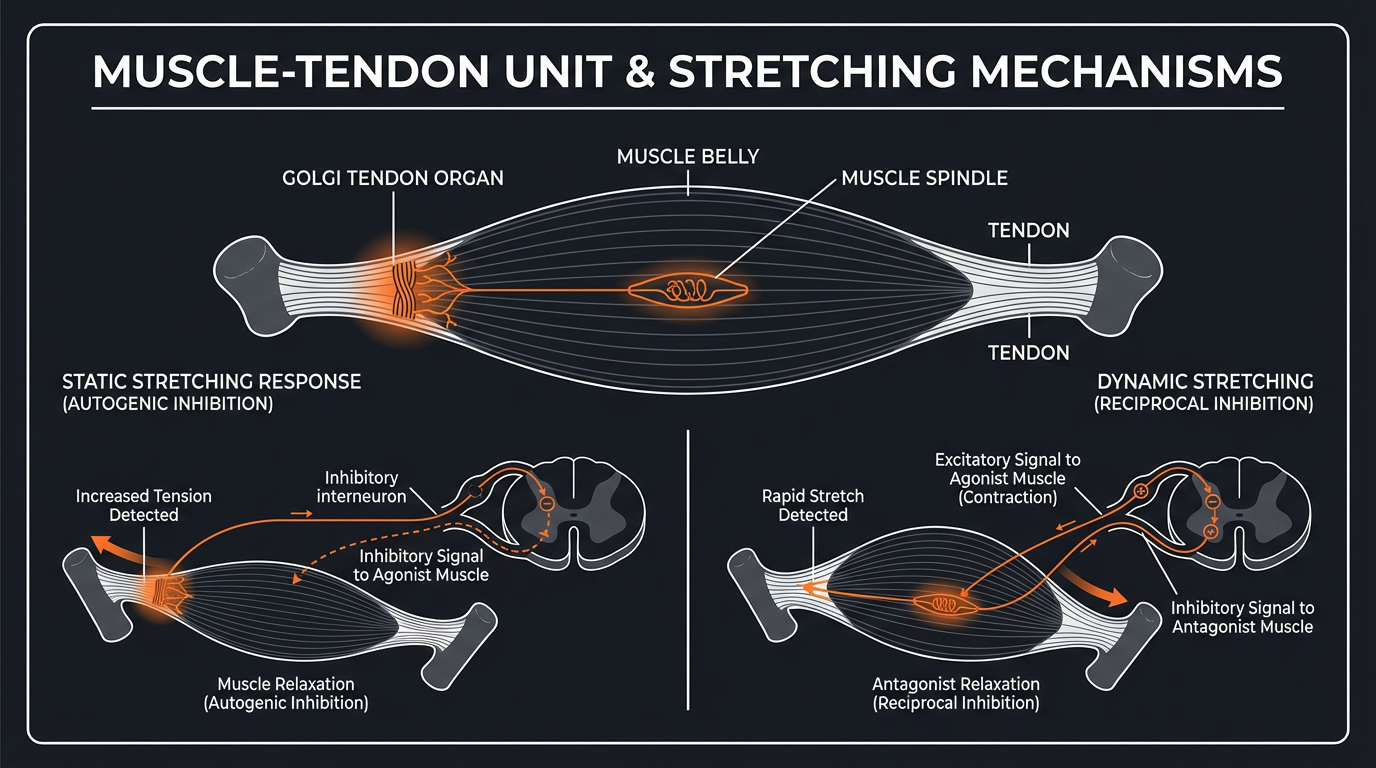
To complement foam rolling, incorporating mobility exercises enhances joint flexibility and stability. These exercises stimulate the production of synovial fluid, which lubricates the joints, reducing friction and promoting smoother movements. Mobility routines can also correct imbalances and prevent injuries, making them an indispensable part of any fitness regimen.
The Ultimate 25-Minute Foam Roller and Mobility Routine
Ready to dive into the routine? Grab your foam roller and follow these steps to optimize your recovery and flexibility.
Foam Rolling (15 minutes)
- •Quads: Lie face down and place the foam roller under your thighs. Roll up and down from your hip to your knee for 2-3 minutes.
- •Hamstrings: Sit on the floor with the roller under your thighs. Roll from the base of your glutes to your knees for another 2-3 minutes.
- •IT Band: Lie on your side with the roller positioned just under your hip. Roll from your hip to just above your knee for 2 minutes per side.
- •Glutes: Sit on the roller and cross one leg over the other, placing your weight on one glute. Roll back and forth for 2 minutes per side.
- •Upper Back: Lie on your back with the roller under your shoulder blades. Roll from the middle of your back to the base of your neck for 2-3 minutes.
Mobility Drills (10 minutes)
- •Hip Flexor Stretch: Kneel on your right knee with your left foot in front. Shift your weight forward until you feel a stretch in your right hip. Hold for 1 minute on each side.
- •Cat-Cow Stretch: Start on your hands and knees. Arch your back for the "cat" pose, then dip it towards the floor for the "cow" pose. Perform this for 2 minutes.
- •Shoulder Reach-Through: Start on all fours. Reach your right arm under your torso to the left side as far as you can. Hold for 1 minute and switch sides.
- •Ankle Circles: Sit down and extend one leg. Rotate your ankle in circles for 1 minute on each side. This helps in lubricating the ankle joints.
Common Concerns about Foam Rolling and Mobility
Q: How often should I perform this routine?***Aim for at least 3-4 times a week for optimal results. Even daily practice can offer significant benefits.*
Q: Can foam rolling be painful?*Some discomfort is normal, especially if you're new to foam rolling or have tight muscles. However, it should never be unbearably painful. Use a softer roller if necessary and gradually work your way up.*
Q: Are there any risks involved in foam rolling?*Foam rolling is largely safe, but avoid rolling over bony areas or joints to prevent injury. Always perform movements slowly and listen to your body.*
Conclusion
Understanding the importance of combining a 25-Minute Foam Roller and Mobility Routine for Recovery and Flexibility is the key to achieving your fitness goals. Implementing this straightforward, yet highly effective routine ensures that your muscles recover faster and remain flexible, allowing you to perform better and stay injury-free.
Ready to take your recovery and flexibility to the next level?** Grab your foam roller and start this routine today! Your body will thank you.
Frequently Asked Questions
- Does foam rolling actually help with muscle recovery?
- It helps reduce perceived soreness and temporarily improves range of motion, but it doesn't speed up actual tissue repair. Think of it as making you feel better and move better, not healing faster.
- When should I foam roll — before or after a workout?
- Before your workout to improve range of motion for your lifts, and after if you're particularly tight or sore. Pre-workout rolling for 5 minutes on areas you're about to train is the best use of your time.
- How long should I foam roll each muscle group?
- Spend 60-90 seconds per muscle group, focusing on tender spots. Roll slowly and pause on tight areas for 20-30 seconds. Going longer doesn't add much benefit — it's not a substitute for stretching.
- Is foam rolling better than stretching for flexibility?
- They do different things. Foam rolling addresses tissue quality and tender spots. Stretching improves actual range of motion. Use both: foam roll first to work out the knots, then stretch to lengthen the muscle.