Face Pulls: The Most Important Exercise You Are Not Doing
If your shoulders hurt and your posture sucks, face pulls are probably the single best exercise you can add to your routine.
 Jeff·Feb 10, 2026·9 min read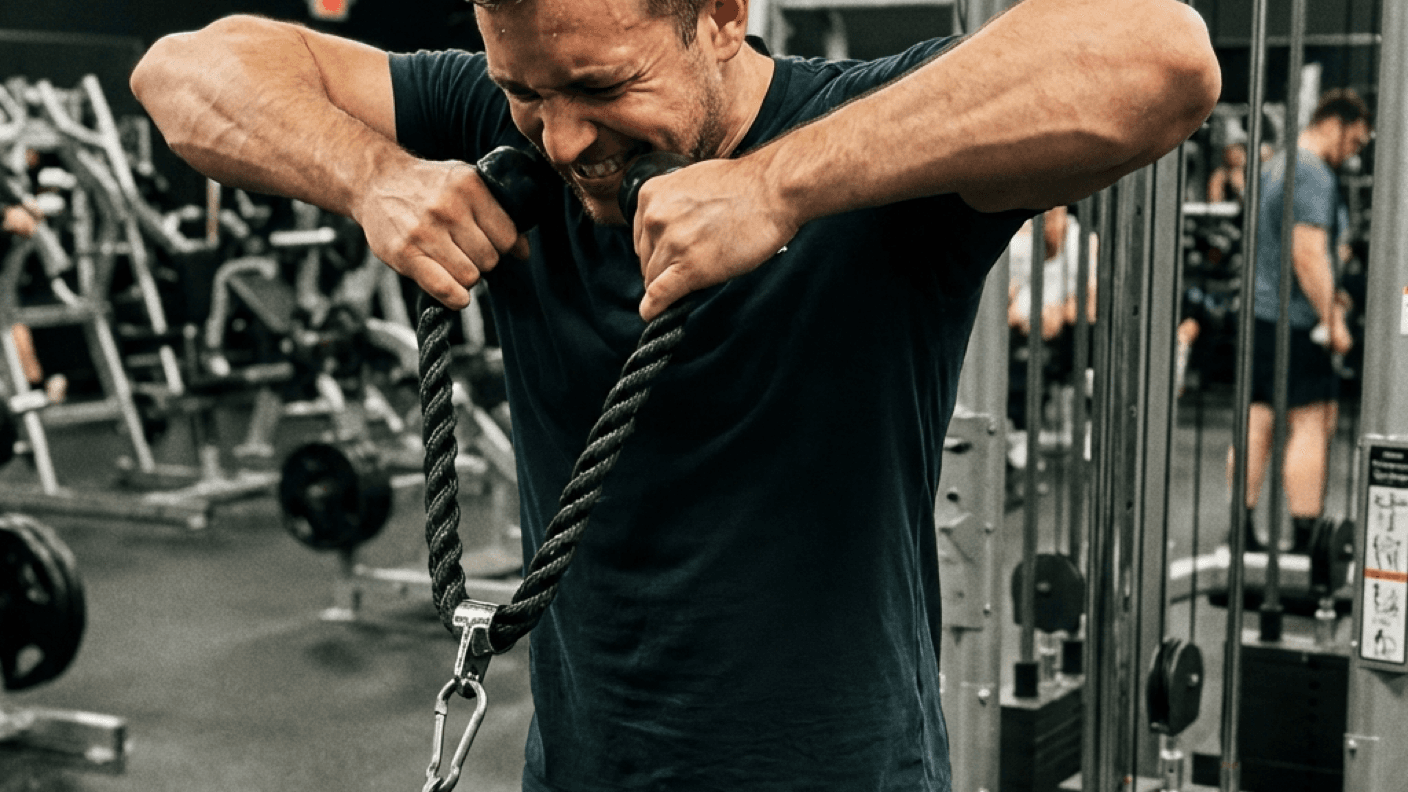
Key Takeaways
- Face pulls train your rear delts, rotator cuff muscles, and middle traps which get ignored by most back exercises like rows and pulldowns.
- Most lifters do too much pushing and not enough pulling in the opposite direction, creating shoulder imbalances that lead to injuries.
- Pull the rope to your face with the cable set at face height, then rotate your hands back so your knuckles point to the ceiling at the top.
- Stop using heavy weight on face pulls because your rear delts and rotator cuff are small muscles that need lighter loads and perfect form.
- Do face pulls at least twice per week to counteract all your bench pressing and prevent your shoulders from getting fucked up.
Get This on WhatsApp
Get a quick summary and link sent straight to your WhatsApp.
Send Me This ArticleWhy face pulls matter so damn much
Here is the problem with how most people train: they bench press, they overhead press, they do pushups, they do flyes. Push, push, push, push. All of these movements internally rotate the shoulder and strengthen the front of the body.
Then for "back day" they do rows and pulldowns, which are great for the lats but do almost nothing for the rear delts and external rotators of the shoulder.
The result? Shoulders that are pulled forward, a rounded upper back, and a rotator cuff that is getting weaker relative to the muscles surrounding it. This is why so many lifters develop shoulder pain after a year or two of serious training. The imbalance catches up to them.
Face pulls fix this. They train external rotation, rear delt activation, and scapular retraction in a single movement. I tell every single person I coach to do face pulls at least twice a week, regardless of their goals. If you are benching heavy and not doing face pulls, you are building an injury.
Jeff Cavaliere from Athlean-X has been preaching this for years and he is absolutely right. John Rusin, a sports performance coach and physical therapist, calls face pulls the single most important exercise for shoulder health. I agree with both of them. It is rare that one exercise can serve as both prehab and a legitimate muscle builder, but face pulls pull it off.
The muscles face pulls train
Face pulls primarily target:
Rear deltoids. The back of your shoulder, which is chronically underdeveloped in most lifters. The rear delt creates that 3D, capped shoulder look when viewed from the side.
Infraspinatus and teres minor. These are two of the four rotator cuff muscles. They are responsible for external rotation of the shoulder. Every time you pull the rope to your face and rotate your hands outward, these muscles are doing the work.
Middle and lower trapezius. The parts of the trap that retract your shoulder blades (pull them together). These are the muscles that counteract forward-rounded posture.
Rhomboids. Small muscles between your shoulder blades that also help with scapular retraction.
Notice what is NOT on this list: your lats. Rows and pulldowns hit your lats. Face pulls hit the stabilizers and postural muscles that rows miss. This is why you need both.
How to do face pulls correctly
Most people butcher face pulls. I see it constantly. They set the cable too low, use too much weight, and turn it into some kind of upright row meets reverse curl hybrid. Here is how to actually do them:
Setup:
- •Set a cable machine with a rope attachment at about upper chest to face height. Slightly above eye level is my preferred position.
- •Grab the rope with a neutral grip (palms facing each other) at the end of the knobs, not the middle of the rope.
- •Step back until the cable is taut and your arms are fully extended.
- •Stagger your stance slightly (one foot forward) for stability.
The movement:
- •Pull the rope toward your face, aiming for your forehead or just above your ears.
- •As you pull, separate the rope apart. Your hands should end up on either side of your head.
- •At the peak of the movement, externally rotate your shoulders so your knuckles point toward the ceiling. You should look like you are hitting a double bicep pose from the front.
- •Squeeze the contraction for a full second. You should feel your rear delts and the muscles between your shoulder blades burning.
- •Slowly return to the starting position. Control the eccentric. Do not let the weight yank your arms forward.
The critical detail most people miss: The external rotation at the top. If you are just pulling the rope to your face and then letting it go back, you are missing half the exercise. The rotation is what trains the rotator cuff muscles and turns a simple rear delt exercise into a comprehensive shoulder health movement.
The high pull vs low pull variation
Face pulls from a high cable (standard): This is the version described above. The cable is set at or above face height, and you pull horizontally or slightly downward. This variation emphasizes the rear delts and external rotators most.
Face pulls from a low cable: Set the cable at the lowest position and pull upward at about a 45-degree angle, finishing with the rope at your forehead. This changes the angle to hit the lower traps more aggressively and creates a different line of pull through the rear delts.
Both versions are good. I use high cable pulls as the default and throw in low cable pulls once or twice a month for variety. The high version is easier to learn, easier to feel, and more natural for most people.
There is also a band face pull variant that I will cover in a later section, which is great for warming up and for people training at home.
Common face pull mistakes
Using too much weight. This is the big one. Face pulls are a rear delt and rotator cuff exercise. These are small muscles. You do not need 80 pounds on the cable stack. If you cannot do the movement with full external rotation at the top and a controlled 2-3 second eccentric, the weight is too heavy. Most people should be somewhere between 15-40 pounds on the cable, and there is no shame in that.
Turning it into a row. If the rope ends up at your chest instead of your face, and your elbows are pulling back behind you instead of out to the sides, you are rowing. Rows are great, but that is not what we are doing here. Pull to your face, elbows high and wide.
No external rotation. Just pulling the rope to your face and reversing. You are leaving the rotator cuff work on the table. Rotate those hands back, get your knuckles pointing at the ceiling.
Using momentum. Rocking your body back and forth to move the weight. Face pulls should be strict and controlled. If you need to rock, drop the weight.
Setting the cable too low. If the cable is at hip height and you are pulling upward to your face, the movement becomes more of an upright row, which shifts work to the upper traps and front delts. Keep the cable at face height or above for the standard version.
Band face pulls vs cable face pulls
Cable face pulls provide consistent tension throughout the range of motion because the cable stack has a pulley system that maintains the line of pull. The tension is relatively even from start to finish.
Band face pulls have an ascending resistance curve. The band gets harder as you stretch it farther. This means the contraction at the peak is actually harder than the cable version, which can be a good thing for the external rotation portion. The tradeoff is less tension at the starting position.
I recommend cable face pulls as your primary version if you have access to a cable machine. Use band face pulls for:
- •Warm-up sets before pressing (2-3 sets of 15-20)
- •Home workouts when you do not have cables
- •Travel workouts
- •Extra volume on non-gym days
A good resistance band (medium to heavy tension) costs about ten bucks and fits in your gym bag. Loop it around a squat rack upright, a door frame anchor, or any sturdy object at face height and you can do face pulls anywhere.
Programming face pulls
Face pulls should be a permanent fixture in your program. Not an afterthought you do when you remember, but a planned, tracked exercise that you do consistently.
Minimum effective dose: 2 sessions per week, 3 sets of 15-20 reps. This is enough to maintain shoulder health and support your pressing.
For rear delt development: 3-4 sessions per week, 3-4 sets of 12-20 reps per session. Rear delts recover fast and respond well to high frequency and high reps.
For shoulder rehab: Daily, 2-3 sets of 15-25 reps with light weight or a band. Focus on the contraction and external rotation, not the load.
| Goal | Frequency | Sets per session | Reps | Load |
|---|---|---|---|---|
| General shoulder health | 2x/week | 3 | 15-20 | Light to moderate |
| Rear delt hypertrophy | 3-4x/week | 3-4 | 12-20 | Moderate |
| Warm-up / prehab | Every push session | 2-3 | 15-25 | Very light |
| Rehab | Daily | 2-3 | 15-25 | Very light |
Where in your workout: I like face pulls as either a warm-up before pressing (2-3 light sets) or as a finisher at the end of any upper body session. Some people do them between bench press sets as a filler exercise, which is a great use of your rest periods.
Face pulls for shoulder rehab and prehab
If you already have shoulder issues from pressing, face pulls can be a game changer. But you need to approach them correctly.
For prehab (preventing shoulder problems): Do them consistently as part of your warm-up and weekly programming. Two to three times per week at moderate intensity. The goal is to maintain the balance between your anterior (front) and posterior (back) shoulder muscles. A good rule of thumb is to match your pushing volume with face pulls and rows combined. If you do 15 sets of pressing per week, do at least 15 sets of pulling (including face pulls) per week.
For rehab (recovering from shoulder pain): Start with band face pulls, very light, high reps, daily. Focus entirely on the external rotation component. Do not try to build muscle or use challenging weight. The goal is blood flow, activation of the external rotators, and motor pattern development. As pain decreases, gradually add load and decrease frequency.
I have had clients who were about to give up bench pressing because of shoulder pain, and we got them back to pain-free pressing within 6-8 weeks just by adding daily face pulls and cleaning up their bench setup. That is not guaranteed for everyone, obviously, and if you have a structural issue you need to see a sports medicine doc. But for the garden-variety "my shoulders hurt from too much benching and not enough pulling" problem, face pulls are close to a magic bullet.
One word of caution: face pulls are not a substitute for a proper diagnosis if you have real shoulder pain. If something hurts, see a physical therapist or orthopedic specialist. Face pulls can help with muscular imbalances, but they cannot fix a torn labrum or a bone spur.
Frequently Asked Questions
- Why are face pulls so important?
- Face pulls train the rear delts and external rotators, which are weak in almost everyone who benches and overhead presses. They counterbalance all the internal rotation from pressing, which keeps your shoulders healthy and fixes the hunched-forward posture that most lifters develop.
- How often should I do face pulls?
- Every upper body session, or even every training day. They are low-fatigue and your rear delts recover fast. Two to three sets of 15-20 reps as a warm-up or finisher adds almost no time to your workout but pays huge dividends for shoulder health.
- What can I do instead of face pulls?
- Band pull-aparts are the closest substitute and you can do them anywhere. Reverse flyes and prone Y-raises also work similar muscles. But honestly, face pulls are available in any gym with a cable machine, so there is rarely a reason to skip them.
- What height should the cable be for face pulls?
- Set it at or slightly above head height. Pulling from this angle targets the rear delts and external rotators best. If the cable is too low, it becomes more of a row and shifts the emphasis to your mid-back instead.