Hip Thrust Guide: Build Stronger Glutes and Hamstrings
The hip thrust is the single best exercise for glute development. Here is exactly how to set it up, execute it, and program it for growth.
 Jeff·Feb 10, 2026·10 min read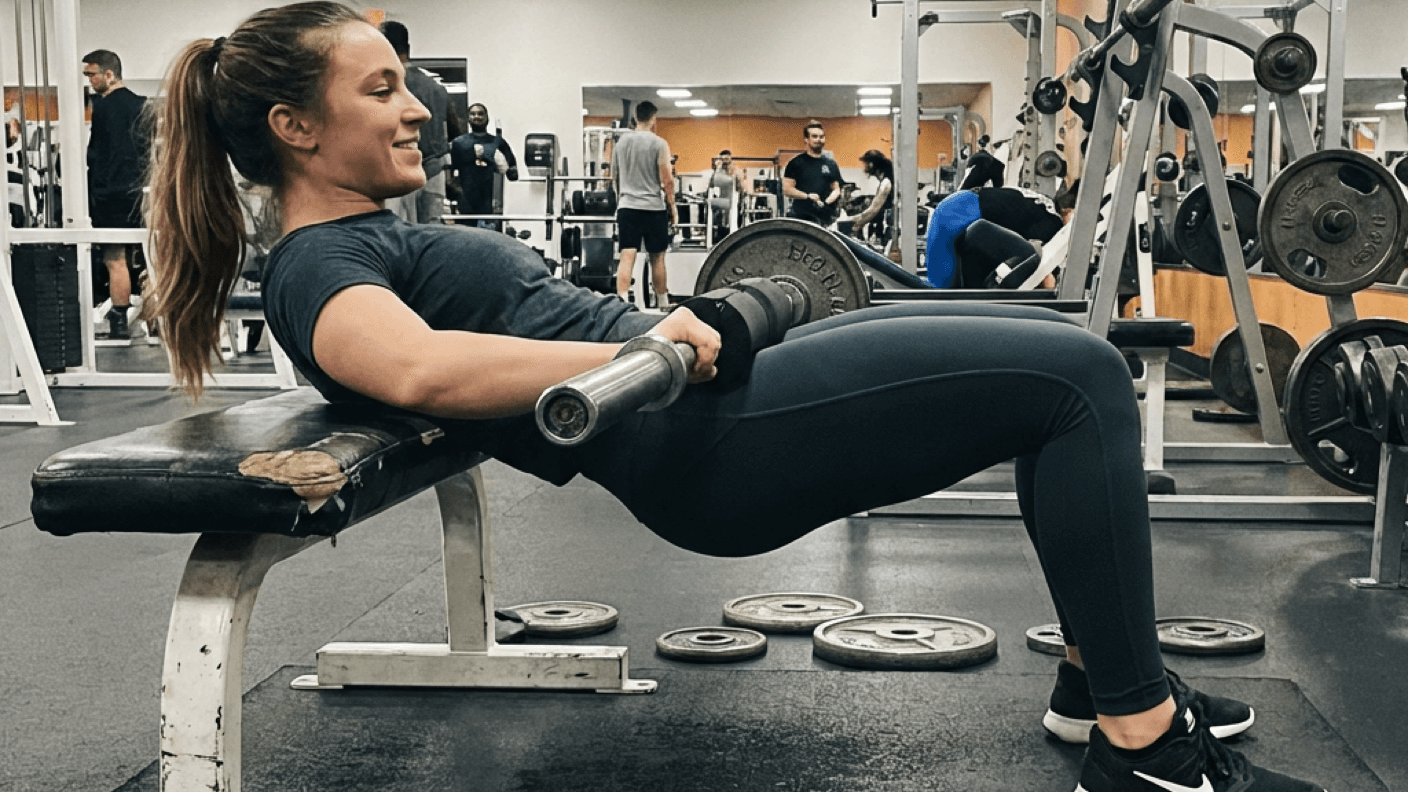
Key Takeaways
- Hip thrusts activate your glutes way more than squats, deadlifts, or any other exercise because they load the muscle at peak contraction.
- Set your feet so your shins are vertical at the top of the movement and use a pad on the bar unless you want bruised hip bones.
- Squeeze your glutes as hard as possible at the top and hold for a full second while tucking your chin to avoid hyperextending your back.
- Start with single leg bodyweight versions to address imbalances before loading up the barbell heavy.
- Program hip thrusts 2-3 times per week with 3-5 sets of 6-12 reps for strength or 12-20 reps for muscle growth.
Get This on WhatsApp
Get a quick summary and link sent straight to your WhatsApp.
Send Me This ArticleWhy the hip thrust is king for glutes
Bret Contreras (the self-titled "Glute Guy") built his entire career around the hip thrust, and love him or hate him, the man was right about the exercise. Research consistently shows that the hip thrust produces higher glute activation than squats, deadlifts, lunges, or any other lower body exercise.
Contreras and Cronin (2015) published EMG data showing that the barbell hip thrust elicited significantly greater gluteus maximus activation compared to the back squat. Neto et al. (2020) confirmed this finding. The numbers are not even close. The hip thrust lights up the glutes in a way that no other exercise matches.
Why? Two reasons.
First, the hip thrust loads the glutes at peak contraction (full hip extension at the top). Most other glute exercises, like squats and deadlifts, are hardest at the bottom where the glutes are stretched, and get easier as you stand up. The hip thrust flips this: the hardest part is the top where your glutes are fully contracted and squeezed.
Second, the hip thrust is a pure hip extension movement without significant knee extension. In a squat, your quads do a ton of work. In a hip thrust, the quads are basically along for the ride. The glutes and hamstrings handle the vast majority of the load.
If you want bigger, stronger glutes, the hip thrust needs to be in your program. Period.
The setup: getting into position
The setup is honestly the most annoying part of hip thrusts. Once you figure it out, the exercise itself is straightforward. But the first few times, you will feel awkward. Everyone does.
What you need:
- •A sturdy bench (standard flat bench works, or a dedicated hip thrust station if your gym has one)
- •A barbell with plates
- •A thick bar pad, folded towel, or hip thrust pad (you need something between the bar and your hip bones, trust me)
Bench height: Ideally the bench should be about 14-16 inches tall, which puts the edge at roughly the bottom of your shoulder blades when you lean against it. Most standard gym benches are 17-18 inches, which is a bit high but workable. If the bench is too tall, your range of motion decreases and the angle changes unfavorably. Some people push the bench against a wall to prevent it from sliding.
Getting the bar in position:
- •Sit on the floor with your upper back against the bench edge.
- •Roll the barbell over your legs until it sits in your hip crease (the fold where your legs meet your torso). Using bumper plates makes this easier because they are larger diameter.
- •Place the pad on the bar directly over your hip bones. Without a pad, a heavy barbell on your hip bones is genuinely painful and will limit how much weight you can use.
Foot placement:
- •Feet flat on the floor, about shoulder width apart.
- •Position your feet so that at the top of the movement (full hip extension), your shins are roughly vertical. For most people, this means feet are about 12-16 inches in front of the bench.
- •Toes can point straight ahead or slightly out (up to about 30 degrees).
If your feet are too close to the bench, you will feel it more in your quads. If your feet are too far from the bench, you will feel it more in your hamstrings and lower back. Play with the position until you feel the burn primarily in your glutes.
How to perform the barbell hip thrust
- •Starting position: Upper back on the bench edge, barbell in the hip crease with pad, feet flat, hands on the bar for stability (not pushing it).
- •Drive through your heels and lift your hips toward the ceiling. Your upper back stays on the bench as a pivot point.
- •At the top: Your hips should be fully extended. Your body from shoulders to knees should form a straight line. Your shins should be vertical. Squeeze your glutes as hard as you possibly can. Hold for a full second.
- •The chin tuck: Look at where the wall meets the floor in front of you (or tuck your chin to your chest). This posterior pelvic tilt at the top ensures you are using your glutes for the lockout, not hyperextending your lower back.
- •Lower under control back to the starting position. Your butt does not need to touch the floor between reps, but get a full stretch at the bottom.
Key cue: "Drive through your heels and squeeze your butt like you are trying to crack a walnut between your cheeks." Crude, but it works. The squeeze at the top is where all the magic happens. If you are not actively and forcefully contracting your glutes at lockout, you are wasting the best part of the exercise.
Breathing: Breathe in at the bottom, brace your core, drive up, exhale at the top or on the way down. You do not need the same level of bracing as a heavy squat, but a solid core helps transfer force.
Single leg vs bilateral hip thrusts
Single-leg hip thrusts are one of the most underrated lower body exercises. They address imbalances between your left and right glute, require zero equipment (bodyweight is usually enough), and absolutely destroy the working glute.
How to do them:
- •Set up exactly like a bilateral hip thrust.
- •Lift one foot off the floor. Either extend it straight out in front of you or bend the knee and hold it near your chest.
- •Drive through the grounded foot and extend your hips.
- •Squeeze at the top, lower under control, repeat.
Start with bodyweight. If you can do 3 sets of 15 per leg with a 2-second squeeze at the top and your glutes are not on fire, I will be genuinely surprised.
When to use single-leg vs bilateral:
- •Bilateral (two legs) for heavy loading and overall strength: 3-5 sets of 6-12 reps
- •Single leg for addressing imbalances, higher rep hypertrophy work, and warm-ups: 2-3 sets of 12-20 per leg
If one glute is visibly larger or stronger than the other (pretty common actually), emphasize single-leg work for a training block. Do the weaker side first, then match those reps with the stronger side.
Hip thrust variations worth doing
Barbell hip thrust (standard). The king. Heavy loading, bilateral, works for both strength and hypertrophy.
Dumbbell hip thrust. Easier to set up than a barbell. Just hold a dumbbell in your hip crease. Good for higher reps and people who train at home. The limiting factor is that you will outgrow the dumbbell pretty quickly. Glutes are strong.
Banded hip thrust. Loop a resistance band around your knees and/or over your hips. The band around the knees forces you to actively push out, which increases glute medius activation. The band over the hips adds resistance at the top where the exercise is easiest.
B-stance hip thrust. One foot is slightly in front of the other, with only the heel of the front foot on the ground. This shifts more work to the back leg without being as difficult as a true single-leg hip thrust. Great intermediate step.
Smith machine hip thrust. The Smith machine locks the bar path, which makes it easier to focus on the squeeze without worrying about balancing the bar. Some people actually feel their glutes work better on the Smith machine because they can focus entirely on the contraction. No shame in using the Smith for hip thrusts.
Feet-elevated hip thrust. Put your feet on a 4-6 inch platform. This increases the range of motion at the bottom, creating a deeper stretch in the glutes. More range of motion under load generally means more growth stimulus.
Common mistakes that kill your results
Hyperextending the lower back at the top. This is the most common issue. At the top of the thrust, your body should form a straight line. If your ribs are flaring and your lower back is arched like a gymnast, you are not using your glutes for the lockout. You are using your spinal erectors. Fix: tuck your chin, think about bringing your ribs toward your hips, and posteriorly tilt your pelvis at the top.
Not squeezing at the top. Lifting your hips up and immediately dropping back down wastes the peak contraction. Hold the top for a full second and squeeze those glutes. Hard. If you are not actively squeezing, you are leaving glute activation on the table.
Feet too close to the bench. This turns the hip thrust into a quad exercise. Your shins should be roughly vertical at the top. If they are angled forward (knees past toes), scoot your feet out.
Lifting with the lower back. If you feel hip thrusts in your lower back more than your glutes, something is wrong. Usually the fix is a combination of tucking your chin, not hyperextending, and really focusing on the glute squeeze. Also check your foot position.
Using too much weight too soon. I see people loading up 315 and doing ugly, partial-ROM hip thrusts with no squeeze. Drop the weight to something you can pause at the top for 2 seconds with a full glute contraction. Then build back up from there.
The squat vs hip thrust debate
This comes up constantly: "should I squat or hip thrust for glutes?" And the answer is both, but they do different things.
The squat loads the glutes primarily in the stretched position (at the bottom of the movement). The hip thrust loads the glutes at peak contraction (at the top). These are complementary stimulus, not redundant.
Barbalho et al. (2020) compared squat and hip thrust training over 12 weeks and found that both produced significant glute growth, but the hip thrust group had slightly better gluteus maximus development while the squat group had better quad development. Neither was dramatically superior for glutes.
My recommendation: do both. Squat for overall lower body development and strength. Hip thrust for targeted glute work. If I had to pick only one for glutes, I would pick the hip thrust. But you would be leaving quad development on the table.
A good lower body session might look like:
- •Barbell squat: 4x6-8 (quads and glutes in stretched position)
- •Barbell hip thrust: 3x8-12 (glutes at peak contraction)
- •Romanian deadlift: 3x10-12 (hamstrings and glutes)
- •Walking lunge: 2x12 per leg (everything)
That covers all the bases.
Programming hip thrusts for maximum growth
The glutes can handle a lot of volume and frequency. They are a large muscle group, they recover relatively fast, and they respond well to both heavy loads and moderate-rep work.
| Variable | Recommendation |
|---|---|
| Frequency | 2-3x per week |
| Total weekly sets | 10-20 (direct glute work including hip thrusts) |
| Rep range | 6-20 (vary across the week) |
| RPE | 7-9 (save RPE 10 for the last set or two) |
Sample weekly glute programming:
Monday (heavy):
- •Barbell hip thrust: 4x6-8 @ RPE 8-9
- •Barbell squat: 4x6-8
Wednesday (moderate):
- •B-stance hip thrust: 3x10-12 per side @ RPE 8
- •Romanian deadlift: 3x10-12
- •Banded lateral walks: 3x15 per side
Friday (higher reps):
- •Dumbbell hip thrust: 3x15-20 @ RPE 8-9
- •Bulgarian split squat: 3x10-12 per leg
- •Single-leg hip thrust (bodyweight): 2x15-20 per leg
This gives you heavy hip thrusts on Monday, moderate unilateral work on Wednesday, and higher-rep metabolic work on Friday. The variation in loading keeps the glutes responding while accumulating enough volume for growth.
One more thing: progressive overload matters as much for hip thrusts as any other exercise. If you are thrusting 135 for 3x10 every session for six months, do not expect your glutes to grow. Add weight when you hit the top of your rep range. Track your numbers. The glutes are strong and can handle heavy loads, so push the weight up over time. I have had female clients hip thrusting 225-315 and male clients hitting 405+. It takes time but the strength comes fast on this exercise.
Frequently Asked Questions
- Are hip thrusts better than squats for glutes?
- For pure glute activation, yes. EMG studies consistently show higher glute activation on hip thrusts compared to squats. Squats are still a better overall lower body builder, but if your primary goal is glute size and strength, hip thrusts should be your main movement.
- How heavy should hip thrusts be?
- Most people can hip thrust significantly more than they squat, often 1.5-2 times their squat weight. If you are squatting 185, you should eventually be hip thrusting 275-315 or more. Do not be afraid to load them heavy. The movement is stable and safe.
- Why do hip thrusts hurt my back?
- You are probably hyperextending your lower back at the top instead of squeezing your glutes and maintaining a neutral spine. Think about tucking your ribs down and driving through your heels. The movement should feel entirely in your glutes and hamstrings, never your lower back.
- How do you set up a hip thrust at the gym?
- Put your upper back on a flat bench, knees bent at 90 degrees at the top, feet flat on the floor about hip-width apart. Use a barbell with a pad across your hip crease. Push through your heels, squeeze your glutes hard at the top, and do not arch your back.