How to Do Dips Properly: Chest vs Tricep Variations
Dips are one of the best upper body exercises if you do them right. Here is how to target your chest or triceps and avoid shoulder problems.
 Jeff·Feb 10, 2026·10 min read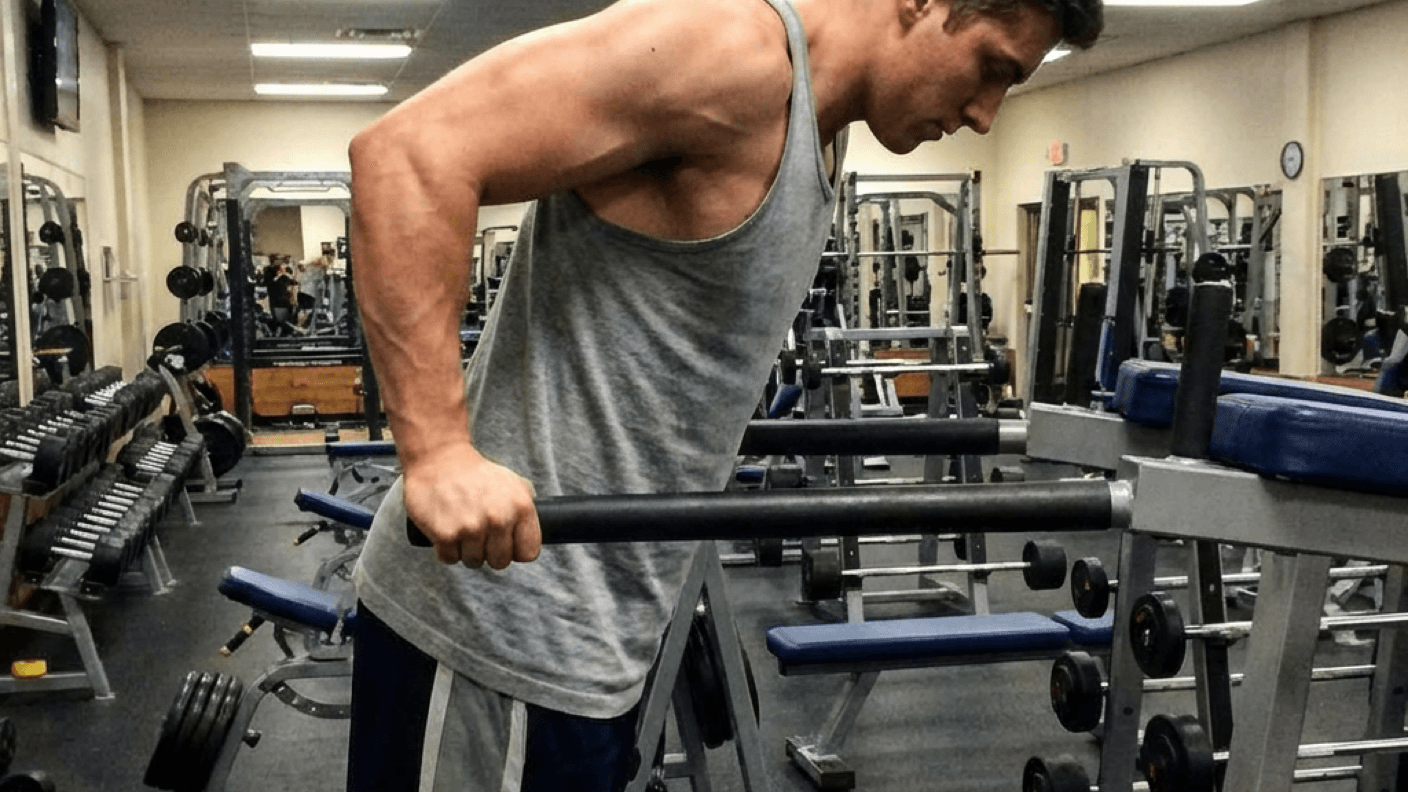
Key Takeaways
- Lean forward 30-45 degrees and flare your elbows wide for chest dips, stay upright with elbows tight for tricep dips.
- Go deeper on chest dips for maximum pec stretch, stop at 90 degrees for tricep dips and lock out hard at the top.
- Skip dips completely if you have shoulder problems or feel sharp pinching pain in the front of your shoulder.
- Don't add weight until you can do 3 sets of 10-12 clean bodyweight dips with perfect form.
- Use dips 2-3 times per week in the 6-12 rep range, treating them like a main lift not an accessory.
Get This on WhatsApp
Get a quick summary and link sent straight to your WhatsApp.
Send Me This ArticleWhy dips deserve a spot in your program
Dips are one of those exercises that has been around forever and for good reason. They were a staple of old-school bodybuilding when guys built incredible physiques with basic equipment, and they are just as effective now as they were in the 1960s.
I call dips the "upper body squat" because they load the chest, shoulders, and triceps through a large range of motion with heavy weight. Vince Gironda, the legendary bodybuilding coach, actually preferred dips over the bench press for chest development. He called them the best overall chest exercise. I am not sure I would go that far, but I understand his reasoning.
The beauty of dips is versatility. Change your body angle and grip width and you shift the emphasis from chest to triceps dramatically. Same exercise, different setup, different muscles doing the heavy lifting.
Chest dips vs tricep dips: the differences
The difference between a chest dip and a tricep dip comes down to three variables: body lean, elbow position, and depth.
| Variable | Chest dip | Tricep dip |
|---|---|---|
| Body lean | Forward lean (30-45 degrees) | Upright (minimal lean) |
| Elbow position | Elbows flare out wide | Elbows stay close to body |
| Depth | Deep, past 90 degrees if possible | To 90 degrees at the elbow |
| Grip width | Wider (outside shoulder width) | Narrower (shoulder width) |
| Feet position | Crossed behind you, knees bent | Straight or slightly forward |
These differences are not trivial. A 2019 study by Bagchi examined dip variations and found that increased forward lean significantly increased pectoralis major activation while decreasing tricep activation. The reverse was true for upright dips. So the setup actually does shift the work where you want it.
How to do chest dips
The goal here is maximum pec stretch and contraction. Think of this as a vertical bench press.
Setup:
- •Grab the parallel bars with a grip that is wider than shoulder width (if adjustable). Wider bars increase the chest stretch.
- •Jump up or press up to the top position, arms locked out.
- •Lean your torso forward 30-45 degrees. Think about looking at the floor a few feet in front of you.
- •Bend your knees and cross your feet behind you. This helps maintain the forward lean.
The rep:
- •Lower yourself by bending at the elbows, letting them flare out to the sides.
- •Descend until you feel a deep stretch across your chest. For most people, this means your upper arms are at or below parallel to the floor.
- •Pause briefly at the bottom, then drive back up by squeezing your chest.
- •Do not fully lock out at the top. Stop just short of lockout to keep tension on the pecs.
Key cues:
- •Think about bringing your chest toward the floor, not just bending your arms.
- •Squeeze your pecs at the top like you are trying to crush something between them.
- •Keep the lean constant throughout the entire rep. Do not start leaning forward and then straighten up on the press.
The stretch at the bottom of a chest dip is one of the most intense pec stretches you can get under load. This is why old-school bodybuilders swore by them. That loaded stretch is a powerful growth stimulus, and modern research on stretch-mediated hypertrophy backs this up completely.
How to do tricep dips
Tricep dips prioritize the triceps (obviously) by keeping the torso upright and the elbows close.
Setup:
- •Use shoulder-width bars if available. Narrower is better for tricep emphasis.
- •Jump or press to the top position, arms locked out.
- •Keep your torso as vertical as possible. Look straight ahead, not down.
- •Legs can be straight or slightly forward.
The rep:
- •Lower yourself by bending at the elbows, keeping them pinned close to your body and pointing back behind you.
- •Descend until your elbows hit about 90 degrees. You do not need to go as deep as chest dips.
- •Press back up by extending your elbows. Lock out fully at the top because the lockout is where the triceps work the hardest.
- •Squeeze your triceps hard at the top.
Key cues:
- •Keep your elbows tight to your body. If they flare, the chest takes over.
- •Think about pushing yourself straight up, not forward.
- •Lock out every rep. The top of the movement is the money zone for triceps.
The tricep dip is essentially a close-grip bench press performed vertically. It hammers the lateral and medial heads of the triceps, and because you can load it very heavy with a dip belt, it is one of the best mass builders for the back of the arm.
The shoulder issue and who should avoid dips
Let me be upfront about this: dips beat up some people's shoulders. And if you are one of those people, no amount of form tweaking is going to fix it. The anatomy of the dip puts the shoulder in a combination of extension and internal rotation under load, which can aggravate the anterior capsule and the biceps tendon.
You should skip dips if:
- •You have a history of shoulder dislocations or subluxations
- •You feel a sharp pinching in the front of your shoulder at the bottom of the movement
- •You have significant anterior shoulder laxity (your shoulders are naturally "loose")
- •The pain does not go away after warming up and persists between sessions
You can probably do dips if:
- •You feel a slight stretch in the front of the shoulder at the bottom but no pain
- •Your shoulders feel fine during and after the exercise
- •You can control the movement through the full range of motion
If you are somewhere in between, try limiting your depth. Going to 90 degrees at the elbow instead of full depth reduces shoulder stress significantly. You can also try leaning forward slightly on tricep dips, which takes some pressure off the anterior shoulder.
And if dips just do not work for your body, that is fine. Bench press, close-grip bench, and cable flyes can cover everything that dips do. There are no mandatory exercises. Only effective ones that work for YOUR body.
Progressions: from zero to weighted
If you cannot do a single dip:
Start with bench dips. Hands on a bench behind you, feet on the floor. Lower yourself until your upper arms are parallel to the floor, then press back up. Once you can do 3 sets of 15, move to the parallel bars.
Next, use a band for assistance. Loop a thick resistance band around the bars and put your knees or feet in it. The band takes some of your bodyweight. Start with a thick band and progressively move to thinner bands as you get stronger.
Another option is the dip machine with counterweight assistance. These are fine for building baseline strength. Use them until you can do 5 clean bodyweight dips, then move to the real bars.
The bodyweight to weighted progression:
Once you can do 3 sets of 10-12 clean bodyweight dips with good form and controlled tempo, you are ready to add weight. Do not rush this. I see guys who can barely do 8 shaky bodyweight reps strapping on a 45-pound plate. That is how shoulders get wrecked.
Progression guideline:
| Milestone | Next step |
|---|---|
| Can do 3x12 bodyweight | Add 10 lbs with dip belt |
| Can do 3x10 with 10 lbs | Add 5-10 more lbs |
| Can do 3x10 with 25 lbs | Add 5-10 more lbs |
| Can do 3x8 with 45+ lbs | You are strong. Keep going. |
Progress slowly. Five-pound jumps are fine. Dips respond really well to progressive overload, and guys who get to the point where they are dipping with 90+ pounds around their waist have incredible upper body development. Every single time.
Adding weight: the dip belt guide
A dip belt is a simple piece of equipment: a belt that goes around your waist with a chain to hang weight plates from. They run about 25-40 dollars and last forever. Best investment you can make for upper body training.
How to use it:
- •Thread the chain through a plate (start with 10-25 lbs).
- •Wrap the belt around your hips (not your waist). It should sit on the bony part of your hips.
- •The chain hangs between your legs with the plate hanging below.
- •Jump up to the bars and perform your set as normal.
Alternatives if you do not have a dip belt:
- •Hold a dumbbell between your feet (works up to about 30-40 lbs before it gets awkward)
- •Use a backpack with weight plates in it
- •Hold a dumbbell between your knees
- •Chain method: wrap a chain around your waist with a carabiner
Common dip mistakes
Not going deep enough. Partial dips are partial results. Get at least to 90 degrees at the elbow. For chest dips, go deeper if your shoulders allow it.
Swinging. If your body is swinging back and forth like a pendulum, you are using momentum instead of muscle. Slow down. Control every inch of every rep.
Shrugging your shoulders. Your shoulders should stay depressed (pulled down away from your ears) throughout the movement. If they shrug up, you lose scapular stability and invite shoulder problems.
Going too fast on the eccentric. The lowering phase should take 2-3 seconds. Dropping into the bottom position under no control is how you strain a pec or irritate a shoulder. Control the descent.
Flaring elbows on tricep dips. Keep them tight. The whole point of the tricep variation is elbow-dominant movement with minimal chest involvement. If your elbows flare, you are just doing a sloppy chest dip.
Programming dips into your routine
Dips fit naturally into push days or upper body days. Here is how I typically slot them in:
As a primary movement (chest dips for chest development):
- •Weighted chest dips: 4x6-10 @ RPE 8
- •Follow with flyes and isolation work
As a secondary movement (after bench press):
- •Bodyweight or lightly weighted dips: 3x8-12 @ RPE 8
- •Great for adding volume to chest or triceps without another barbell setup
As a tricep builder (tricep dips on arm day or push day):
- •Weighted tricep dips: 3x6-10 @ RPE 8-9
- •Pair with overhead extensions for complete tricep development
As a finisher:
- •Bodyweight dips to failure: 2-3 sets
- •Use these at the end of a push session to fully exhaust the chest and triceps
One underrated way to use dips: superset them with chin-ups. Do a set of dips, rest 30-60 seconds, do a set of chin-ups, rest 60-90 seconds, repeat. This is one of the most time-efficient upper body workouts you can do. You hit chest, triceps, shoulders, back, and biceps in about 20 minutes.
Frequently Asked Questions
- How do you target chest vs triceps on dips?
- For chest, lean your torso forward about 30 degrees, use a wider grip, and flare your elbows out slightly. For triceps, keep your torso upright, use a narrower grip, and keep your elbows tucked close to your body. The lean angle is the biggest variable.
- Are dips bad for your shoulders?
- Not if you do them correctly and have the mobility for it. The problems start when you go too deep, flare your elbows excessively, or have existing shoulder impingement. If dips cause pain, stop at the point where your upper arm is parallel to the floor and work on your shoulder mobility before going deeper.
- How many dips should I be able to do?
- Being able to do 10-15 clean bodyweight dips is a solid benchmark. Once you can hit 15 comfortably, start adding weight with a dip belt. Doing 30 unweighted dips is an endurance test, not a muscle builder.
- Can dips replace bench press?
- Weighted dips are an excellent chest and tricep builder and some people respond to them better than bench press. But they load the shoulders differently and are harder to progressively overload in small increments. Use both if you can, or use dips as your primary presser if bench press bothers your shoulders.