How to Warm Up Properly Before Lifting Weights
Your warm-up probably sucks. Here is a simple, effective warm-up protocol that actually prepares you to lift heavy without wasting 30 minutes.
 Jeff·Feb 10, 2026·12 min read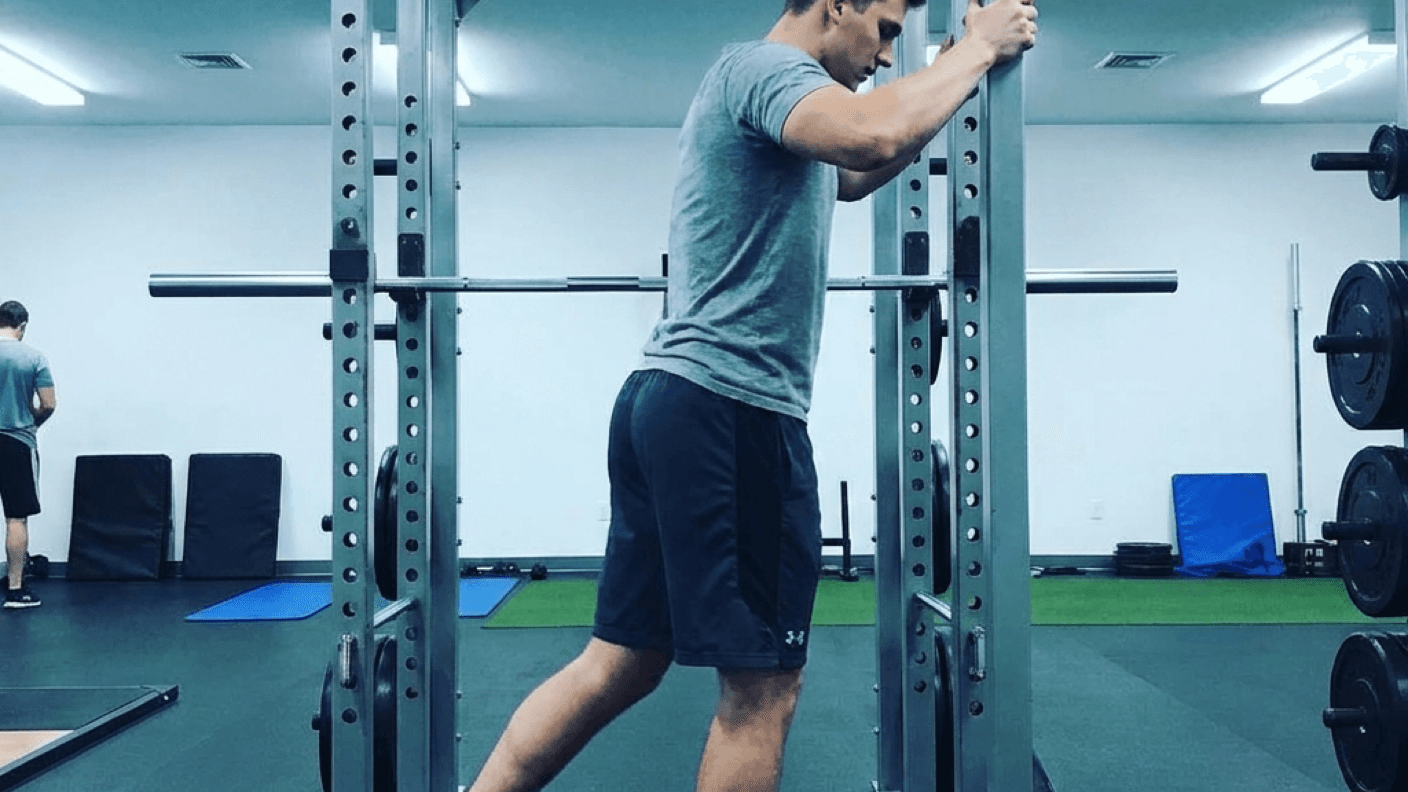
Key Takeaways
- You either skip the warm-up and risk injury or waste 35 minutes foam rolling, both approaches will screw you over.
- A good warm-up takes 10-15 minutes total and needs to raise your body temperature, increase blood flow, prepare your joints, and wake up your nervous system.
- Do 3-5 minutes of rowing or biking until you're lightly sweating, then spend another 3-5 minutes on movement prep like leg swings and bodyweight squats.
- Always start your main lifts with the empty bar and take bigger weight jumps early, smaller jumps as you get closer to your working weight.
- Keep warm-up set reps low (2-3 reps) as the weight gets heavier so you don't tire yourself out before the real work starts.
Get This on WhatsApp
Get a quick summary and link sent straight to your WhatsApp.
Send Me This ArticleThe two warm-up extremes
I see two types of people in the gym. The first walks in, loads up 225 on the bench, and starts pressing. No warm-up sets, no movement prep, nothing. He is usually 22 and thinks he is invincible. He will learn the hard way, probably through a pec strain or a shoulder that starts clicking.
The second type spends 35 minutes on the foam roller, does a full yoga sequence, 10 minutes of band work, then five minutes of "activating the glutes" with a mini band before finally touching a barbell. By the time he starts lifting, he is basically doing a cool-down. Half his energy is gone and he has been in the gym for 45 minutes without completing a single working set.
Both approaches are wrong. The first is asking for injury. The second is wasting time and energy on stuff that does not measurably improve performance or reduce injury risk.
A good warm-up should take 10-15 minutes and leave you feeling ready to train hard. Not tired, not bored, not still cold. Ready.
What a warm-up actually needs to accomplish
There are four things a warm-up needs to do, and anything that does not serve one of these purposes is wasted time:
Raise your core body temperature. Warmer muscles produce more force, contract faster, and are more resistant to injury. Bishop (2003) documented that a 1-degree Celsius increase in muscle temperature improves force production by about 4%. That is significant when you are trying to move heavy weight.
Increase blood flow to working muscles. More blood means more oxygen delivery, more nutrient availability, and faster removal of metabolic waste. This improves work capacity during your session.
Prepare the joints and connective tissue. Synovial fluid in your joints becomes less viscous (thinner) when it is warm, which reduces friction and improves joint function. This is why your knees feel creaky for the first few reps but smooth out after a warm-up.
Prime the neuromuscular system. Your nervous system needs to "wake up" before you can produce maximal force. Post-activation potentiation (PAP) is the principle that a moderate-intensity contraction primes the nervous system for a subsequent maximal effort. This is why you feel stronger on your third warm-up set than your first. Your nervous system is progressively recruiting more motor units.
That is it. Raise temperature, increase blood flow, prepare joints, prime the nervous system. Everything in your warm-up should serve one of these goals.
The general warm-up
The general warm-up is 3-5 minutes of low-to-moderate intensity activity that raises your heart rate and core temperature. It is not specific to the lifts you are about to do.
Options (pick one):
- •Rowing machine: 3-5 minutes at a moderate pace. This is my favorite because it moves your whole body through a large range of motion and gets your heart rate up quickly.
- •Stationary bike: 3-5 minutes. Fine if rowing is not available. Less upper body involvement.
- •Brisk walking on an incline treadmill: 3-5 minutes at a steep incline and fast walk. The incline engages the posterior chain.
- •Jumping jacks or jump rope: 2-3 minutes. Good for a quick pulse raiser when equipment is limited.
You should be slightly sweaty by the end of this. If you are not, you did not go hard enough. If you are breathing heavy and your heart is pounding, you went too hard. You want a light sweat and a slightly elevated heart rate. Think "I am warm" not "I just did cardio."
Skip the general warm-up only if you are already warm. If you walked or biked to the gym, or you have been moving around for 20-30 minutes before training, you are probably warm enough to go straight to movement prep.
The specific warm-up
The specific warm-up prepares the muscles, joints, and movement patterns you will use in that day's training. This is where most people either do too much or too little.
For a lower body day (squats, deadlifts), spend 3-5 minutes on:
- •Leg swings (front-to-back and side-to-side): 10 each direction per leg. Hold onto something for balance. This takes your hips through their full range of motion dynamically.
- •Bodyweight squats: 10-15 reps, focusing on depth and control. Push your knees out, keep your chest up, sit all the way down.
- •Walking lunges: 10-12 total steps. These combine hip flexor stretching with glute activation in a dynamic movement.
- •Glute bridges: 10-15 reps, squeezing hard at the top. This wakes up the glutes, which tend to be lazy after sitting all day. Most people can skip these if the rest of the warm-up includes lunges and squats.
For an upper body day (bench, overhead press, rows), spend 3-5 minutes on:
- •Arm circles: 10 forward, 10 backward, small to large. Gets blood flowing to the shoulder joint.
- •Band pull-aparts: 15-20 reps. Activates the rear delts and rhomboids, which stabilize the shoulder during pressing.
- •Band dislocates: 10-12 reps. Takes the shoulder through its full range of motion.
- •Push-ups: 10-15 reps. These are an underrated bench warm-up because they move the same joints through the same pattern at a lower intensity.
Total time for the specific warm-up: 3-5 minutes. Not 15, not 20. This is not a workout. It is preparation.
How to ramp up for your main lifts
This is the part most people get wrong. The ramp-up (also called "feeder sets" or "warm-up sets") is where you progressively load the barbell from empty to your working weight. This is the most important part of the warm-up because it is the most specific preparation for what you are about to do.
The principles:
Start with the empty bar. Always. I do not care if your working weight is 500 pounds. The empty bar set is about greasing the movement pattern, not about the load. Feel the positions. Get your technique right. Let the joints settle in.
Take bigger jumps at the bottom, smaller jumps near the top. The early warm-up sets are about increasing tissue temperature and neuromuscular priming. The later sets are about preparing for the specific load. The transition from 50% to 70% can be one jump. The transition from 80% to 90% should be smaller.
Keep reps low as weight increases. You do not want to accumulate fatigue during warm-up sets. A common mistake is doing sets of 10 all the way up. By the time you reach your working weight, you have done 50+ reps and you are already tired. Keep early warm-up sets at 5-8 reps and drop to 2-3 reps as you get closer to working weight.
Rest longer between heavier warm-up sets. The bar-only set and the first loaded set need maybe 30-60 seconds between them. But your last warm-up set (close to working weight) might need 90 seconds to 2 minutes before you start your working sets. You want to be fresh when the real work begins.
Warm-up sets for squat day
Let us say your working weight is 315 for sets of 5.
| Set | Weight | Reps | Rest after |
|---|---|---|---|
| 1 | 45 (empty bar) | 8 | 30 seconds |
| 2 | 135 | 5 | 45 seconds |
| 3 | 185 | 4 | 60 seconds |
| 4 | 225 | 3 | 90 seconds |
| 5 | 275 | 2 | 2 minutes |
| 6 | 295 | 1 | 2 minutes |
| Working sets | 315 | 5 | 3-4 minutes between sets |
That is 6 warm-up sets, which sounds like a lot, but it only takes about 10-12 minutes including rest. And by the time you get to 315, it feels smooth and familiar rather than shockingly heavy.
If your working weight is lighter (say 185 for sets of 5), you need fewer warm-up sets:
| Set | Weight | Reps | Rest after |
|---|---|---|---|
| 1 | 45 | 8 | 30 seconds |
| 2 | 95 | 5 | 45 seconds |
| 3 | 135 | 3 | 60 seconds |
| 4 | 165 | 2 | 90 seconds |
| Working sets | 185 | 5 | 2-3 minutes |
Warm-up sets for bench day
Working weight: 225 for sets of 5.
| Set | Weight | Reps | Rest after |
|---|---|---|---|
| 1 | 45 | 10 | 30 seconds |
| 2 | 95 | 5 | 45 seconds |
| 3 | 135 | 5 | 60 seconds |
| 4 | 185 | 3 | 90 seconds |
| 5 | 205 | 1-2 | 2 minutes |
| Working sets | 225 | 5 | 3 minutes |
For bench, I like a few extra reps on the early sets because the shoulder joint benefits from more volume at lighter loads to get fully warm. The pec is also a muscle that tears when it is not properly warm, and bench press pec tears are one of the most common serious injuries in the gym.
Warm-up sets for deadlift day
Working weight: 365 for sets of 5.
| Set | Weight | Reps | Rest after |
|---|---|---|---|
| 1 | 135 | 5 | 30 seconds |
| 2 | 185 | 4 | 45 seconds |
| 3 | 225 | 3 | 60 seconds |
| 4 | 275 | 2 | 90 seconds |
| 5 | 315 | 1 | 2 minutes |
| 6 | 345 | 1 | 2-3 minutes |
| Working sets | 365 | 5 | 3-4 minutes |
Note that deadlift warm-ups start at 135 (one plate) instead of the empty bar. Deadlifting an empty bar puts you in a weird position because the plates are not touching the ground, so the range of motion is longer than it should be. Start with 135 from the normal pull height.
If 135 is close to your working weight, do some Romanian deadlifts with an empty bar or light weight first, then start your warm-up pulls at whatever weight gives you normal bar height.
What about warming up for accessories
After your main compound lifts, you are already warm. You do not need extensive warm-up sets for accessories like curls, lateral raises, tricep extensions, or leg curls.
One set at about 50-60% of your working weight for 8-10 reps is enough to prime the muscle and find the right weight. Then go straight into working sets.
Some lifters do not even do that and just jump into their first working set of accessories at a slightly conservative RPE. That is fine too. The injury risk on a cable curl or leg extension is minimal compared to a heavy squat or bench press.
The exception: if your first accessory is a heavy compound (like barbell rows after deadlifts, or overhead press after bench), give it at least 2-3 warm-up sets because you are loading the spine or shoulders in a new pattern even though you are already warm.
Common warm-up mistakes
Doing static stretching before lifting. I covered this in detail in the foam rolling vs stretching article, but it bears repeating. Static stretching reduces maximal force production by about 5% if done immediately before lifting (Simic et al., 2013). Use dynamic stretching instead. Save the static holds for after your session.
Warming up too aggressively. Your warm-up is not a conditioning session. If you are out of breath and sweating heavily after 5 minutes on the rowing machine, you spent energy you need for your working sets. Light sweat, slightly elevated heart rate. That is the target.
Too many warm-up sets. If you are doing 10 warm-up sets before your first working set, you are wasting energy and time. 4-6 warm-up sets is plenty for most people at most working weights.
Too few warm-up sets. Going from an empty bar to your working weight in two jumps. Your joints, muscles, and nervous system are not prepared for the load. Take the time to ramp up properly. This is especially important for people over 30 whose connective tissue takes longer to warm up.
Not warming up at all. This is the biggest one. I have seen people tear their pec on the first rep because they loaded up 225 without a single warm-up set. I have seen guys strain their lower back on their first deadlift rep because they did not bother warming up their hips. Five to 10 minutes of warming up can prevent an injury that costs you weeks or months of training. The math is simple.
Over-relying on the foam roller. Spending 15 minutes rolling out every muscle before training is not a warm-up. It might make you feel looser, but it does not raise your core temperature, does not prepare your nervous system, and does not practice the movement patterns you are about to load. Foam rolling can be part of a warm-up (2-3 minutes on problem areas), but it should not be the whole warm-up.
The cold weather adjustment
If you train in a garage gym, an unheated warehouse gym, or anywhere that gets genuinely cold, you need a longer general warm-up. Your muscles and joints take longer to reach optimal temperature in a 40-degree room than a 70-degree room.
In cold environments:
- •Extend the general warm-up to 5-8 minutes
- •Add an extra warm-up set or two during your ramp-up
- •Wear layers and only remove them once you are genuinely warm
- •Keep rest periods slightly shorter to avoid cooling down between sets
I trained in a garage gym in the northeast for two winters. The worst thing was that mid-session cooldown between sets when you are standing around in 45-degree air. I started keeping a hoodie on until my heaviest sets, and honestly that alone made a noticeable difference in how the weights felt.
The bottom line: your warm-up should be simple, efficient, and specific to what you are training that day. Get warm, move through the ranges of motion you need, ramp up the bar to working weight, and start training. Fifteen minutes from walking in the door to your first working set is the goal. If your warm-up takes longer than your first exercise, something is wrong.
Frequently Asked Questions
- How long should a warm-up be before lifting?
- Ten to fifteen minutes max. Five minutes of light cardio to raise your body temperature, then 5-10 minutes of dynamic movements specific to that day's training. If your warm-up is 30 minutes long, you are wasting time and energy you need for your actual workout.
- Should I stretch before lifting weights?
- Dynamic stretching yes, static stretching no. Leg swings, arm circles, bodyweight squats, and band pull-aparts are great before training. Holding a 30-second hamstring stretch before deadlifts can temporarily reduce force production. Save static holds for after your workout.
- Do I need to do cardio before lifting?
- Three to five minutes of light cardio (walking, bike, rowing) to break a sweat is sufficient. You are not doing a cardio workout, just raising your core temperature and getting blood flowing. Do not run a mile before squats and wonder why your legs are dead.
- How many warm-up sets should I do?
- For your first compound exercise, do 3-4 progressively heavier warm-up sets. If you are squatting 225, do the bar for 10, 95 for 8, 135 for 5, 185 for 3, then start your working sets. Later exercises in the session need fewer warm-up sets since you are already warmed up.